
Set up your shot list
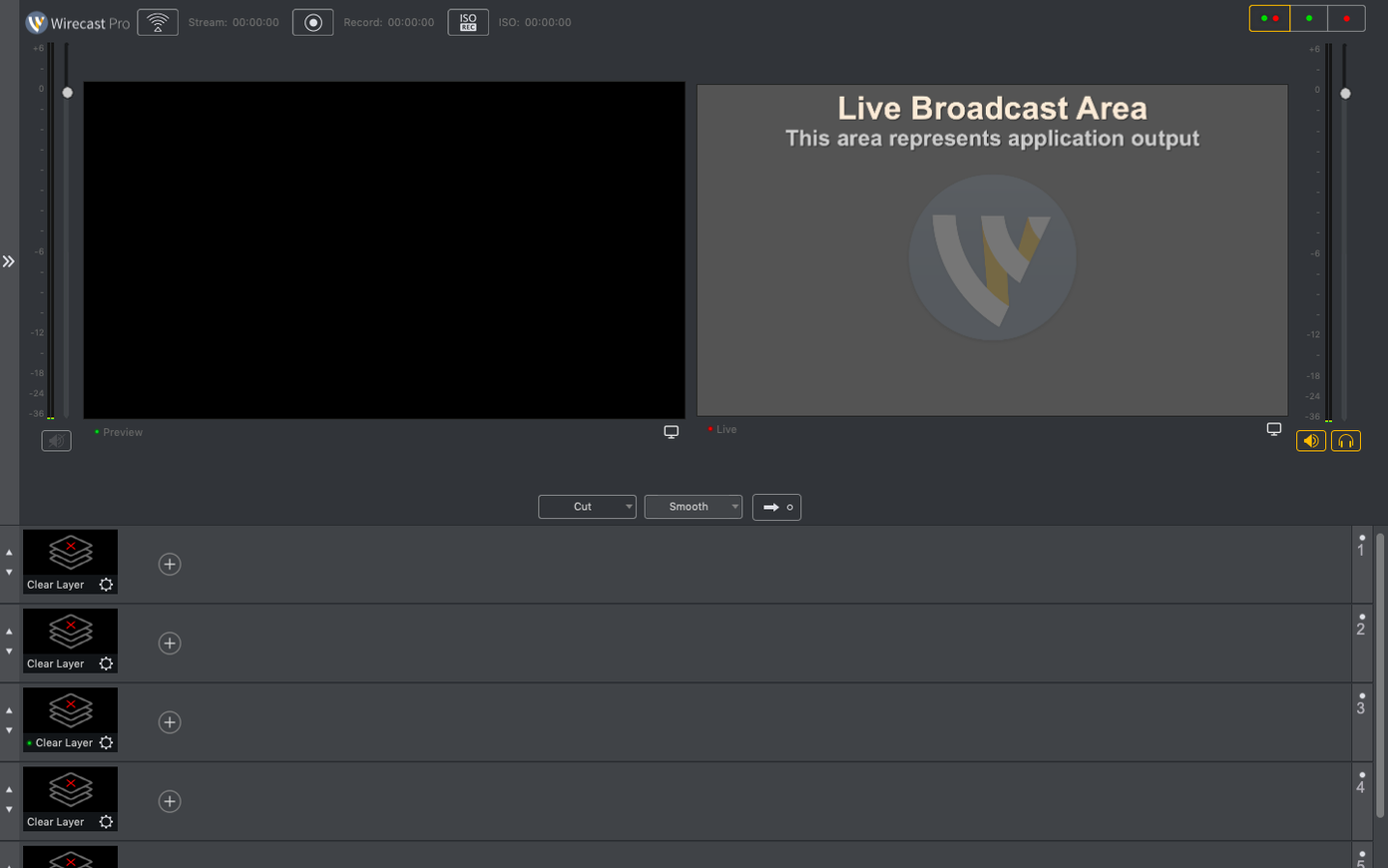
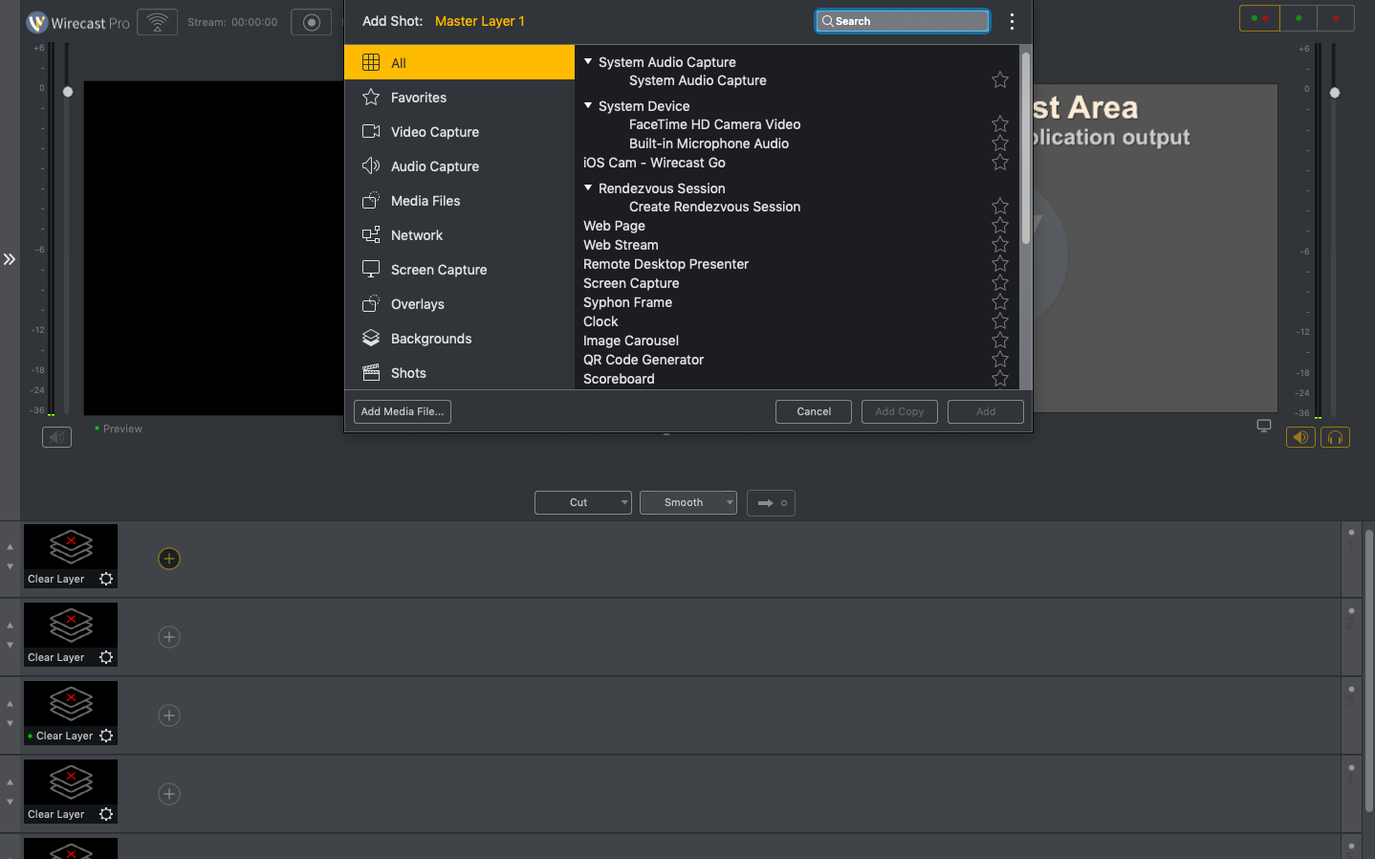
I'd map every camera and media source to a shot layer before going live. You can line up NDI feeds, a desktop capture, and pre-recorded clips, then switch between them with a click during the broadcast.
Add titles on the fly
The thirty built-in title styles mean I can drop in a lower-third nameplate or a session label without leaving the live window. Quick text edits mid-stream keep things accurate when a speaker changes or a score updates.
Record while you stream
Pressing record at the same time as going live gives me a clean master file to trim later. It's how I'd handle a concert or a church service — one button, no extra software, and the archive is ready when the stream ends.
Can your Mac handle multiple cameras smoothly
Most folks I talk to want to know whether their Mac can actually push multiple camera feeds without bogging down. With version 16.5.4 running on macOS 11 or later, the answer is yes — provided your machine meets the memory and graphics headroom you'd expect for any NDI-heavy work. I'd test it first with two sources and watch the CPU meter, then add feeds gradually.
Another common question is whether a wirecast torrent floating around the web installs cleanly and runs smoothly. What I pay attention to is the version number and the team behind the release. The TNT build of wirecast 16.5 has a straightforward install: mount the disk image, follow the Gatekeeper-friendly steps, and drag the app into Applications. No mystery wrappers, no odd permissions requests beyond what you'd normally allow for a streaming tool.
People also ask if they can use it as a virtual camera for Zoom or Teams calls. Yes — the latest release even includes a fix for the virtual camera when corporate IT policies block the microphone driver, so that scenario is specifically handled now.
Test your source switching with a quick recording
Before you build a complex production, open a blank document and add two sources. A webcam and a desktop capture are fine. Switch between them, record a thirty-second clip, and check the file. This little ritual surfaces any resolution mismatches or audio routing quirks before they can ruin a real stream.
Next, spend ten minutes with the title editor. Pick three styles you'll actually use — a clean lower-third, a full-screen opener, and a bug for the corner logo. Type in dummy text, resize it, save the setup as a template. Later, during a live broadcast, you'll be glad the fonts and positions are already dialed in.
If you're working with PTZ cameras over NDI, run the detection scan once before the day of the event. The 16.5.4 release fixed a detection issue for certain PTZ models on macOS, so if you'd tried an earlier build and gave up, this version is worth revisiting. Also, check that your NDI sources show the discontinuous-frame flag in the source inspector — that's new in this release and helps with sync.
Apple Silicon responsiveness versus Intel fan noise
On Apple Silicon, Wirecast Pro feels quick. I see the main window populate sources without the half-second lag that some cross-compiled apps show. On Intel machines, especially older Macs still on macOS 11, the fans spin up predictably once you exceed four NDI feeds with overlays, but the interface stays responsive — no beachballing during a shot switch, which is where it really counts.
Memory use settles around what I'd expect for a video mixer: more RAM when recording locally at high bitrates, less when you're only pushing an RTMP stream. I'd budget about 2 GB free above your system idle before launching, just to leave breathing room for the GPU compositing the title overlays.
Stability over multi-hour sessions is solid. I've let it run for a three-hour conference stream — wirecast pro download that version, set inputs, lock the Mac, and walk away — and it didn't drop a frame or lose audio sync. The virtual camera patch in 16.5.4 seems to have cleared up a crash some users hit when toggling the virtual output while other apps were grabbing the feed.
Setting up for a half-day workshop stream
It's seven in the morning and I'm setting up for a half-day workshop stream. The Mac is booted, external drive attached for recording, and Ethernet plugged in — Wi‑Fi is a last resort for live video. I open Wirecast Pro and immediately save the empty document as workshop-spring.wirecast so no work gets lost.
First step: add my main camera. It's a PTZ model connected over NDI, and the source browser finds it right away — no manual IP entry needed, which I attribute to the detection fix in this version. I drop it onto shot layer one and see the preview fill the program monitor. Good light, good framing.
Second step: add the presenter's slides. I grab a desktop capture of the external monitor, crop it to the slide area, and place it on shot layer two. A quick test switch — one click — confirms the transition is smooth. I set the default transition to a half-second dissolve so cuts feel softer during the workshop.
Third step: titles. I open the built-in title library, pick a lower-third style with a clean sans-serif font, and type the first speaker's name. I save it as a template, then duplicate it for the second speaker so I can swap text instantly later. I also set a small studio logo bug in the top-right corner — it stays on the program out regardless of which shot layer is active.
Fourth step: audio check. My camera feeds are carrying embedded audio, but I also add a USB microphone as a separate audio source. In the audio mixer I drop the camera audio level slightly and bring the dedicated mic up — the meters show clean levels with no clipping. I mute the desktop capture's audio so slide transitions don't pop through the stream.
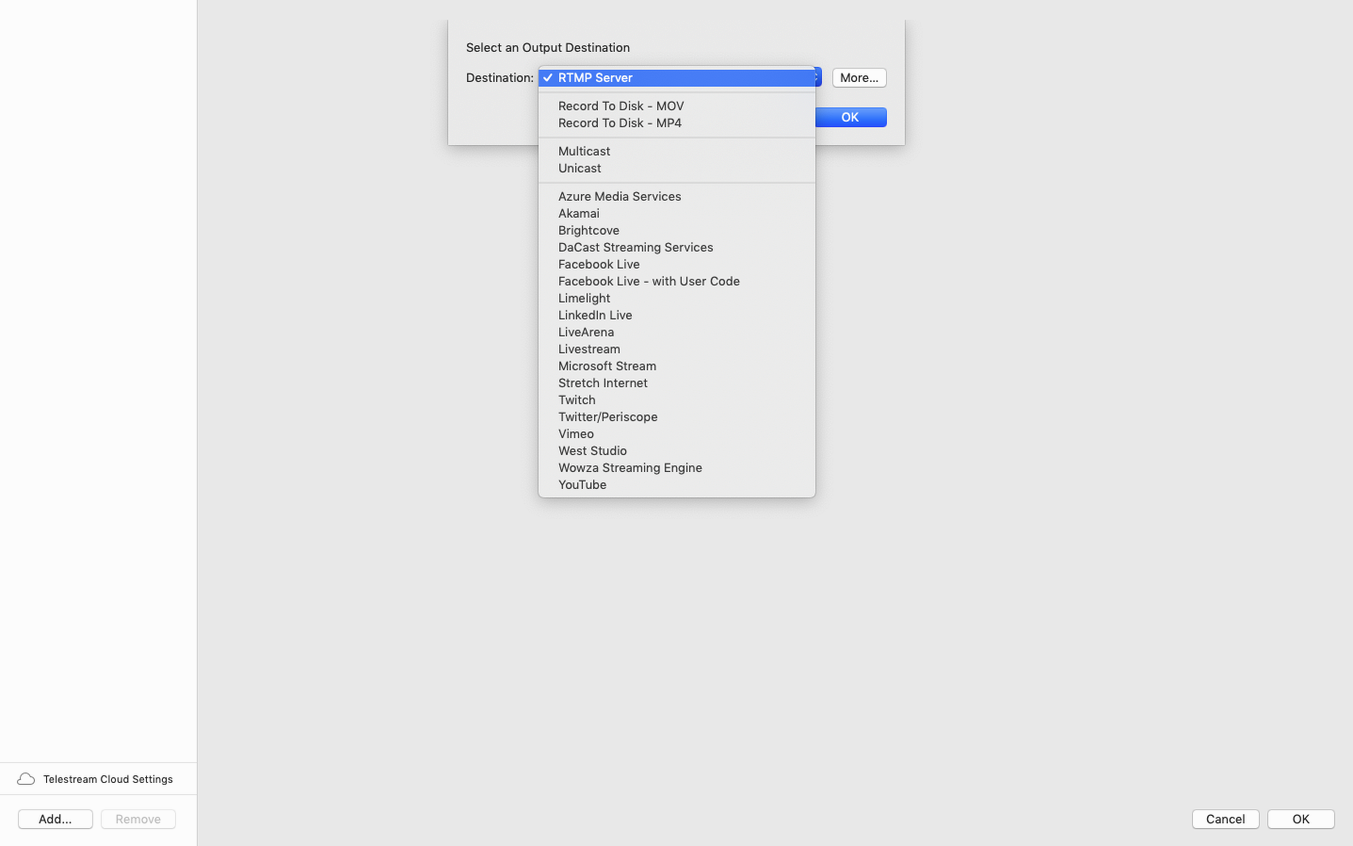
Fifth step: streaming destination. I plug in the RTMP credentials for the platform we're using and hit the stream button. The connection indicator goes green within seconds. I then press record so the local archive starts alongside the live feed. Now the stream is live, the master file is writing to disk, and I've got one hand on the shot switcher and the other free for title edits.
During the workshop I toggle between camera and slides as the presenter moves through material. Each switch is instant. When the second speaker steps up, I open the title template, change the name, and it updates on the outgoing feed without ever leaving the main window. Two hours in, the fans are humming but the stream hasn't buffered once, and the recording timer shows we've captured everything cleanly.
When the session wraps, I stop the stream first, let the recording finalize for a few seconds, then stop recording. The master file is sitting on the external drive, ready for a quick trim. I close Wirecast, and the Mac settles back to idle. No crashes, no lost settings, and the template I saved means next week's setup takes half the time.
What's new in 16.5.4:
- Fixed PTZ NDI camera detection that was spotty on macOS.
- Virtual camera now works even when corporate IT blocks the virtual microphone driver.
- New discontinuous-frame flag for NDI sources helps keep sync steady.
- macOS 11 or newer
- 64-bit Intel or Apple Silicon Mac
Notes from other shops 0
Sign in or open a shop account to leave a note.
No notes yet. If you've used this on a shop Mac, tell me how it went.