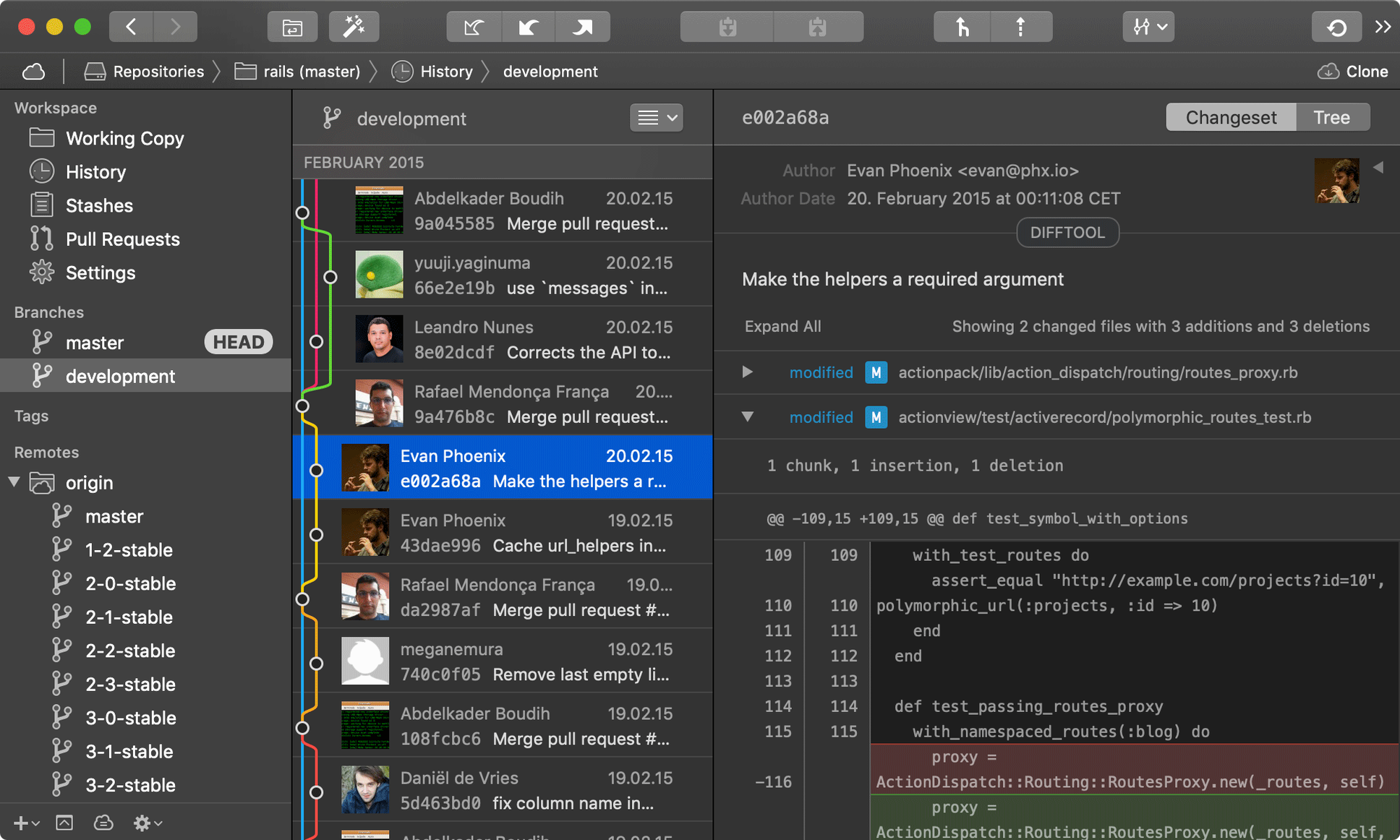
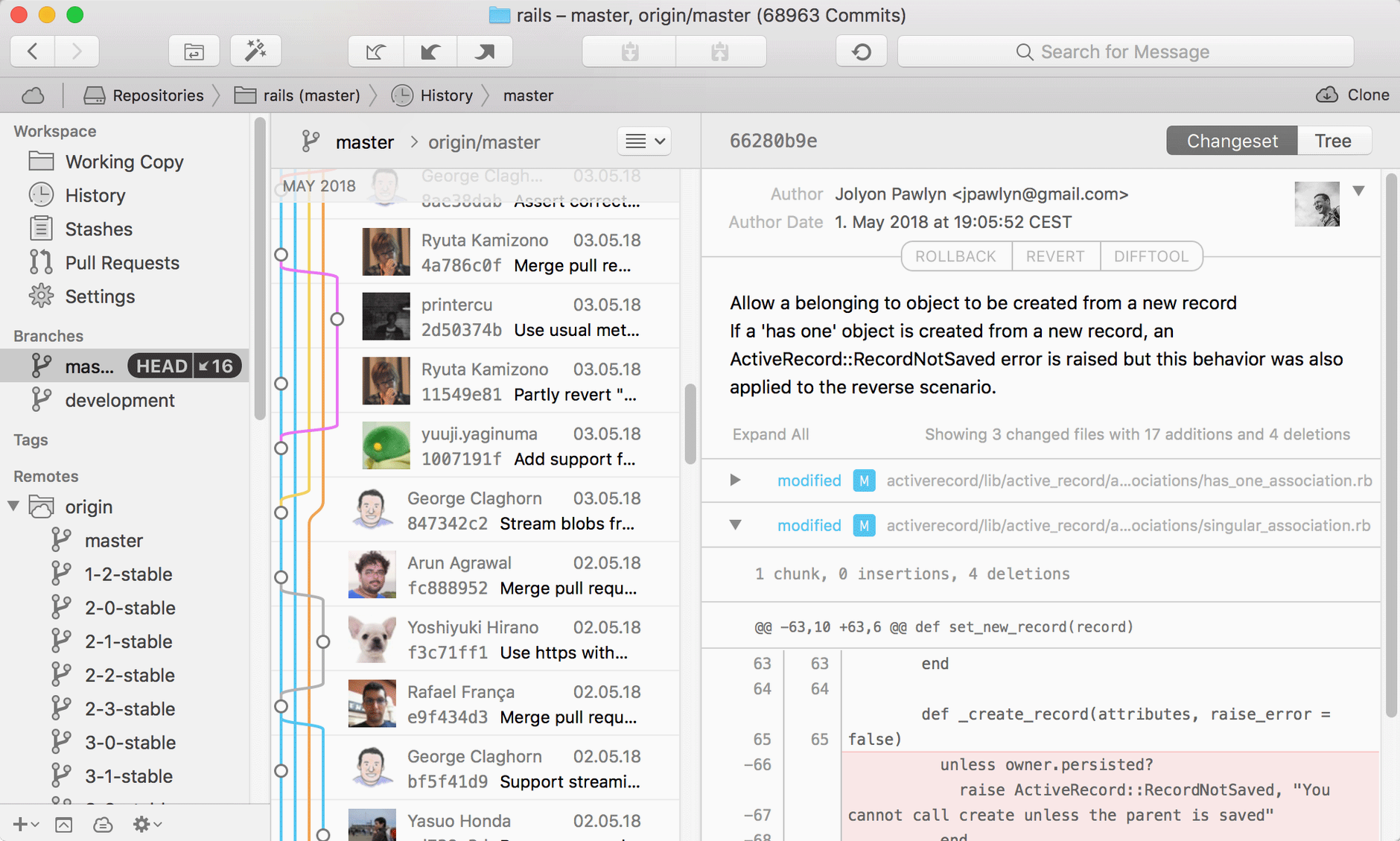
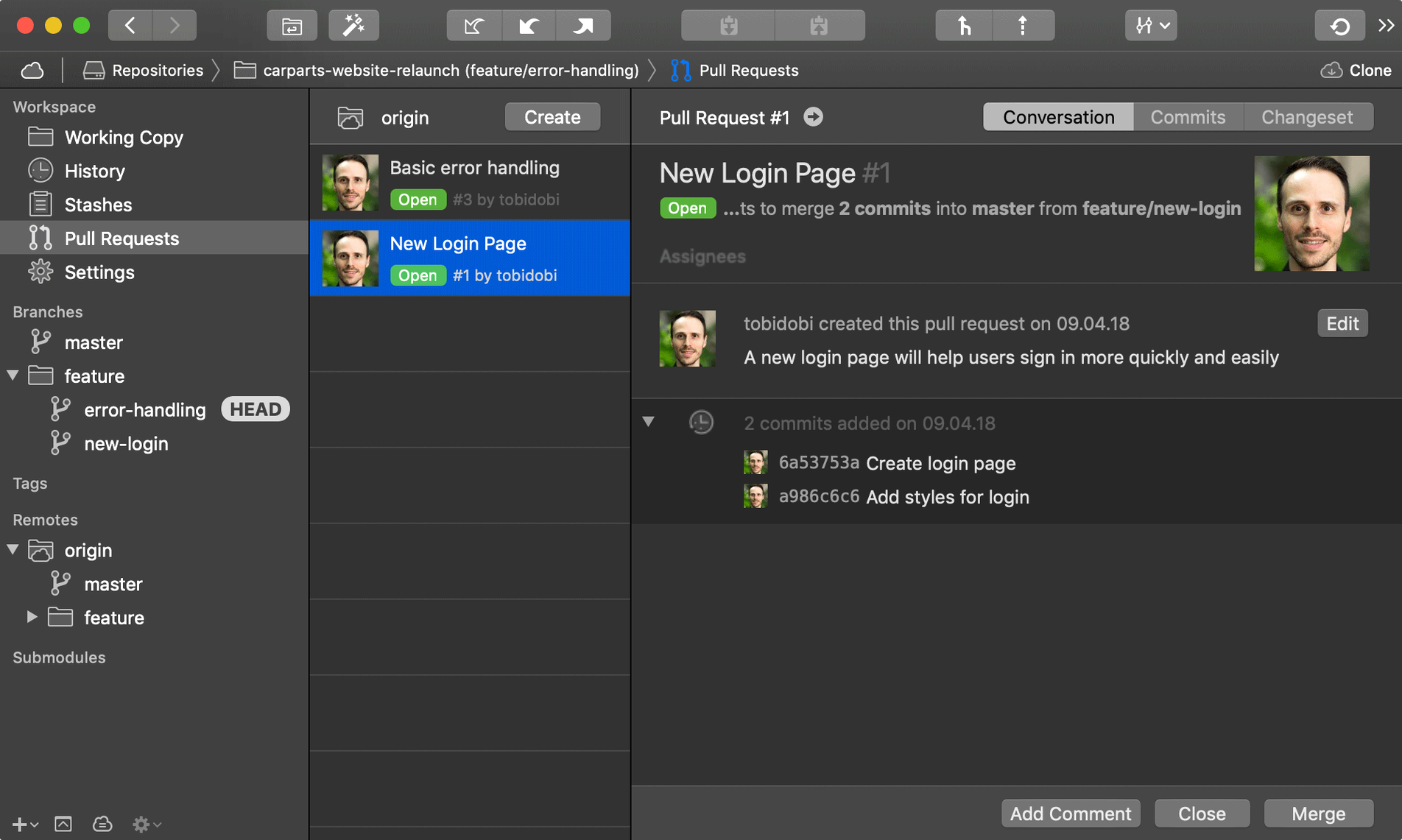
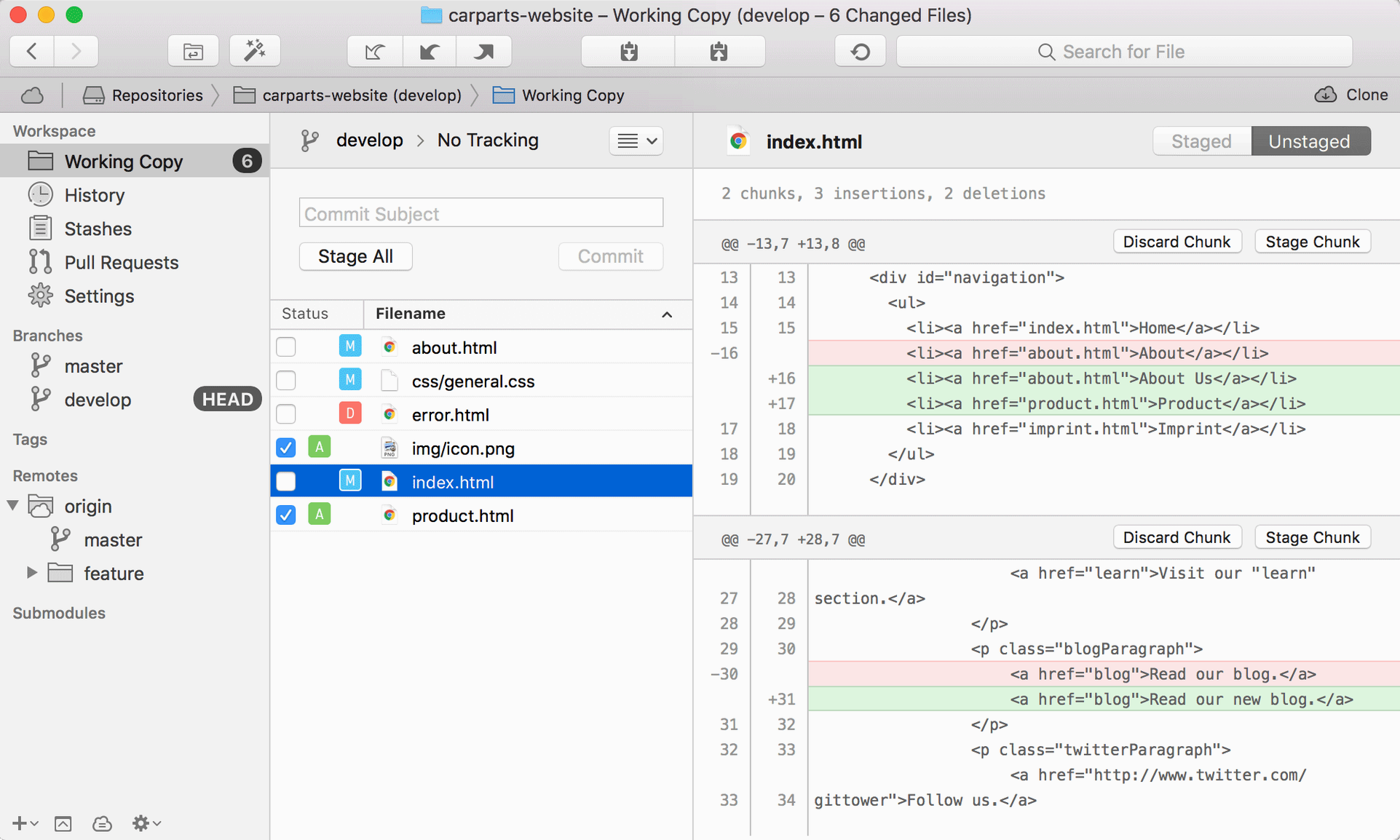
Tower 17 sharpens up one of the messier parts of Git: knowing when a branch is truly done. The Fully Merged detection now matches your local branches against pull requests that were merged on GitHub, GitLab and similar hosting services — even after squash or rebase merges, which used to confuse most clients.
| What it is | System requirements |
|---|---|
| Native Git client for macOS | macOS 12 or later |
| Apple Silicon & Intel ready | Interface: English |
Before you go hunting for a tower pro mac torrent, make sure your machine is up to the job. Tower is a native Mac app through and through, so it runs well on both Apple Silicon and Intel hardware as long as you're on macOS 12 Monterey or newer. That native foundation shows in the details: one-line staging keeps commits quick, submodule support is built right into the interface, and a lot of everyday actions — moving commits, merging branches, applying stashes — work with straightforward drag and drop instead of memorizing command-line flags.
How Tower compares with other Mac Git clients
Put Tower next to Fork and you'll notice the difference in ambition straight away. Fork keeps things compact — it's a fast, focused client that does the basics without much ceremony. If your Git life is mostly commit, push, pull and the occasional merge, Fork feels light and unintrusive. Tower brings more to the table: deeper merge detection across hosting services, drag-and-drop for operations that Fork keeps menu-driven, and a visual branch map that's easier to scan when you're tracking several feature branches at once. I'd reach for Fork on a quick freelance project; I'd want Tower when I'm juggling pull requests across a team.
GitKraken is the other one people ask about. It's cross-platform and leans hard into the graphical timeline, which some folks love. But Tower is built solely for Mac, and that shows in the interface weight and responsiveness. GitKraken's UI can feel busy once you've got a few remotes and submodules in play. Tower tends to stay readable — the file history panel, the staging area, and the sidebar don't compete for attention in the same way. If you collaborate with Windows or Linux teammates, cross-platform matters. If you're on a Mac and want something that respects the platform's conventions, Tower fits that niche better.
Where Tower earns its place
Neither Fork nor GitKraken handles post-squash branch detection the way Tower 17 does. That alone tips the balance if your team squashes pull requests regularly. You stop second-guessing whether a local branch is safe to delete, and that's a small daily friction that adds up fast.
What a freelance iOS developer would notice first
Picture someone building an iOS app for two clients simultaneously, each with their own GitLab repository, each with feature branches that get squash-merged after code review. Before Tower 17, they'd finish a feature, see the merge notification, and still hesitate before deleting the local branch — because squash rewrites history and older clients often miss the connection. With the new Fully Merged badge, the branch gets flagged reliably even after a squash merge. That one change removes a recurring moment of doubt that freelancers know well: staring at a branch list, trying to remember whether feature/oauth-fix is truly done or just looks done.
The drag-and-drop cherry-picking also suits the solo developer who switches contexts multiple times a day. Grabbing a commit from last Thursday's branch and dropping it into the current one without typing a hash or opening a terminal keeps momentum going during a long afternoon of bug fixes.
Treating undo like a time machine
The biggest one is treating the undo button like a time machine. Tower makes it easy to undo recent actions — discarding commits, resetting to a previous state — but beginners sometimes click undo repeatedly to "go back" through a messy afternoon, then lose track of what state the repository is actually in. The undo history is step-by-step, not snapshot-based, so chaining too many undos without checking the log can leave you in an unexpected spot.
Another common slip: ignoring the submodule panel entirely. Tower surfaces submodules in the sidebar, but newcomers to Git often don't realize that a project uses them until they clone it and notice missing files. If you see a submodule entry in Tower's interface, that's your cue — you need to initialize and update it before the project will build. Tower can handle that, but it won't do it automatically on clone unless you tell it to.
Tip: after cloning a project, always glance at the sidebar for submodule entries before you open the project in Xcode or your editor.
What's new in Tower 17:
- Smarter Fully Merged detection that compares your local branches against merged pull requests on services like GitHub and GitLab.
- A branch can now be marked Fully Merged even after squash or rebase merges — no more leftover branches that look active but aren't.
- macOS 12 or later
- Apple Silicon or Intel Mac
Questions from the stall
Does Tower PRO work on Intel Macs or only Apple Silicon?
Tower runs natively on both Apple Silicon and Intel Macs, so you don't need a newer M-series machine to use the current version.
Notes from other shops 0
Sign in or open a shop account to leave a note.
No notes yet. If you've used this on a shop Mac, tell me how it went.