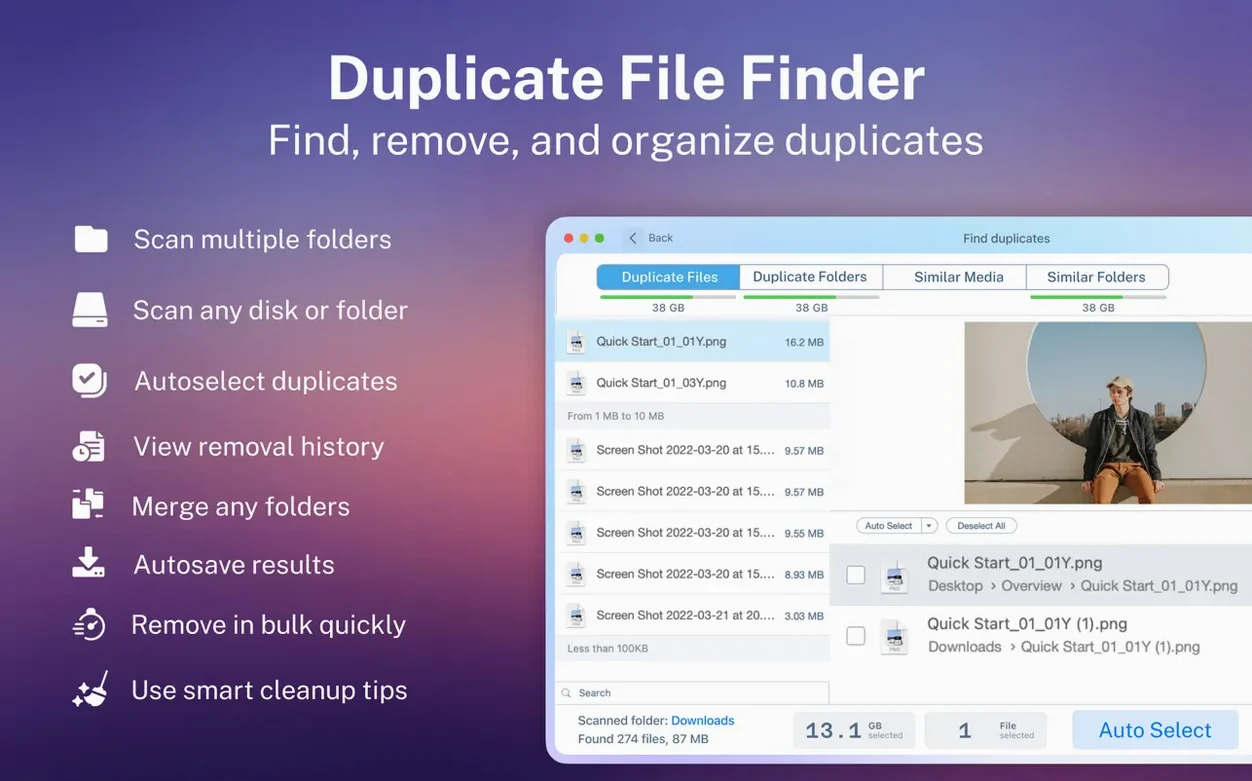
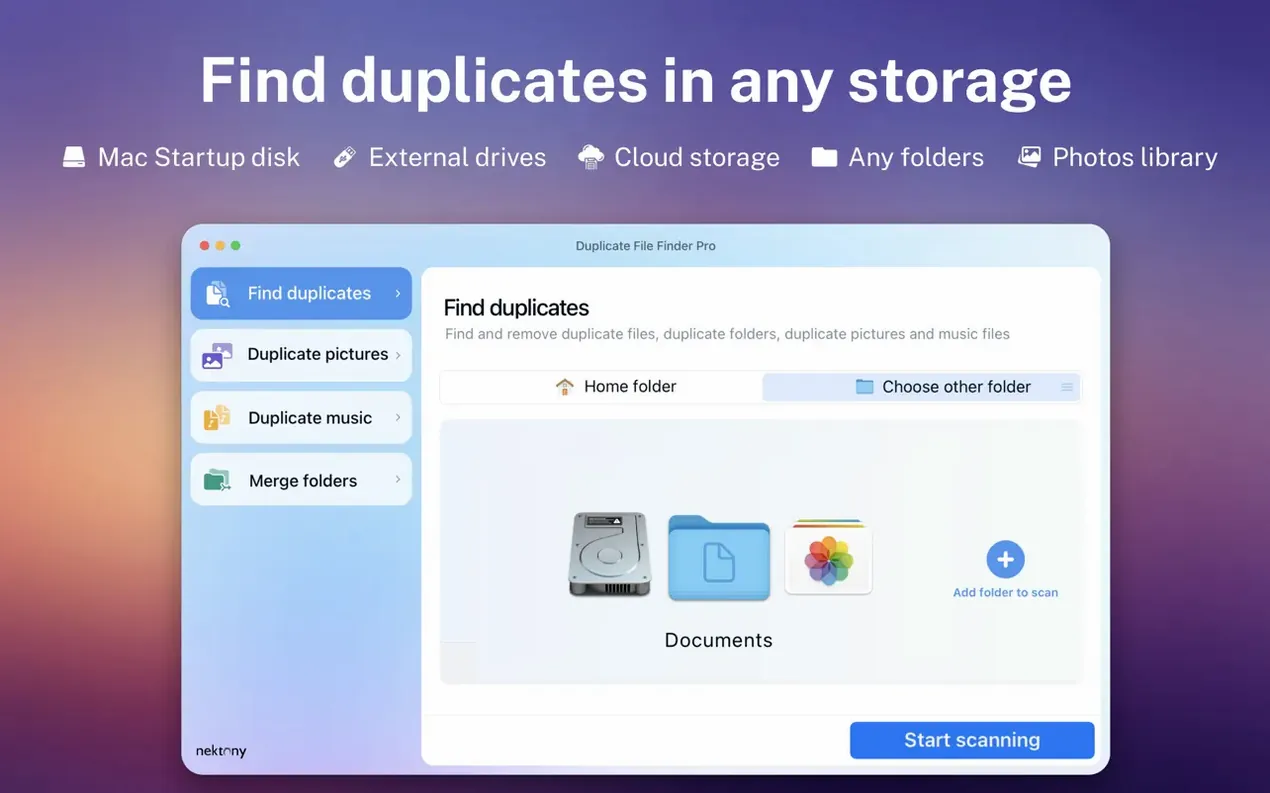
A messy Mac feels like a messy mind. When you know you have three copies of the same client logo spread across your drives, but you can't find the one you just edited, it's time for a proper cleanup. Duplicate File Finder Pro digs through your storage to surface those space-wasting copies so you can reclaim gigabytes with a few clicks.
This version runs on any Mac from macOS 10.13 High Sierra onward, and it's happy on both Intel and Apple Silicon machines. If you've been holding onto an older Mac for your shop, you're covered. The package includes activation and the built-in extras, so you're not chasing unlock codes after the download.
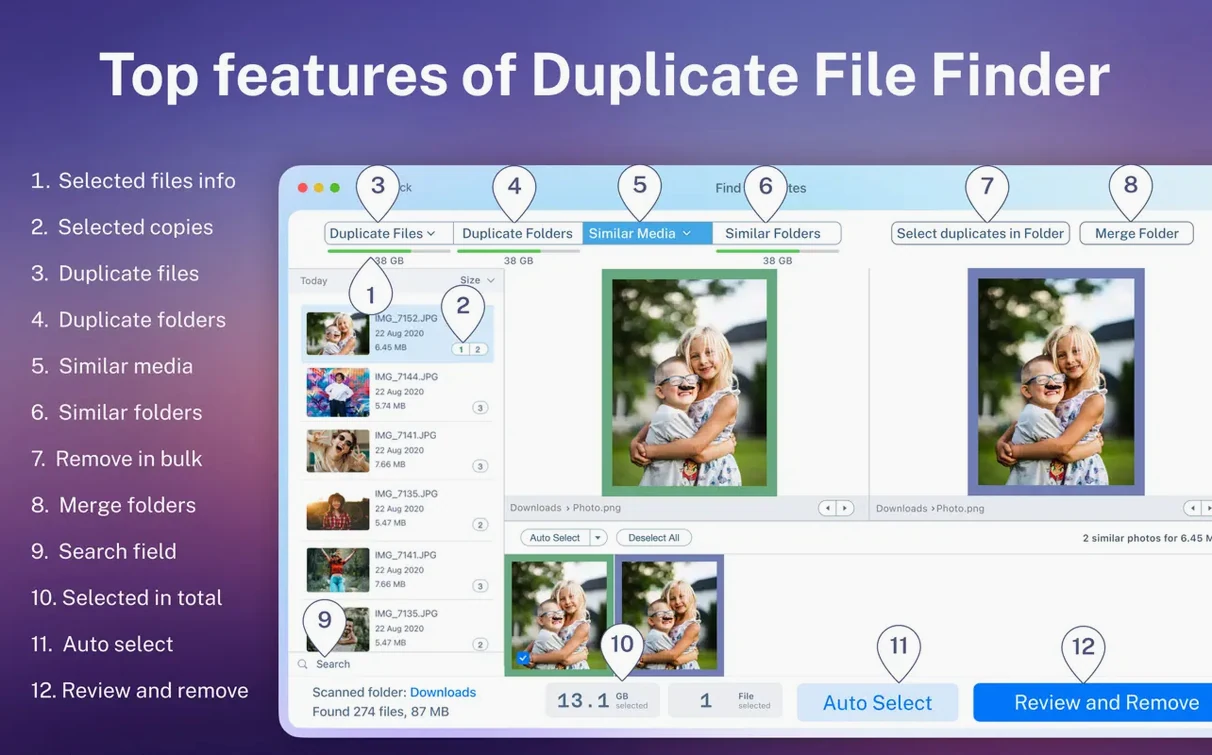
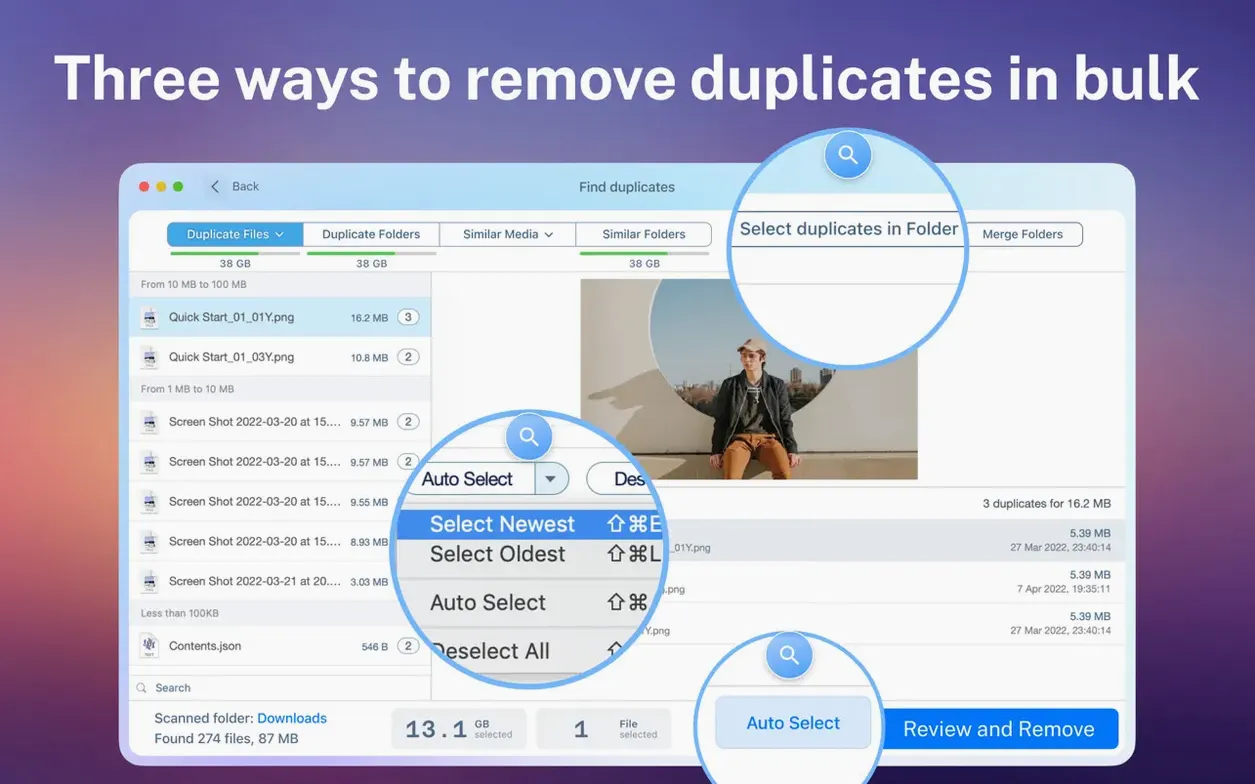
Beyond just finding twins, the app scans across categories like images, music, and archives. You can preview a file before you trash it—handy when you're looking at ten versions of a product photo and only need the retouched one. A smart selection button picks the keepers automatically, and you can sort results by size or count to tackle the biggest space hogs first. There's also a folder merge tool for when you've ended up with scattered project folders and just want one tidy home for everything.
Juggling raw files, edits, and stray backups in a busy studio
Imagine a product photographer who shoots directly to a MacBook in the studio. Over a year, client folders accumulate—raw shots, edited TIFFs, resized JPEGs for web, and the occasional backup copy dragged to an external drive “just in case.” Before a big archive session, she opens Duplicate File Finder Pro and points it at both the internal SSD and the connected RAID. Ten minutes later the scan report separates everything into images, documents, and a handful of stray video clips from a BTS shoot. She previews a few near-identical frames, keeps the ones with color corrections, and lets the smart selection handle the rest. What looked like a weekend of manual sorting becomes a lunch-break job, and the cleared space lets her add a dropbox folder to finder without worrying about disk warnings.
How it feels during real work
Scans on a 512 GB internal drive with mixed file types complete in a few minutes—fast enough that you don’t wander off to make tea. On larger external drives, especially spinning disks with deep folder trees, it takes longer, but the app stays responsive while it works. You can browse the partial results as they build, which is a small thing that makes the wait feel shorter.
Memory use stays modest. On an M1 Mac with 16 GB of RAM, it hovers around 200–300 MB during scanning, dipping lower once results are displayed. I haven’t seen beachballs or UI freezes mid-scan, and it plays nicely alongside Lightroom and a browser with a dozen tabs open. The unified binary means Apple Silicon Macs run it without Rosetta overhead, and older Intel machines don’t feel left behind either—version 8.5.2 still supports macOS 10.13, so even a trusty 2012 Mac Pro can earn its keep in a cleanup workflow.
Why your NAS folder scans empty the first time
Scanning network folders without adjusting settings first. By default the app might skip hidden directories or system-protected paths, but network shares can behave differently. If a NAS folder scans empty or shows far fewer files than expected, open the scan options and toggle Scan hidden folders on. That one checkbox usually resolves a “missing files” mystery.
Trusting “Select Duplicates” too quickly. The automatic selection logic picks one copy in each duplicate group to keep and marks the rest for removal. In most cases that’s exactly right, but if you’ve intentionally placed copies in different project folders as working references, you’ll want to review the list before hitting delete. A thirty-second sanity check saves a lot of rebuilding later.
Forgetting the Trash safety net. If you send duplicates to Trash instead of using permanent delete, you can restore them from the app’s built-in recovery function or from the Finder Trash itself. That’s your undo path. People who choose permanent deletion straight away sometimes regret it when they realize a “duplicate” was actually a variant edit. Stick with Trash on the first pass.
Misreading the folder merge tool. Merging doesn’t just copy files—it moves them. If two folders share the same name but live on different drives, the app consolidates the contents into one destination. That’s powerful, but if you’re not paying attention to which folder is the source and which is the target, you might relocate files unintentionally. Double-check the arrows in the merge dialog before confirming.
Ignoring the preview pane for similar folders. Similar-folder results can look identical at a glance because they share most of the same file names. Tapping through a few previews often reveals that one folder holds compressed exports while the other keeps originals. The extra click beats deleting the wrong version.
If you've been hunting for a straightforward way to tidy up without digging through every finder window yourself, this one does the heavy lifting.
Version 8.5.2 brings stability improvements and small fixes that keep scans running smoothly on the latest macOS updates.
- macOS 10.13 or newer
- Works on Intel and Apple Silicon Macs
- Activation and built-in extras included
Questions from the stall
Can I undo a deletion if I remove the wrong duplicate?
Files moved to the Trash can be restored the usual way, but anything deleted permanently is gone for good—so previewing results first is a smart habit.
Does the folder merge feature work with network drives?
The app focuses on local and directly attached storage; for consistent results with network volumes, it's best to check the current documentation for your setup.
Notes from other shops 0
Sign in or open a shop account to leave a note.
No notes yet. If you've used this on a shop Mac, tell me how it went.