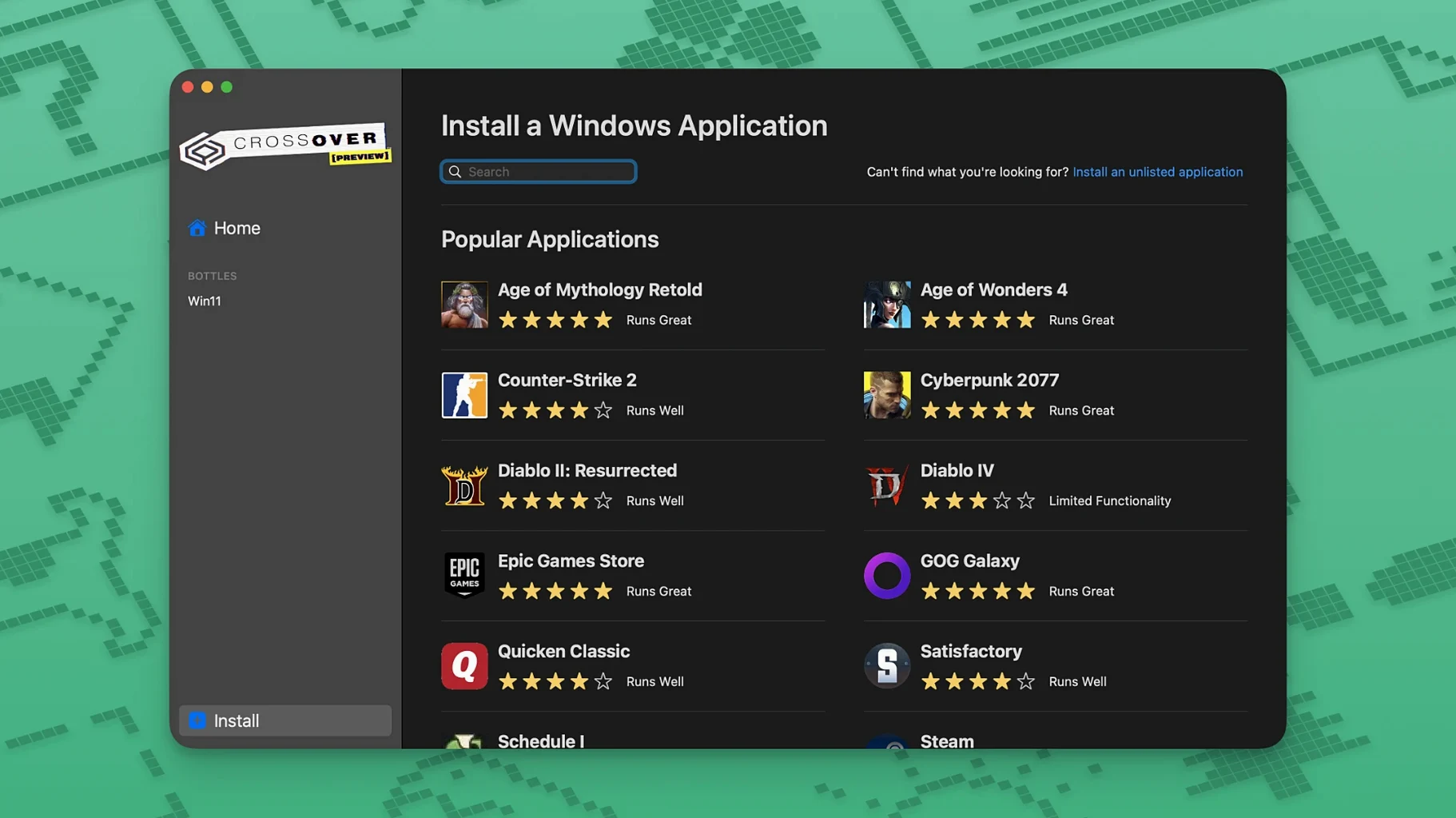
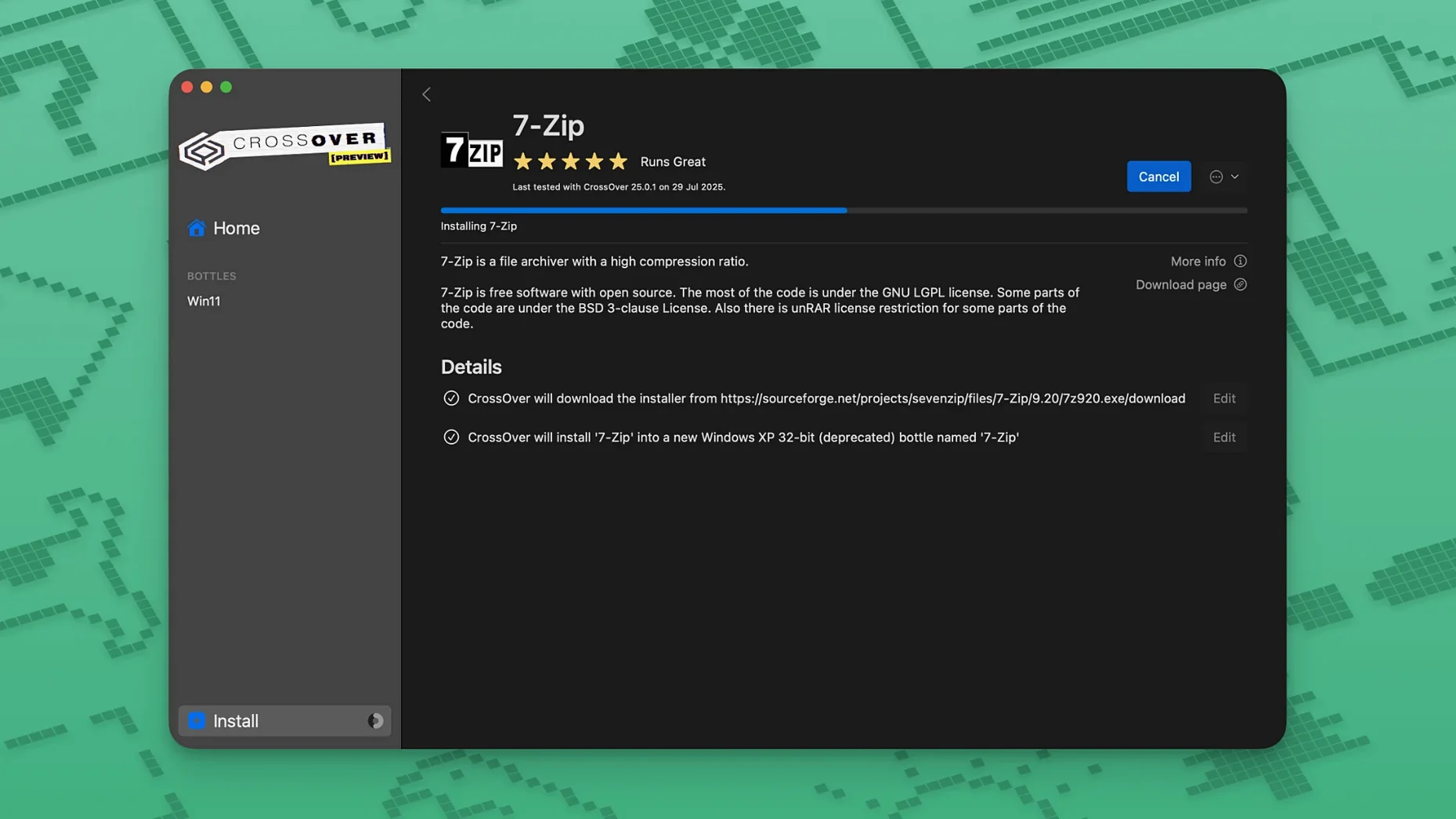
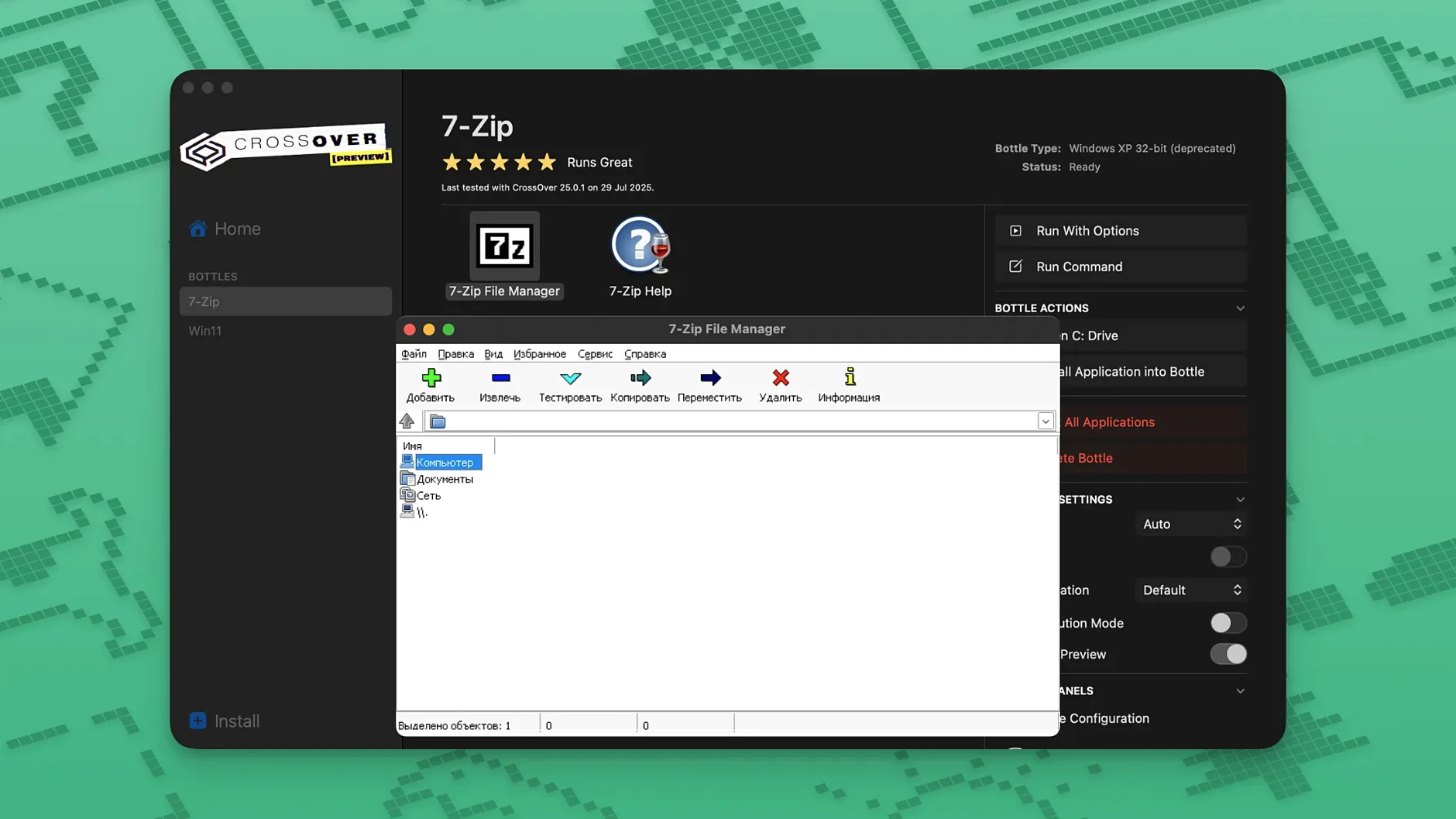
If you’ve used Wine before, CrossOver 26 Mac will feel like a familiar idea with a lot more polish. Instead of wrestling with configuration files, you get a proper Mac app that translates Windows commands on the fly. Not every Windows program works — support for unsupported titles can be spotty — but for productivity tools, utilities, and a solid list of games, it’s often enough.
Will CrossOver 26 run on your Mac?
Start with the basics. CrossOver 26 needs macOS Catalina (10.15) or newer and an Intel processor. Apple Silicon Macs can run it through Rosetta, though performance varies by application. If your setup checks those boxes, you’re ready to begin.
- Grab the disk image and mount it.
- Run the Gatekeeper-friendly opener — it walks you past the standard macOS block.
- Drop the app into your Applications folder.
- Find the Extra folder and copy the croslic folder to your desktop.
- Inside that folder, right-click license.tool, pick Open With > Terminal, and type your Mac password when asked.
- If activation stumbles, give Terminal full disk access in System Settings.
What you get is one place to launch Windows software without a virtual machine or a reboot. The latest 26.3.0 update tidied up a few rough edges that cropped up with recent game launcher changes, so things like Epic downloads and Diablo IV are back on track.
How CrossOver stacks up against the alternatives
Parallels Desktop and VMware Fusion take a different route — they run a full copy of Windows inside a virtual machine. That means near-perfect compatibility, but you pay for it with disk space, memory overhead, and the need for a Windows license. CrossOver skips all that. No Windows install, no VM, just a translation layer that turns Windows calls into something macOS understands. For a handful of trusted apps, it's lighter and faster to launch.
Then there's Wineskin Winery and plain Wine via Homebrew. Both use the same underlying technology CrossOver is built on, but they leave the fiddly bits exposed. You're editing registry keys by hand, chasing DLL overrides, and praying a winetricks command doesn't break the bottle. CrossOver wraps all that in a friendly interface and ships pre-tested configurations for supported apps. If you've ever spent a Sunday afternoon coaxing a Windows utility to run under straight Wine, the difference is night and day.
Where CrossOver shines is the middle ground: apps that don't need pixel-perfect GPU passthrough but do need a stable, repeatable Windows environment. Think an old accounting package, a label designer, or a niche RPG from 2012. For bleeding-edge DirectX 12 titles, a VM or Boot Camp still wins. For everything else, CrossOver often gets the job done with less fuss.
Where CrossOver fits in your Mac toolbox
CrossOver plays nicely with the Mac way of doing things. Bottles sit in your home folder, so Time Machine backs them up without extra steps. You can drag a bottle to an external drive and open it on another Mac running CrossOver — handy when you're moving to a new machine. Spotlight won't index the Windows executables inside bottles, but you can add CrossOver-launched apps to the Dock just like native ones. Right-click a bottle in the main window, choose "Add to Dock," and you've got a one-click launcher.
It also respects macOS focus modes and notification settings, since Windows apps aren't firing off system-level alerts. If you use Automator or Shortcuts, you can chain CrossOver into a workflow with a simple "Open CrossOver App" action — pick the bottle, pick the program, and it launches on schedule. I've seen shop owners tie it to a daily routine: fire up a Windows inventory tool at 8 a.m., pull a report, and close the bottle when done.
Another quiet strength: file associations. CrossOver can map Windows file types to the right app inside a bottle, but it doesn't hijack your Mac's default opener. Double-click a .docx in the Finder and Pages still opens it. Inside the bottle, that same file opens in the Windows word processor you installed. The two worlds stay politely separate.
Putting an old thermal label printer back to work with a fresh bottle
Say you've got an old Windows label-printing program — something that drives a vintage thermal printer no Mac software supports. Here's how a session might go:
- Create a fresh bottle. Pick "New Bottle" from the File menu, name it "Label Printer," and choose Windows 10 64-bit as the bottle type. CrossOver builds the C drive structure and registry in under a minute.
- Install the label software. Drag the setup .exe onto the bottle or use the "Install Software into Bottle" button. CrossOver detects common installers and applies any known tweaks. The installer runs in a window that looks like it belongs on Windows, complete with the familiar wizard dialogs.
- Handle the printer driver. Windows printer drivers are tricky, but CrossOver can pass through to a connected USB printer if the driver installs inside the bottle. Run the driver setup the same way, then open the Windows Control Panel (CrossOver has a shortcut for that) and set the printer as default.
- Launch and test. The label program appears in CrossOver's bottle listing. Double-click it, design a quick label, and hit print. If the printer spits out a label, you're done.
- Lock it down. Right-click the bottle, choose "Archive" to save a snapshot. If a future CrossOver update or a misclick breaks things, restore the archive and you're back in business.
The whole process takes maybe ten minutes. The same task under raw Wine might eat an afternoon of forum-diving for the right DLL combination.
Processing Thursday orders in my 2016 inventory tracker
Thursday morning. I've got orders to process, and the inventory tracker I rely on is a Windows-only utility from 2016. I click the CrossOver icon in the Dock — it lives there permanently, right next to my email client.
The main window opens to my list of bottles: "Inventory," "Old Games," "Label Printer." Each one shows the apps installed inside and whether the bottle is running. The Inventory bottle already has a green dot from yesterday's session, so I double-click the app name. A few seconds later, the inventory window draws on screen. No Windows desktop, no loading spinner, just the app. It thinks it's running on Windows 10. I don't correct it.
I pull up a purchase order PDF in Preview and copy a vendor code. Alt-tab over to the inventory app — CrossOver lets macOS treat it like any other open window — and paste the code into the search field. A few keystrokes later, stock levels update. I close the app and CrossOver winds down the bottle in the background. Total time: under four minutes.
Later, I fire up the "Old Games" bottle for a quick break. This one runs a turn-based strategy game I've had since college. CrossOver 26.3.0 smoothed out a launcher hiccup that appeared last month, so it opens cleanly now. I play a few rounds, save, and quit. The bottle suspends, freeing up the RAM it was using.
Right-click a bottle to clone your perfect setup for safe testing
Some of CrossOver's best tricks aren't on the main screen. A few worth knowing:
- Bottle duplication. Got a bottle configured just right? Right-click it and choose "Duplicate." Now you've got a sandbox to test updates or sketchy plugins without breaking the working setup. Delete the copy when you're done.
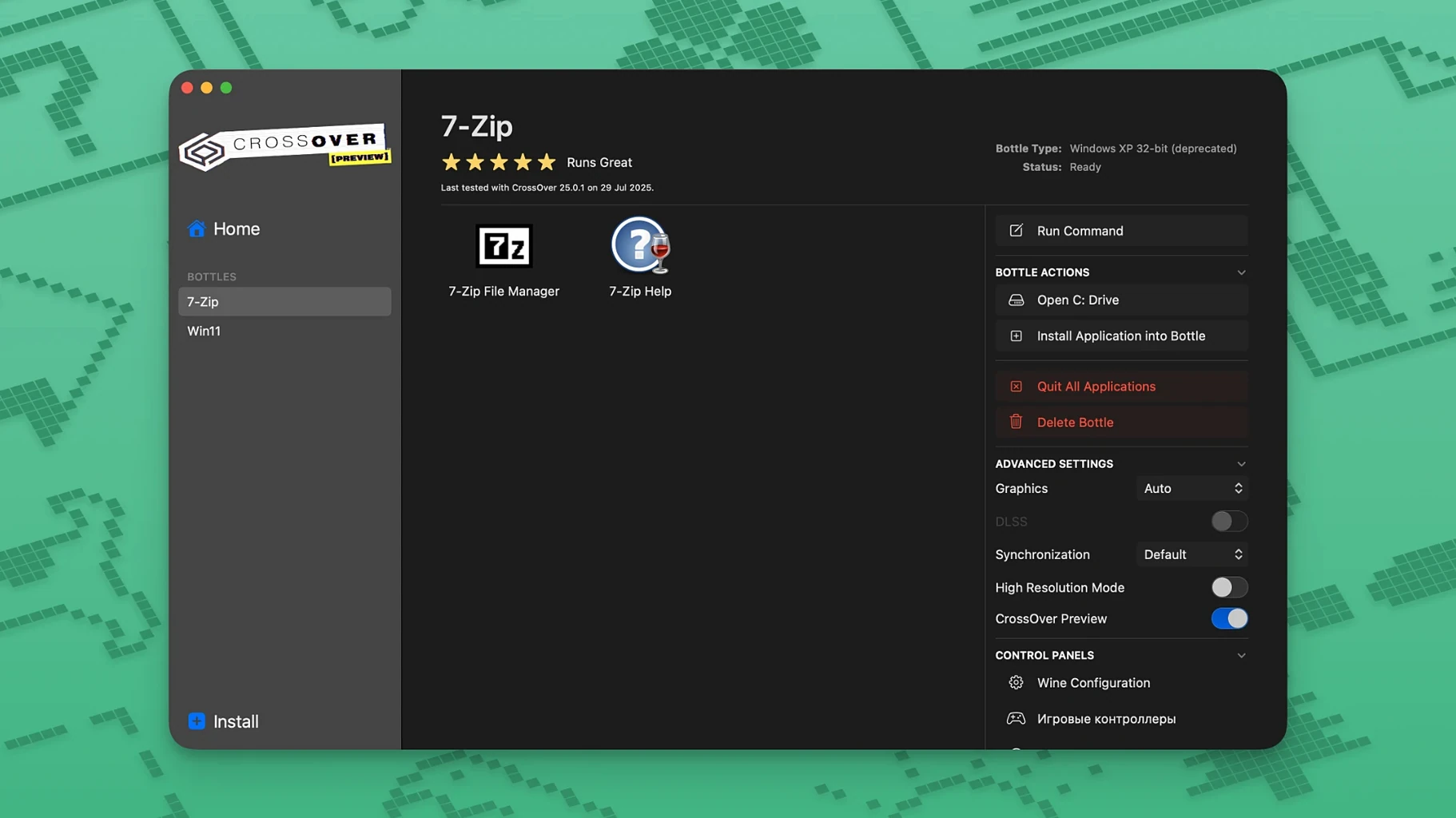
- Run command directly. The "Run Command" button in the bottle view opens a dialog where you can launch any .exe inside that bottle's environment — including tiny utilities and portable apps that never had an installer. Drag the .exe in, hit run, and it just works.
- Control panel shortcuts. Each bottle has a "Control Panels" submenu with quick access to Add/Remove Programs, Internet Settings, and the Windows Registry Editor. The registry editor is plain but functional — useful for the rare app that needs a manual key tweak.
- Bottle archiving. We touched on this earlier, but it's worth repeating. Archive a known-good bottle before any major change — a CrossOver update, a new app install, a Windows DLL override. Restoring takes seconds and saves hours of rebuilding.
- Dock integration, revisited. Once you've added a Windows app to the Dock, you can launch it without opening the CrossOver interface at all. Click the icon, the bottle starts, the app appears. It's the closest thing to feeling native.
- Log files, when things go sideways. If an app crashes, CrossOver keeps logs in the bottle's folder. Open them from the bottle menu under "Open C Drive" and dig into the windows/logs directory. The messages aren't always plain English, but they'll tell you if a missing DLL or a graphics call caused the problem.
One more: CrossOver remembers which bottles were running when you quit the app. Next launch, it offers to restart them. If you're mid-task and need to reboot your Mac, that little checkbox saves you from reconstructing your workspace.
A few timely fixes landed in 26.3.0:
- Diablo IV launches normally again after a recent game update.
- Epic Games Launcher downloads work on Mac once more.
- GOG Galaxy loads without trouble after its own update.
- macOS 10.15 Catalina or newer
- Intel processor (Apple Silicon runs via Rosetta)
Notes from other shops 0
Sign in or open a shop account to leave a note.
No notes yet. If you've used this on a shop Mac, tell me how it went.