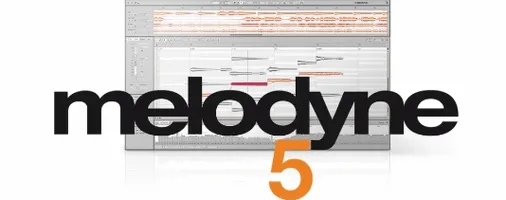
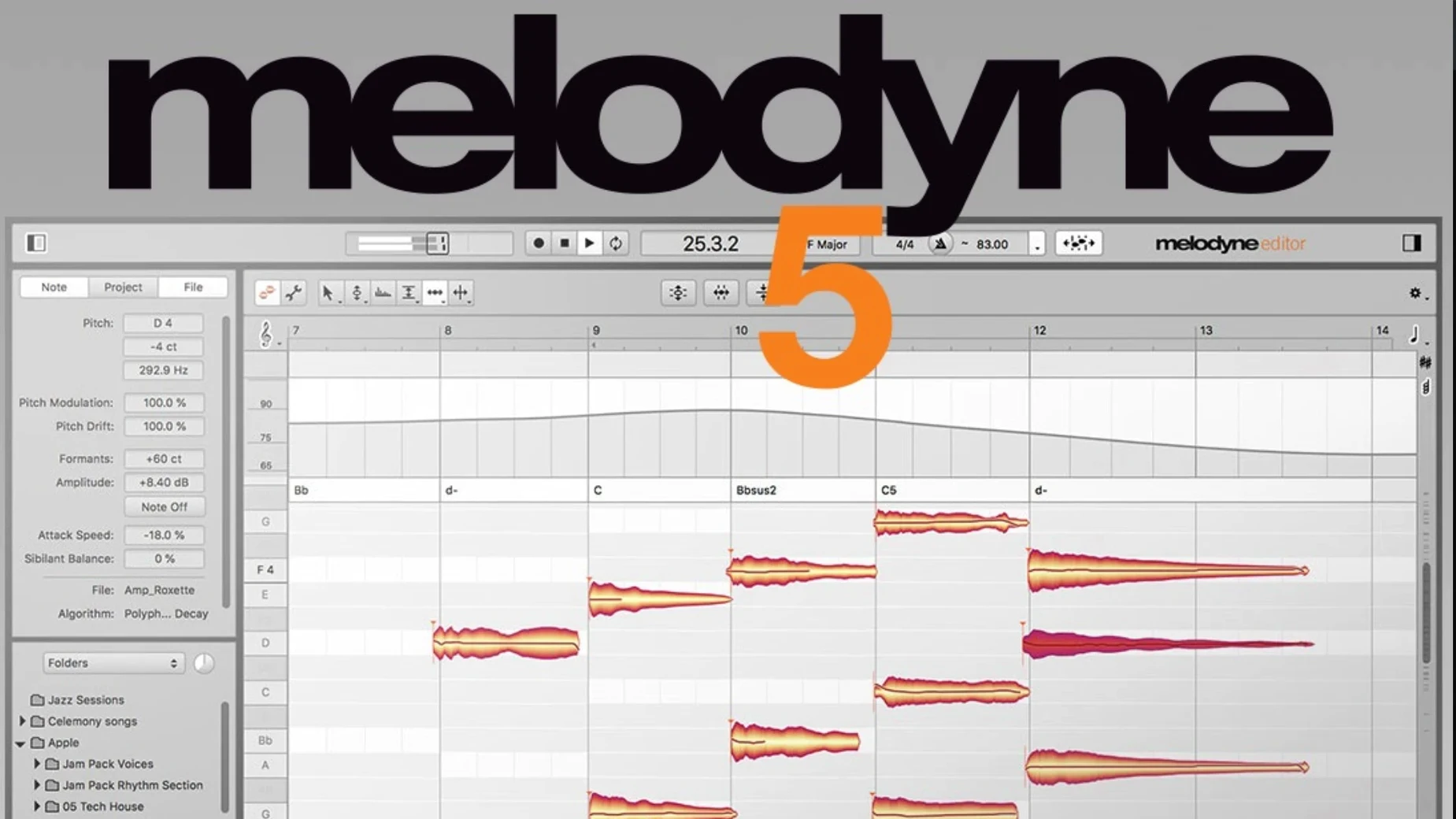
The Note Assignment mode can pull individual notes out of a strummed guitar recording and let you re-voice the chord after the fact. That kind of access is what sets Melodyne apart from a standard tuning plugin.
ARA mode — deep integration with DAWs that support the format, so you don’t have to transfer audio in real time; edits stay in sync with your arrangement.
Universal Binary — one installer covers Intel and Apple Silicon Macs. No extra steps.
Edition system — Essential, Assistant, Editor, and Studio. The feature set scales with the edition, but all of them share the same sound engine and core analysis.
Chord detection — the software recognizes pitches within polyphonic material. You can edit one note inside a piano chord without touching the others.
Sound parameters — it separates pitch, noise, breath, and intonation per note. Good for taming sibilance or adding air to a dull vocal take without EQ.
Mac requirements — macOS 10.12 or later. English interface.
DAW compatibility check before you install
The first one is almost always about whether it plays nicely with a DAW they already know. The short answer is yes — Melodyne works as a plug-in inside Logic Pro, Ableton Live, Pro Tools, Studio One, and most other major hosts. If your DAW speaks ARA, you skip the real-time transfer step and everything stays linked to your timeline. If not, you use the standard plug-in and capture a few bars; still painless, just one extra click.
Another question I hear a lot: “Will it run on my old Mac?” The installer covers both Intel and Apple Silicon, and the minimum macOS is 10.12. I’ve seen it chug a bit on a 2015 MacBook Air when you load a full multitrack session into it, but for single-track vocal edits or a guitar part, it’s perfectly usable. The Universal Binary means you’re not stuck hunting for a separate build.
People also ask if they need the Studio edition to get anything done. The truth is, Assistant and Editor cover a lot of ground. You get the core pitch and timing tools, the blobs, the macros. Studio adds multitrack note editing and the full polyphonic toolkit, but if you’re mainly tuning vocals or tightening up a bassline, you can do that without the top tier.
And yes, someone always asks, “Can I just drop a Melodyne torrent on my Mac and go?” You can grab the installer, mount the disk image, and run the standard installation. It’s a clean setup — no weird terminal commands or manual kext approvals. The activation is already handled, so what you download is what you run.
Fixing a drifted vocal in a home recording
Imagine someone recording in a bedroom with a decent condenser mic and an acoustic guitar. They lay down a vocal take that feels right emotionally, but the second verse drifts sharp on two syllables and the bridge ends with a note that wobbles in pitch just enough to bug them. They don’t want to comp six takes together — they want this one, fixed.
They open Melodyne as an ARA plug-in on the vocal track. The blobs appear almost instantly. They spot the sharp syllables, drag them down a few cents, and the drift is gone. The wobbly note at the bridge gets a quick pass with the Pitch Modulation tool — they reduce the vibrato depth just enough to settle it without making it sound robotic. Then they notice the word “stay” has a sibilant that bites. They pull up the Sibilant Balance control, ease it back, and the harshness softens without dulling the whole phrase.
Next, they look at the guitar track — a single condenser mic on the acoustic, picking up a mix of strummed chords and fingerpicking. They load it into Melodyne and switch to the polyphonic view. A couple of notes in the D chord ring out louder than the rest. They select the offending blobs, drop their amplitude a touch, and the chord breathes more evenly. Ten minutes of work, and the demo sounds like a mix, not a rough sketch.
When Melodyne doesn't show up in your DAW
Melodyne doesn’t see my DAW. This usually means the plug-in wasn’t validated on first launch. In Logic, check the Plug-in Manager and force a rescan. In Ableton, hold Alt and click Rescan in Preferences. If you’re on an Apple Silicon Mac and your DAW is running in native mode, make sure you’re using the AU or VST3 version that’s Universal — sometimes an older Intel-only component file lingers from a previous install and causes confusion.
Audio transfer is silent. If you’re using the non-ARA plug-in, you have to play the section you want Melodyne to capture. Make sure the transport is rolling and the track isn’t muted or solo-isolated in a way that starves the plug-in. Also check that you haven’t accidentally set the Melodyne plug-in to a blank instance — it happens more often than you’d think.
Trackpad scrolling feels weird. Version 5.4.2 improved this, but if you’re coming from an older build, the new behavior might surprise you. It’s smoother and more responsive, but if you prefer the old feel, you can adjust scroll speed in your Mac’s System Settings. No per-app sensitivity inside Melodyne, unfortunately.
Melodyne crashes on launch. The 5.4.2 update fixed a specific crash that could happen when opening the plug-in in ARA mode under certain conditions. If you’re still seeing a crash, try launching the standalone app first — sometimes that initializes preferences and clears whatever snag is tripping the plug-in. After that, the DAW version usually behaves.
Polyphonic detection misses notes. The algorithm is good but not magic. If a guitar chord is strummed hard and the strings ring into each other, or if a piano recording has heavy pedal bleed, Melodyne might misinterpret some blobs. Try re-analyzing with the “Percussive Pitched” algorithm for plucked or struck material. Also, trim the audio region to start exactly at the first transient — giving the analysis a clean attack helps it lock onto the right pitches.
Why snapping every note to perfect pitch backfires
Snapping every note to perfect pitch. This is the fastest route to a lifeless vocal. Real singers don’t hit exact equal temperament on every syllable. Use the Pitch Macro sparingly — a setting of 70–80% correction preserves character while fixing the worst offenders. You can always go back and hand-tune the one or two notes that still bother you.
Ignoring the blobs’ internal separations. When you double-click a vocal blob, Melodyne shows you pitch and noise components. Beginners sometimes drag the whole blob around and wonder why the breathiness changes. If you only want to shift pitch, make sure you’re grabbing the pitch center, not the noise band. Otherwise you end up chasing your tail on sibilants that suddenly sound unnatural.
Applying timing edits before committing to a tempo map. If your song doesn’t stick to a strict grid — and most live recordings don’t — let Melodyne analyze the tempo first, or set it manually. Dragging note starts and ends without a reference tempo makes the whole track feel jumpy. The tempo detection isn’t perfect, but it gives you a grid that’s close, and you can nudge notes relative to it instead of working blind.
Tuning the take before comping. This one’s a workflow trap. If you have multiple vocal takes, comp the best phrases together first, then tune the composite. Melodyne can analyze each take individually, but if you tune first and then chop, your edits get fragmented across blobs and you’ll have a mess of overlapping corrections. One clean comp, one clean tuning pass.
Forgetting that formant and pitch are independent. A beginner will shift a vocal up three semitones and wonder why it sounds chipmunk-like. That’s formant shift, not pitch. Melodyne lets you change pitch without touching formants, or vice versa. If you want a note higher but with the same vocal weight, drag pitch up and leave the Formant tool alone. If you actually want that gender-bend effect, adjust formants deliberately — don’t stumble into it.
Skipping the backup of the original audio. Melodyne’s editing is non-destructive inside the plug-in, but once you bounce or commit the track in your DAW, those blob edits are printed. Keep the raw take on a muted playlist or a hidden track. It takes two seconds and saves you from re-recording if you decide three weeks later that the “corrected” bridge sounds sterile.
Version 5.4.2 is a maintenance update that keeps things running smoothly on newer Macs:
- Adaptations for macOS Sequoia
- Trackpad scrolling feels more responsive
- Fixes a crash that could happen when opening Melodyne in ARA or plug-in workflows
- macOS 10.12 or later
- Intel or Apple Silicon Mac (Universal Binary)
- English interface
Notes from other shops 0
Sign in or open a shop account to leave a note.
No notes yet. If you've used this on a shop Mac, tell me how it went.