Build a grid with ImageGrid
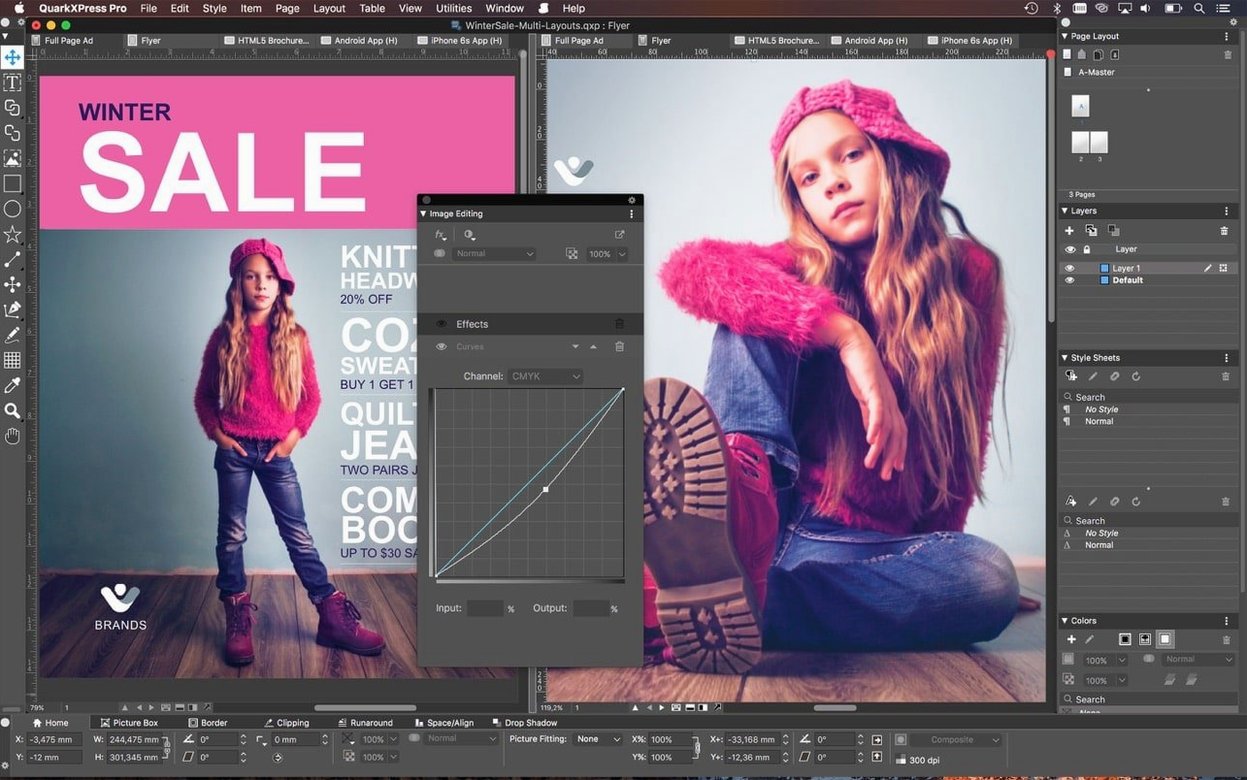
ImageGrid lets me set up a structured photo layout once and have it repeat cleanly across as many pages as I need. The latest version keeps master page elements locked in place on every auto-generated page, so nothing shifts out of alignment.
Refine copy in the Story Editor
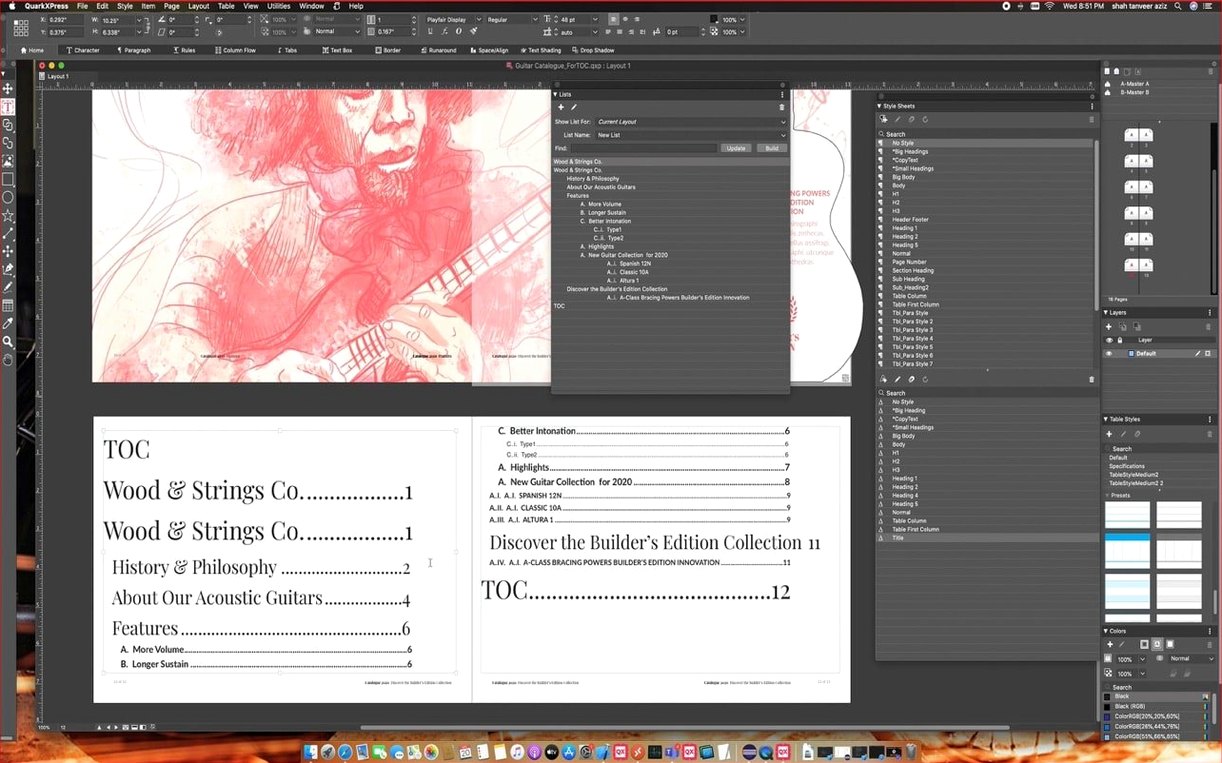
When I'm working on a multi-page booklet, I switch to the Story Editor to focus on the words without the distraction of the visual layout. It gives me a full text-editing space for catching typos, restructuring paragraphs, and running spell checks in any of the 30-plus supported languages.
Export a finished ePub
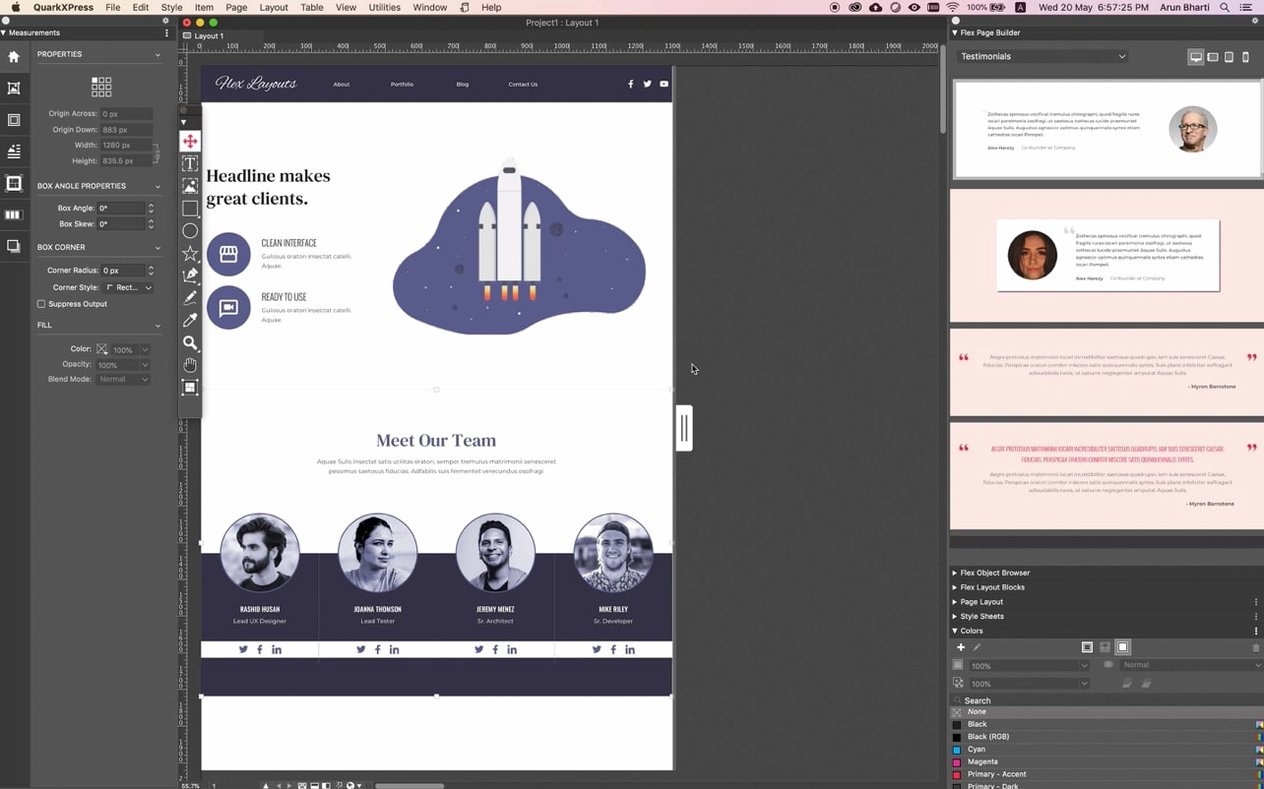
Once everything reads well and the graphics sit right, the built-in ePub export utility turns the project into an ebook I can preview on a Blio eReader or share digitally. It's a straightforward path from a printed-page design to a screen-ready publication.
When text frames refuse to link into a single story
People often hit a wall when text frames refuse to link the way they expect. If Linkster isn't connecting boxes, check that neither frame already belongs to a different chain — a frame can only sit in one story at a time. Break any existing links first, then drag between the frames again.
Another headache is misplaced master page items after using ImageGrid. The fix in version 22.0.1 keeps master elements consistent on auto-generated pages, but if you're opening an older project, go to the Page Layout palette, right-click the master page, and choose Reapply Master. That usually snaps everything back into place.
When an ePub export looks garbled on certain readers, the culprit is nearly always a text box that overlaps an image frame in a way the export engine misinterprets. Switch to Reflow View before exporting — it shows you exactly how content will reorder on a device screen. Adjust any stacked elements until the reading order flows top to bottom without jumps.
If QuarkXPress feels sluggish on a large project, disable live font preview in the measurements palette. It's a small toggle that frees up noticeable responsiveness, especially when you're scrolling through long documents with many typefaces.
A standalone workshop versus Adobe’s subscription ecosystem
Next to Adobe InDesign, QuarkXPress occupies a narrower and more deliberate lane. InDesign pulls you into a subscription ecosystem and ties its strengths to the rest of Creative Cloud. QuarkXPress feels like a standalone workshop — everything from mathematical equation typesetting to the Story Editor lives inside one self-contained application without cross-app dependencies.
Compared to Affinity Publisher, the difference shows up in long-document muscle. Affinity Publisher handles smaller booklets and marketing collateral smoothly, but QuarkXPress offers deeper prepress controls, conditional styles that apply rules across hundreds of pages, and callouts that move grouped objects with flowing text — features a magazine production team genuinely relies on.
Scribus, the open-source alternative, covers basic page layout well enough for community newsletters, but it lacks the polished typographic engine, the Blio eReader support, and the direct Illustrator and Photoshop import that QuarkXPress treats as routine. When a print run demands exact color separations and spot-color handling, the gap widens quickly.
Conditional styles that survive four language editions
Book designers and long-document specialists are the natural home for QuarkXPress on a Mac. If you're laying out a 300-page technical manual with numbered equations, cross-references, and an index that needs to survive four language editions, the conditional styles and equation support introduced in version 22.0 save days of manual formatting.
Small-press publishers who handle both print and digital editions from a single file also feel the benefit. One project can produce a print-ready PDF, an ePub for iBooks and Kindle, and a version that looks right on a Nook — without duplicating work across multiple applications.
Designers moving from an older quarkxpress version who want to keep their existing file library intact while gaining Apple Silicon speed will find the transition straightforward. The single file format across regions means files opened on a Mac in Tokyo behave identically on a Mac in Berlin, which matters when you're sharing projects with an international prepress team.
Swap the default measurement unit to points, millimeters, or picas
Open the preferences pane and switch the default measurement unit to match your workflow — points for print precision, millimeters for European print shops, or picas if you work with newspaper grids. Leaving it on inches when you think in picas leads to constant mental arithmetic.
Right below that, set the default story direction for new text boxes. If you work in Japanese or Traditional Chinese, changing the direction to vertical before you start building templates avoids reflow surprises later.
In the Display tab, drop the Greeking threshold to 4 points. The factory setting hides small text below 7 points as gray bars, which makes proofreading fine print — footnotes, captions, legal disclaimers — harder than it needs to be.
Turn on Auto Save with a 5-minute interval. QuarkXPress doesn't nag you about it during setup, and losing an afternoon of layout work because a crash snuck in is a lesson you only need once. The recovery file sits quietly in the background until the moment you're grateful it exists.
Here's what changed recently:
- Native support for mathematical equations arrived in version 22.0, so you can typeset formulas without a separate tool.
- The ImageGrid feature got a polish — master page elements now stay consistent across every auto-generated page.
- The welcome screen in v22.0.1 was redesigned with clearer presets and quicker access to tutorials.
- macOS 12 or later
- Apple Silicon or Intel 64-bit processor
Questions from the stall
Which macOS versions does QuarkXPress 22.0.1 support?
It runs on macOS 12 Monterey and later, including macOS 14 Sonoma, macOS 15 Sequoia, and macOS 26 Tahoe.
Does QuarkXPress 22.0.1 run on Apple Silicon Macs?
Yes, version 22.0.1 runs natively on both Apple Silicon and Intel 64-bit Macs.
What's new in the welcome screen for version 22.0.1?
The welcome screen was redesigned with project size presets, customized workspaces, built-in tutorials, and quick access to learning resources.
Notes from other shops 0
Sign in or open a shop account to leave a note.
No notes yet. If you've used this on a shop Mac, tell me how it went.