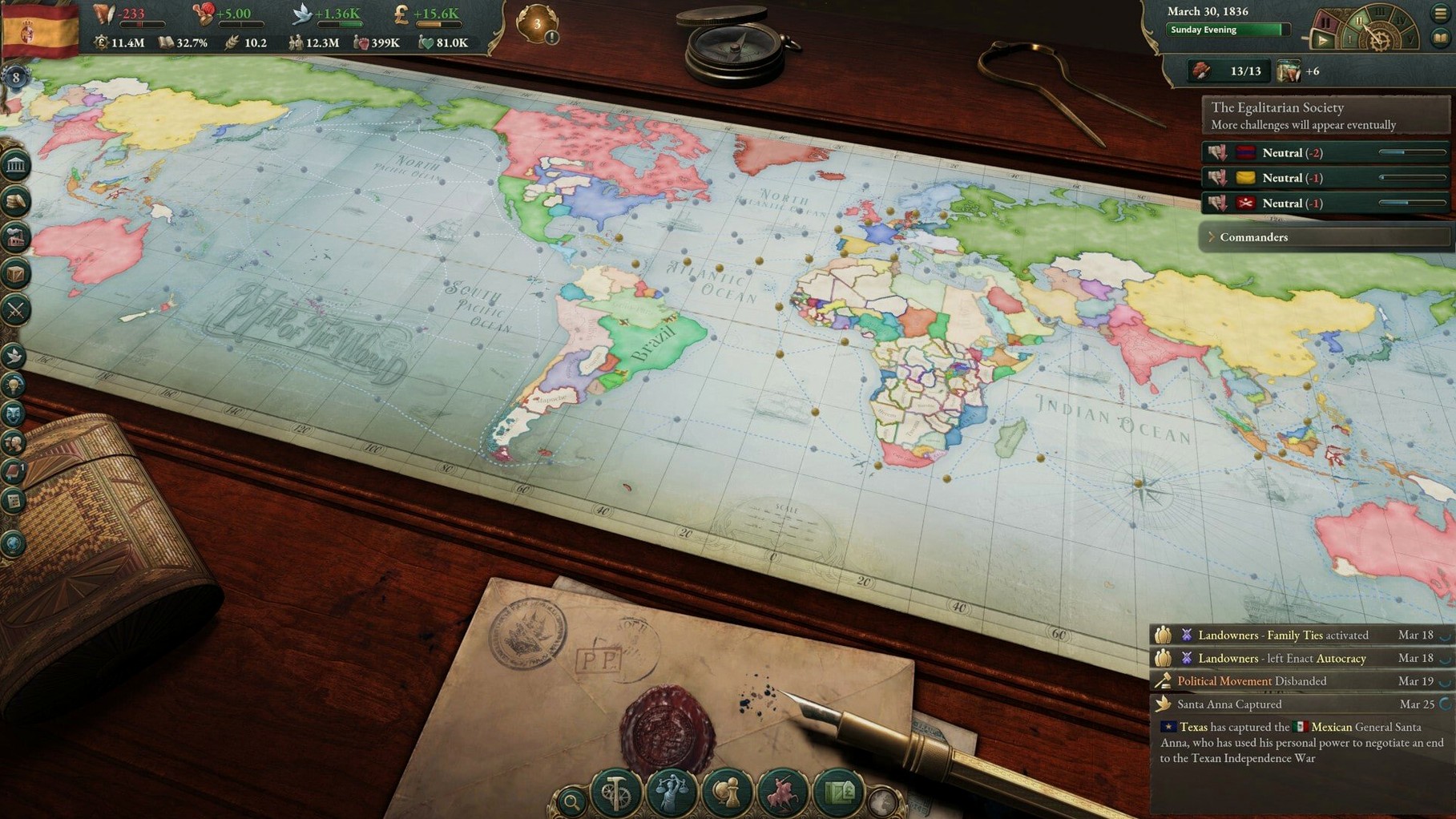
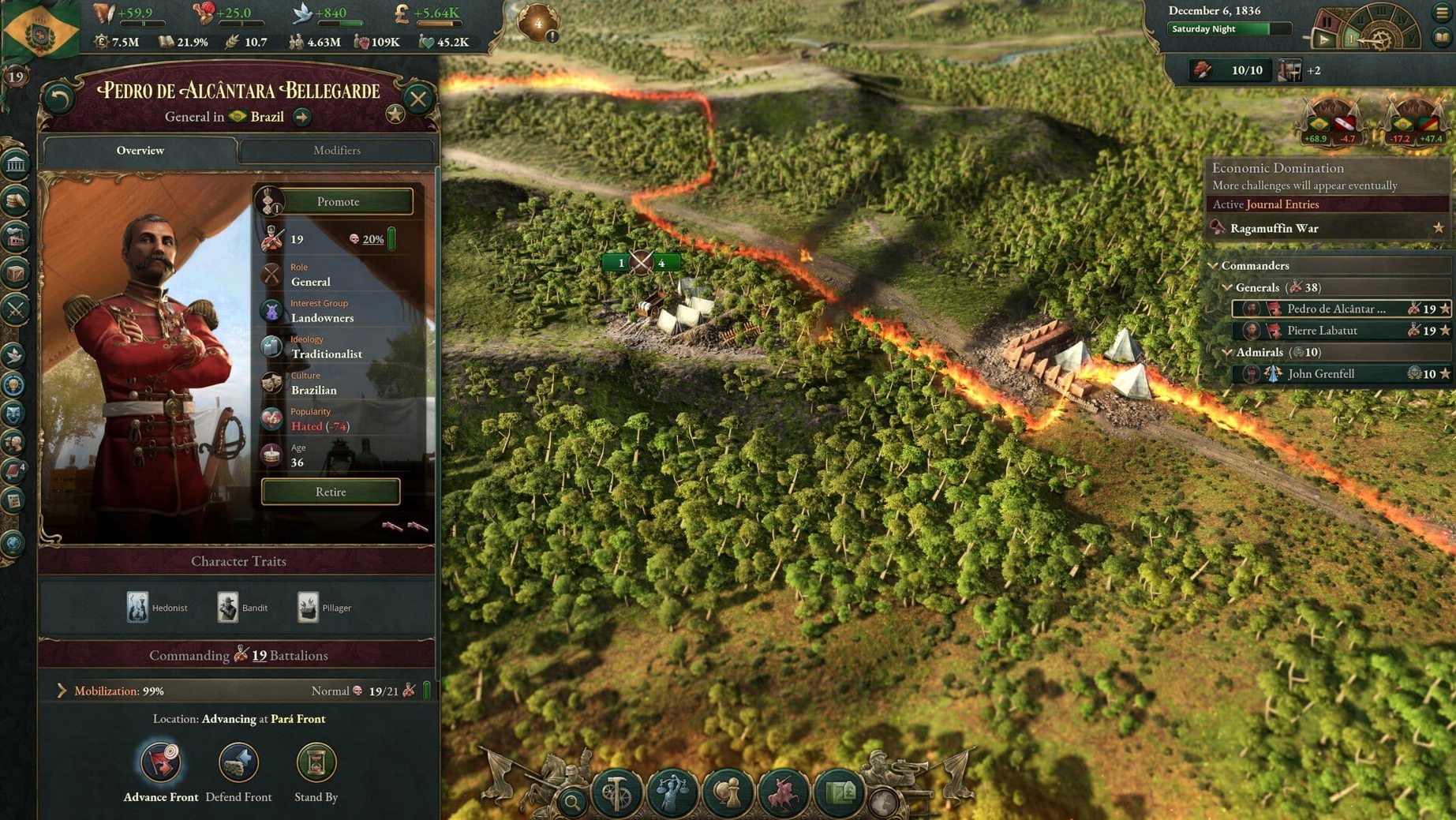
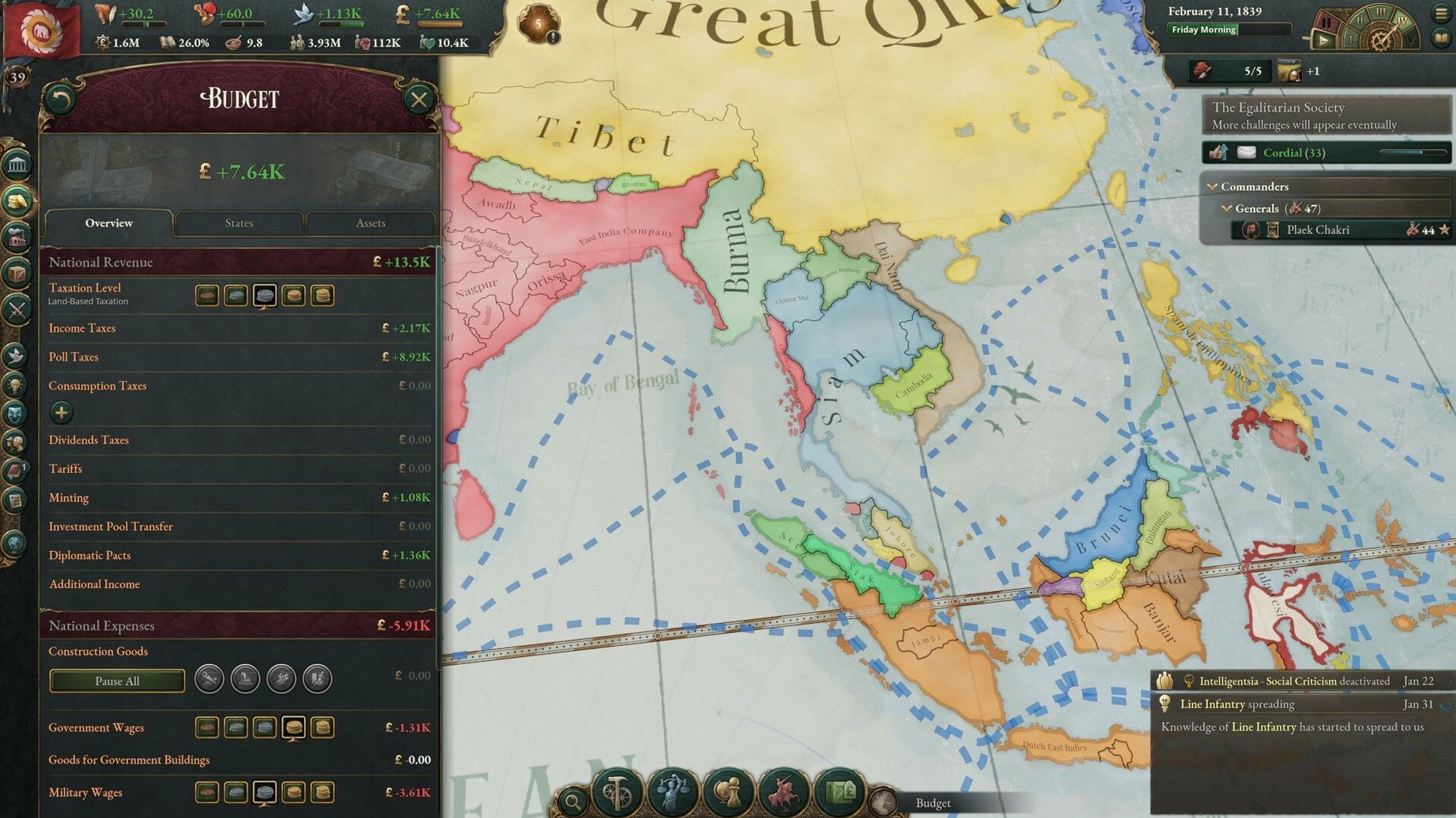
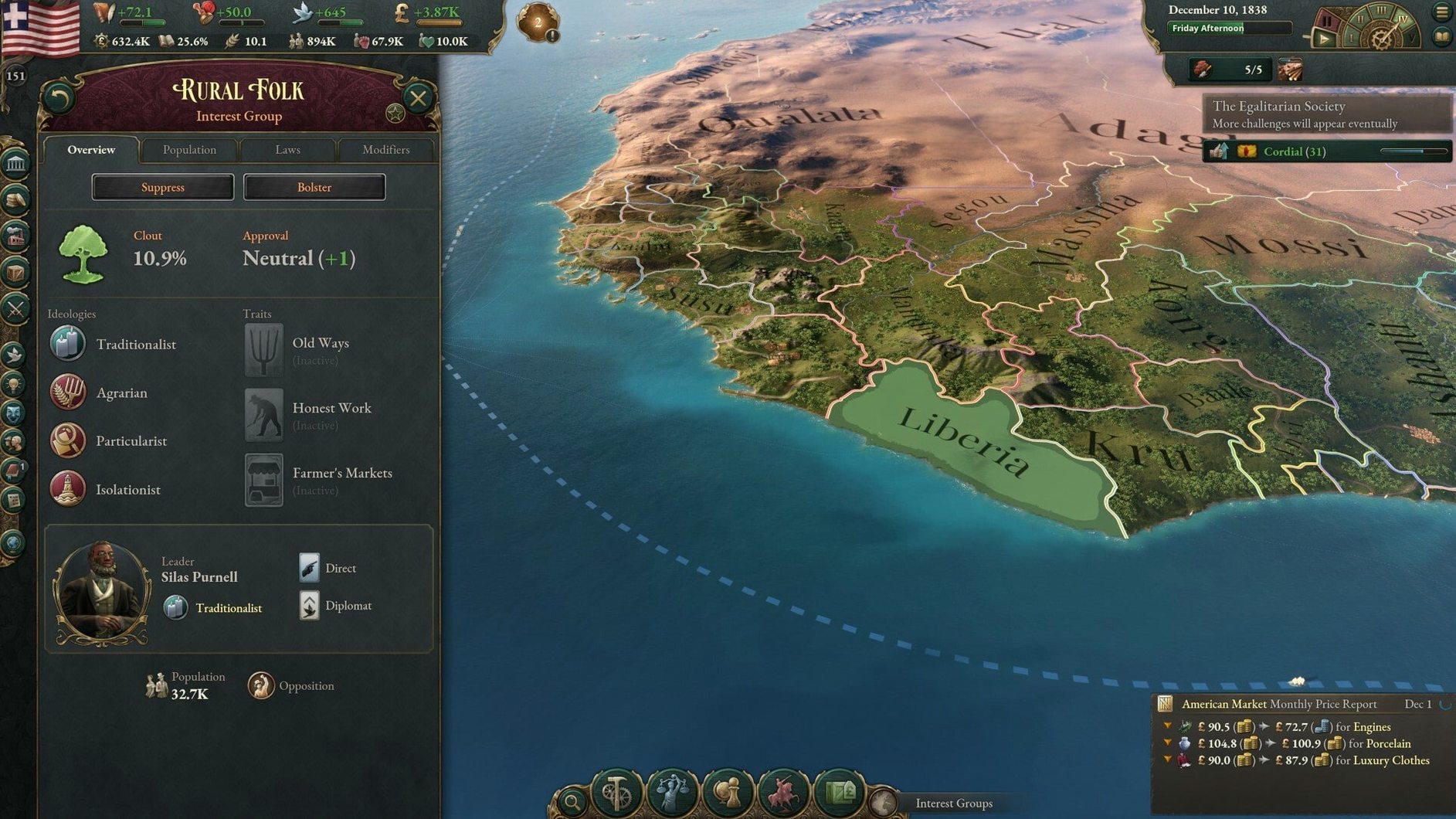
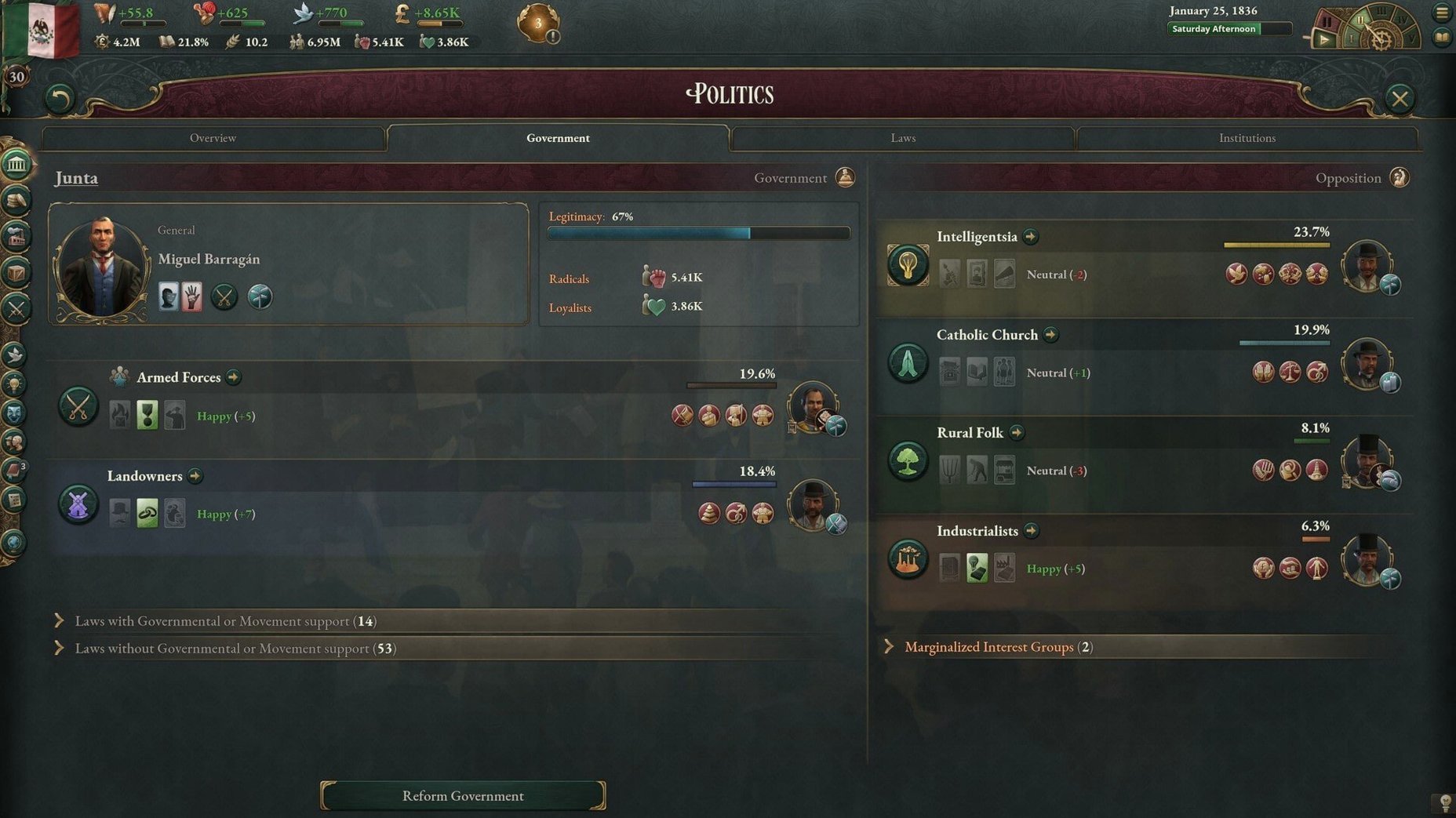
Victoria 3 is a grand strategy game about guiding a nation through a century of dramatic change, from the early Victorian era to the brink of World War II. It cares less about painting the map your color and more about the people living on it. You manage industrial development, political reforms, and diplomatic maneuvering while dozens of population groups push their own agendas.
If you like turning iron into engines and tweaking tax laws
This game rewards patience with systems. If you enjoy watching a factory line turn raw iron into profitable engines, or tweaking tax laws to see how a new middle class reacts, you will find a home here. The draw is internal management, not rapid conquest. You might spend an hour reforming a constitution, balancing a budget, or researching new production methods while watching population groups shift their political views. Military strength matters, but mostly as diplomatic leverage—send a fleet to pressure a rival, not necessarily to start a war. Players who like spreadsheet-adjacent problem solving, where expanding a textile mill feels like a genuine victory, are the core audience.
No tactical armies, just decade-long tariff ripples
If you want direct control over armies on a tactical map, Victoria 3 will frustrate you. War is abstract, not hands-on. The pace is slow and the feedback loops are long; a tariff decision might take a decade of game time to show its full effect. Players who prefer clear, immediate win conditions or traditional 4X expansion will likely find the game opaque. It simulates dozens of countries over exactly one hundred years, but the story is about societal pressure, economic trends, and the messy, often boring work of running a state. It is a niche within a niche—perfect for a specific, systems-loving mind, and not much fun for anyone else.
A newspaper editor in Bavaria
Imagine you are running Bavaria in the 1840s. You have no colonial ambitions, a modest army, and a population that is starting to read newspapers. Your goal is not to conquer Prussia but to become the cultural and industrial heart of southern Germany. You lower tariffs on imported grain to keep food cheap, which upsets your landowning aristocrats but stabilizes the growing urban workforce. You invest in paper mills and a fledgling chemical industry, watching the intelligentsia gain political clout. When Austria pressures you into a customs union, you use the threat of a Prussian military alliance as a diplomatic feint—never firing a shot, but keeping your sovereignty intact. That is a typical Victoria 3 session: staying small, staying agile, and letting your factories and reforms do the talking.
Runs on Apple Silicon without Rosetta overhead
Does it run on Apple Silicon? Yes, version 1.13.11 includes a native ARM build alongside the 64-bit Intel version. On a Mac mini M4 it runs without Rosetta overhead, and the late-game simulation churn stays manageable even with hundreds of pop groups recalculating their needs every tick.
Is it an older game repackaged for modern Macs? The Victoria series started two decades ago, but this is a modern grand strategy title built on the Clausewitz engine. The interface handles high-DPI displays well, and the tooltips—your real best friend for the first twenty hours—nest information in a way that feels designed for screen-heavy learning.
Do I need an internet connection? No. Activation is not required, so once you finish the drag-to-Applications install, you can launch it offline. The simulation does not phone home for anything.
How steep is the learning curve? Steep, but the game funnels you toward specific systems. Pick a smaller, stable country like Belgium or Sweden for your first run. If you try to command Russia on day one, your economy will catch fire before the first election cycle.
Start as a middle power and pin your market panel
When you mount the image and drag Victoria 3 into Applications, resist the urge to hit "Play" as a great power. Start with a middle-tier nation and do three things in the first session:
- Pin your market panel. Watch what goods are expensive. That one item with a +40% price is your first industrial target—build a factory for it, even if you do not yet understand the whole supply chain.
- Check the laws tab immediately. Before you unpause, look at your taxation, education, and citizenship laws. Changing one law is a multi-year project that can trigger a revolution, so you want to know what you are working with from the start.
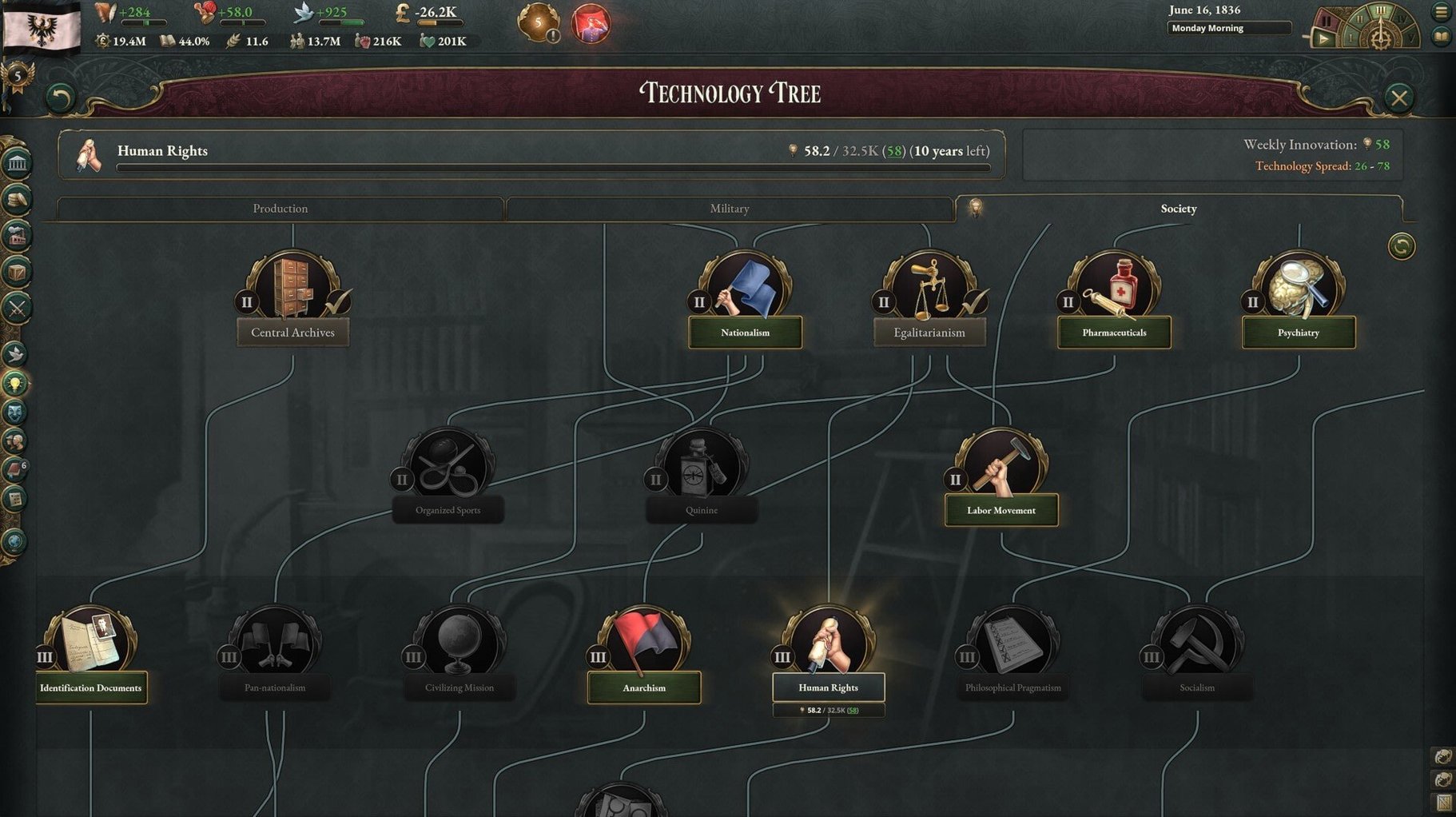
- Ignore the military for a while. Unless a neighbor is hostile and mobilizing, spend your first decade on construction sectors and universities. The technology tree opens up production methods that make your army relevant later without needing to manually recruit a single regiment.
One tip: the tooltip delay can be shortened in settings. By default it takes a moment to appear; reducing it makes the interface feel much more responsive when you are speed-reading pop needs and factory profitability numbers.
A handful of fixes and balance tweaks landed in version 1.13.11:
- Fixed a crash that could trigger at the turn of the month when sway offers were pending in a diplomatic play.
- Adjusted the outcome options for the A Doctrine of Iron and Steel event.
- Tweaked Banana Plantation output values.
- Architecture: Apple Silicon and Intel
- Tested on macOS Tahoe with Mac mini 2024 M4
Questions from the stall
What time period does Victoria 3 cover?
The game runs from 1836 to 1936, covering the Industrial Revolution, the Victorian era, and the lead-up to the Second World War.
Notes from other shops 0
Sign in or open a shop account to leave a note.
No notes yet. If you've used this on a shop Mac, tell me how it went.