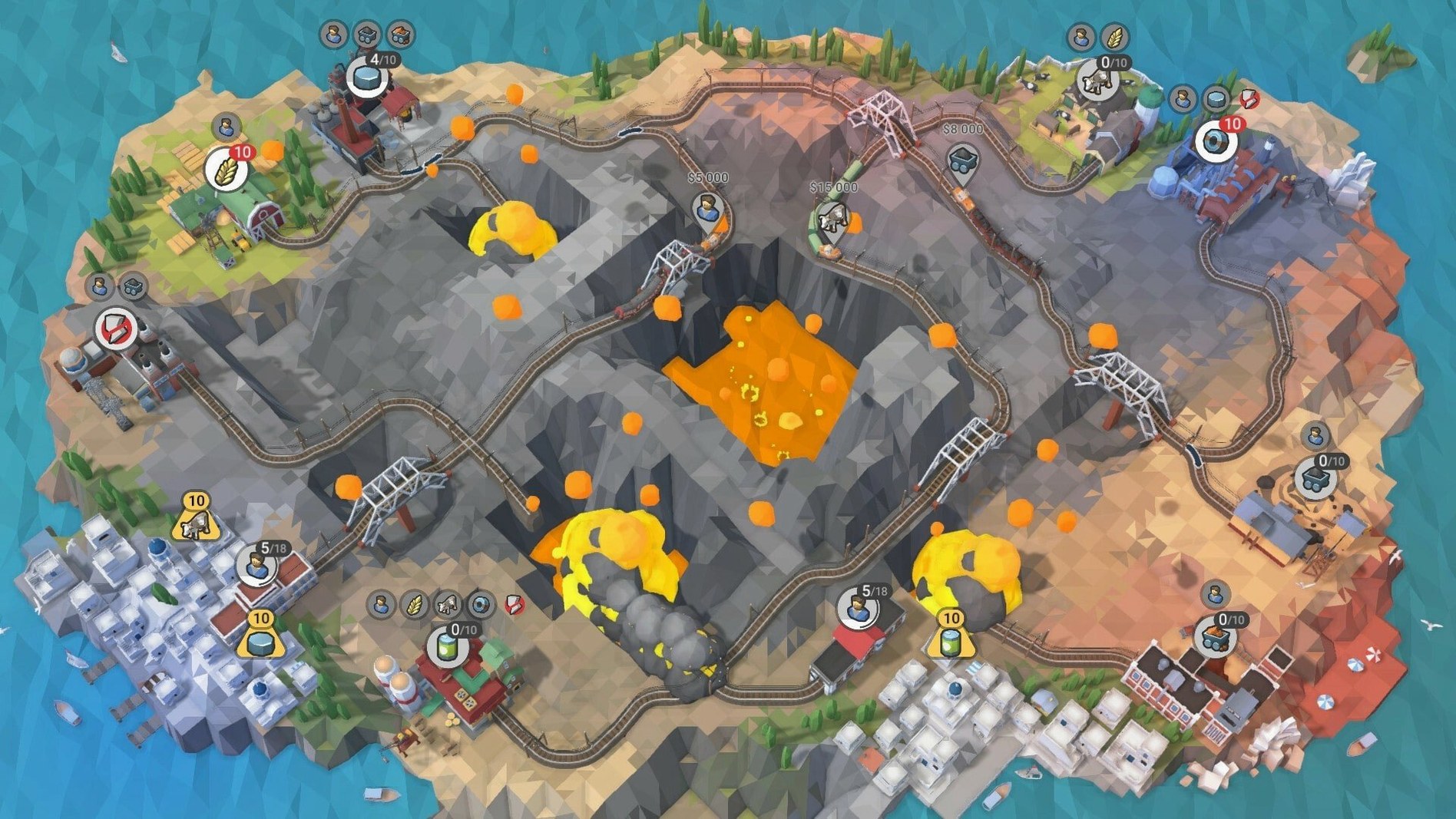
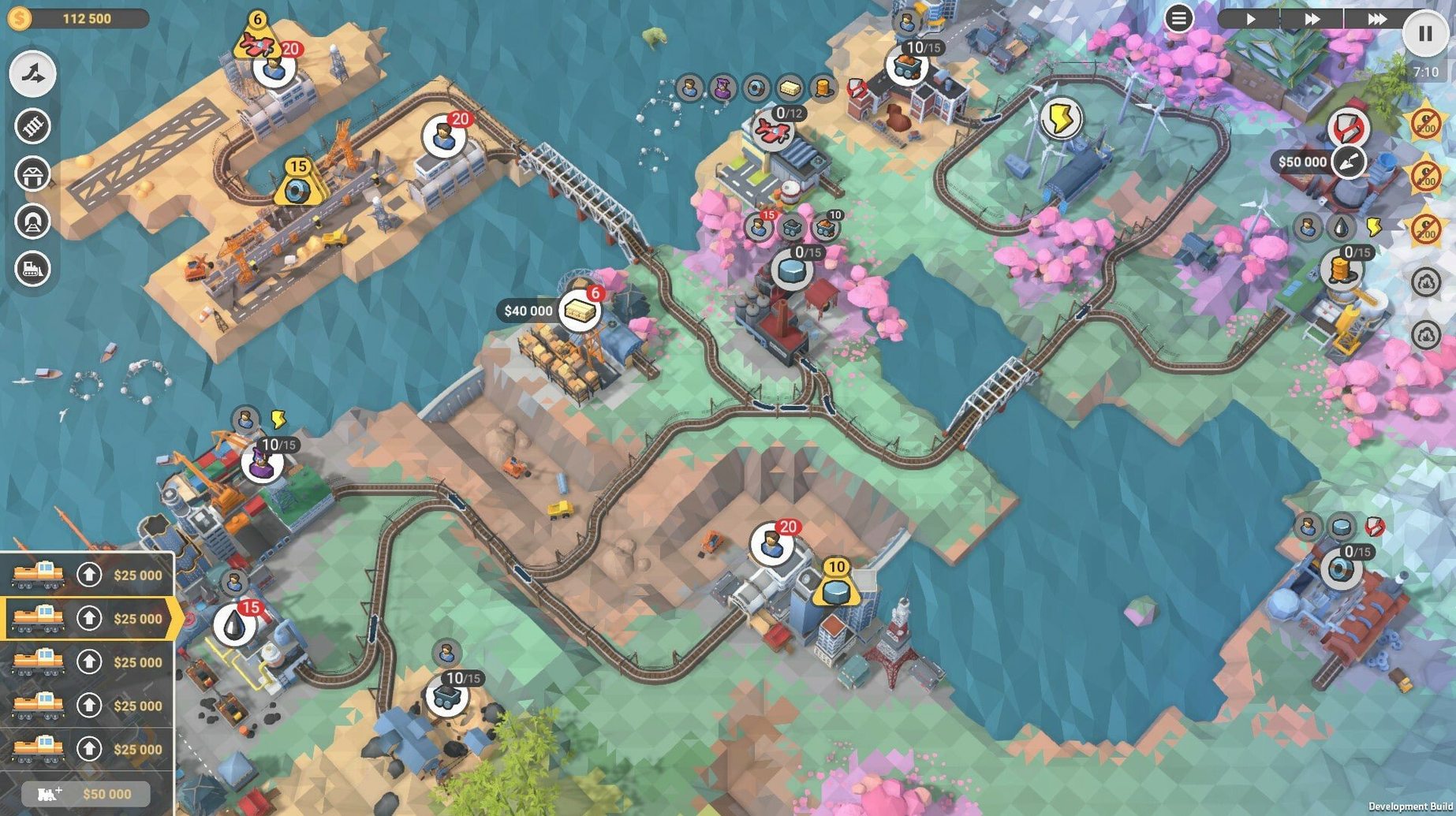
Train Valley 2 suits anyone who likes their strategy served with a side of charming logistics. You take a tiny railway company and shepherd it through the ages, laying track to connect cities with the industries that keep them humming.
Build the network
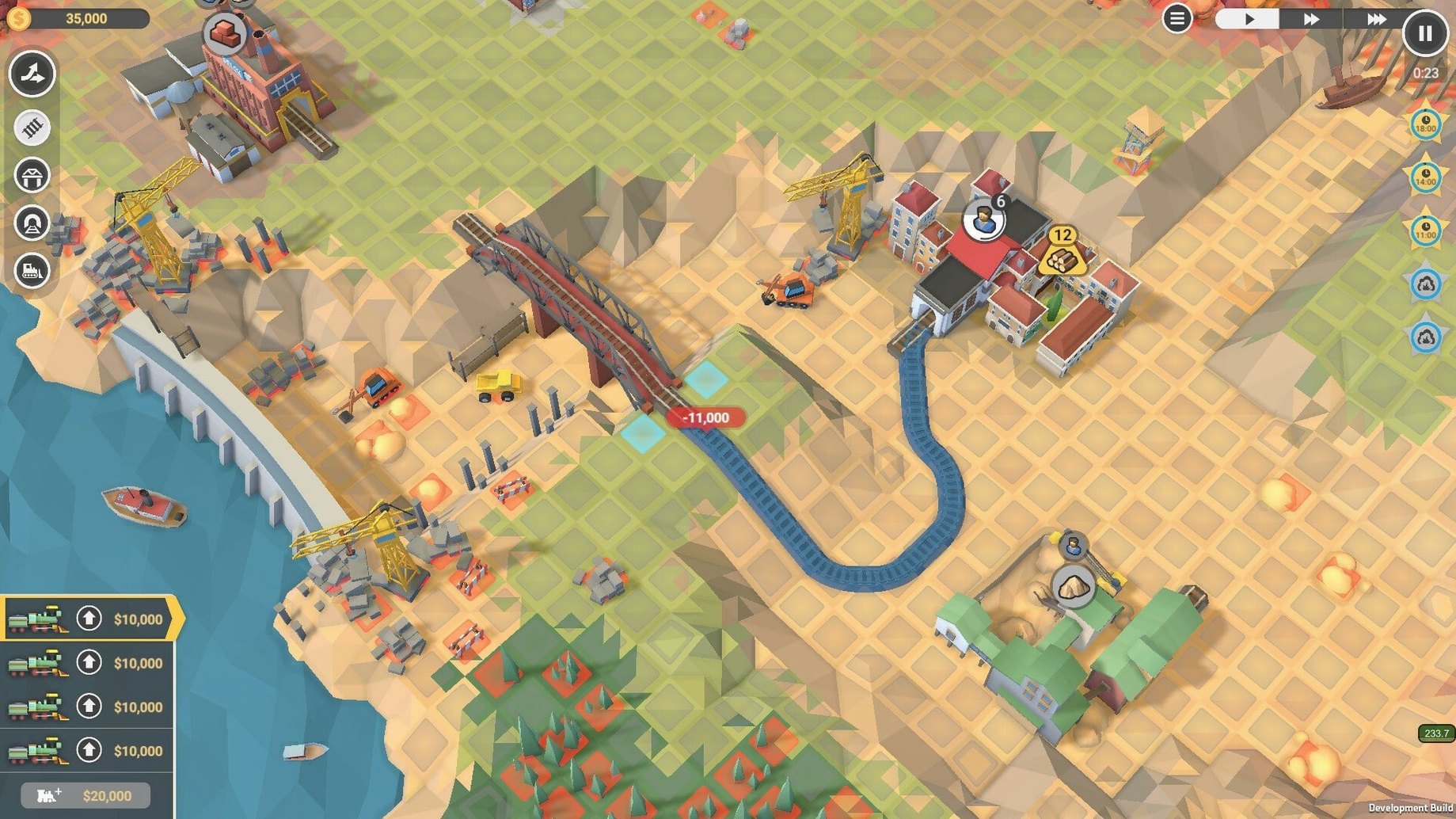
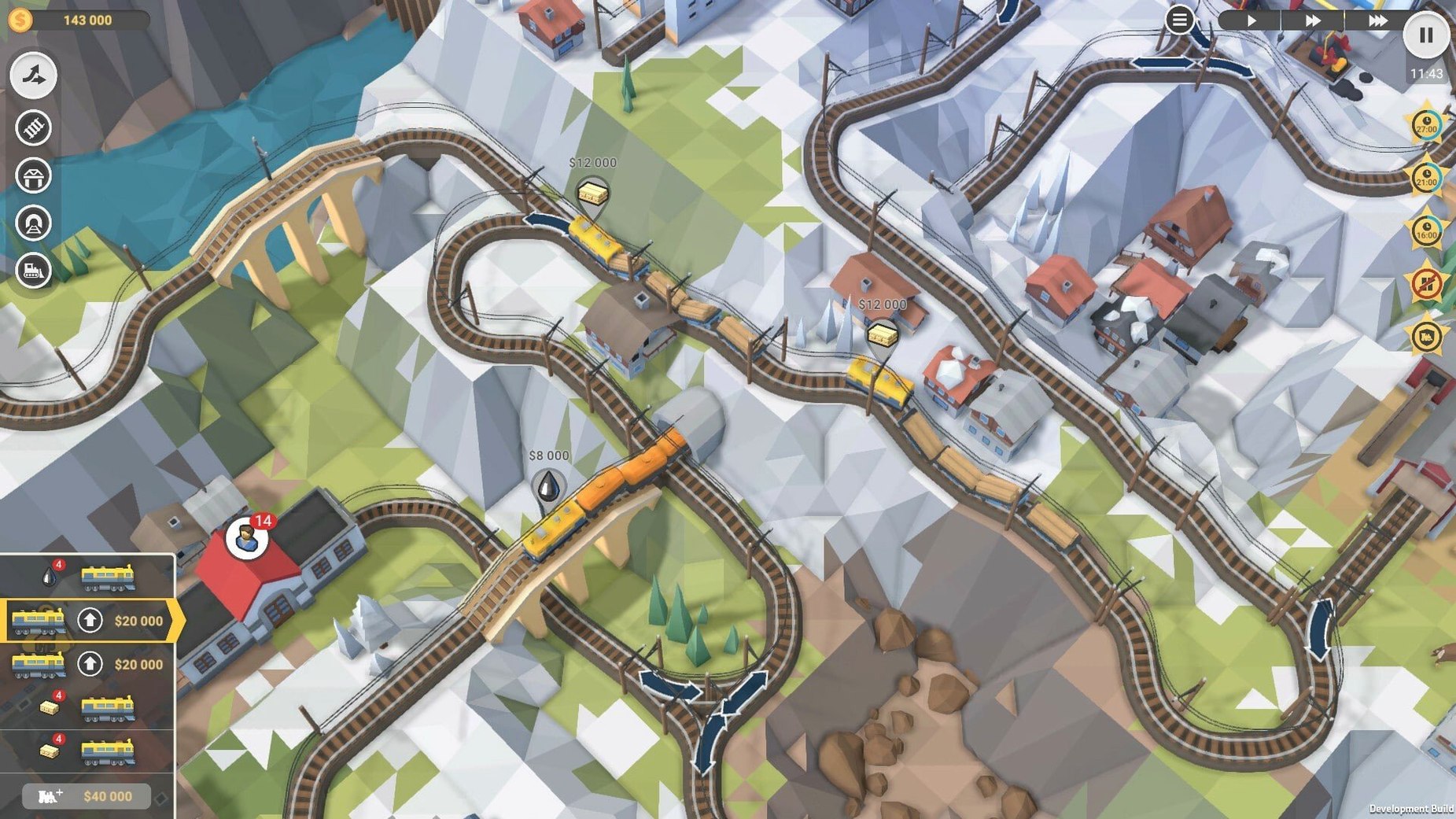
Your real work is designing a network that doesn't jam up. You lay track tile by tile, deciding which factory links to which city while keeping fast passenger trains from tangling with slow freight.
Manage the fleet
You buy 18 different locomotives over time and match them to 45 railcar types, each with its own cargo. A steam engine pulling grain feels very different from a modern diesel on a timed express run.
Keep the economy moving
Every level is a small economic puzzle where demand ticks upward. You expand stations, reroute trains, and learn that one well-placed viaduct solves more problems than five extra engines ever could.
Workflow: taking a level from chaos to five stars
I usually start a level by pausing straight away — the clock doesn't run, and I can study where the cities and factories sit. I trace the shortest sensible line between each pair that needs to trade, but I also look for shared track sections early. A river or a mountain ridge often forces a natural corridor, and I'd rather pay for one bridge than three.
Next I place the first few trains. I keep the fleet small at the start — one engine per route, with railcars matched to the cargo. A grain hopper behind a slow steamer works fine for a farm-to-bakery line; I save the faster locomotives for passenger runs where the timer is tighter. Before I unpause, I check every junction. Two trains crossing at grade is the fastest way to lose a star rating.
Once the level is running, I watch for the first bottleneck. It's usually a factory with two incoming lines and only one platform. I pause, add a siding or a second platform, and adjust the signal order. The last pass before the finish is about trimming: I sell redundant track, retire a locomotive that's sitting idle half the time, and reroute the remaining trains to use the cleanest paths. That's when the star rating usually jumps from three to five.
Minimalist transit without the cargo economy
Mini Metro shares the minimalist transit-puzzle DNA, but it strips away the economic layer entirely. You're drawing subway lines for abstract stations; there are no locomotives to buy, no industries to supply, and the pressure comes purely from overcrowding. Train Valley 2 feels cosier and more deliberate — you're building a little world, not just managing flow.
Transport Fever 2 goes the other direction. It's a full transport simulation with huge maps, freeform track laying, and deep supply chains. The trade-off is time: a single map can run for hours. Train Valley 2 respects your afternoon. A level takes ten to twenty minutes, and the puzzle constraints mean every piece of track matters instead of fading into a sprawling network.
Railway Empire sits in between, with a stronger historical business layer than Train Valley 2. You manage staff, research technologies, and compete against AI rivals. It's richer in economic simulation but less focused as a puzzle. Train Valley 2 doesn't ask you to worry about stock prices or rival buyouts — just the trains, the tracks, and the clock.
Scenario: the small-shop owner unwinds
After a day of inventory spreadsheets and packaging orders, I don't want a game that feels like more work. I'll open Train Valley 2 on a rainy Seattle evening, pick a late-industrial-era level, and spend twenty minutes untangling a rail yard. The low-poly towns and soft soundtrack make it feel like a wind-down toy rather than a spreadsheet exercise. One level usually turns into three, and I'll notice I've been smiling at a little steam engine chugging across a viaduct I placed perfectly ten minutes earlier. For a self-taught business owner who spends all day optimizing real systems, optimizing a tiny railway is surprisingly restorative.
Here's what shipped in the latest release:
- Version 1.9.4 — the current build, with fixes and polish that keep your rail network running smooth.
- macOS 10.12 or later
- Runs on Intel and Apple Silicon Macs
Questions from the stall
Does Train Valley 2 run on Apple Silicon Macs?
Yes, the build supports both ARM and 64-bit x86, so it runs natively on Apple Silicon as well as older Intel Macs.
What languages does the interface support?
You can play in Russian, English, German, Spanish, Italian, Simplified Chinese, Korean, Polish, Portuguese, Turkish, French, Czech, Swedish, or Japanese.
Notes from other shops 0
Sign in or open a shop account to leave a note.
No notes yet. If you've used this on a shop Mac, tell me how it went.