
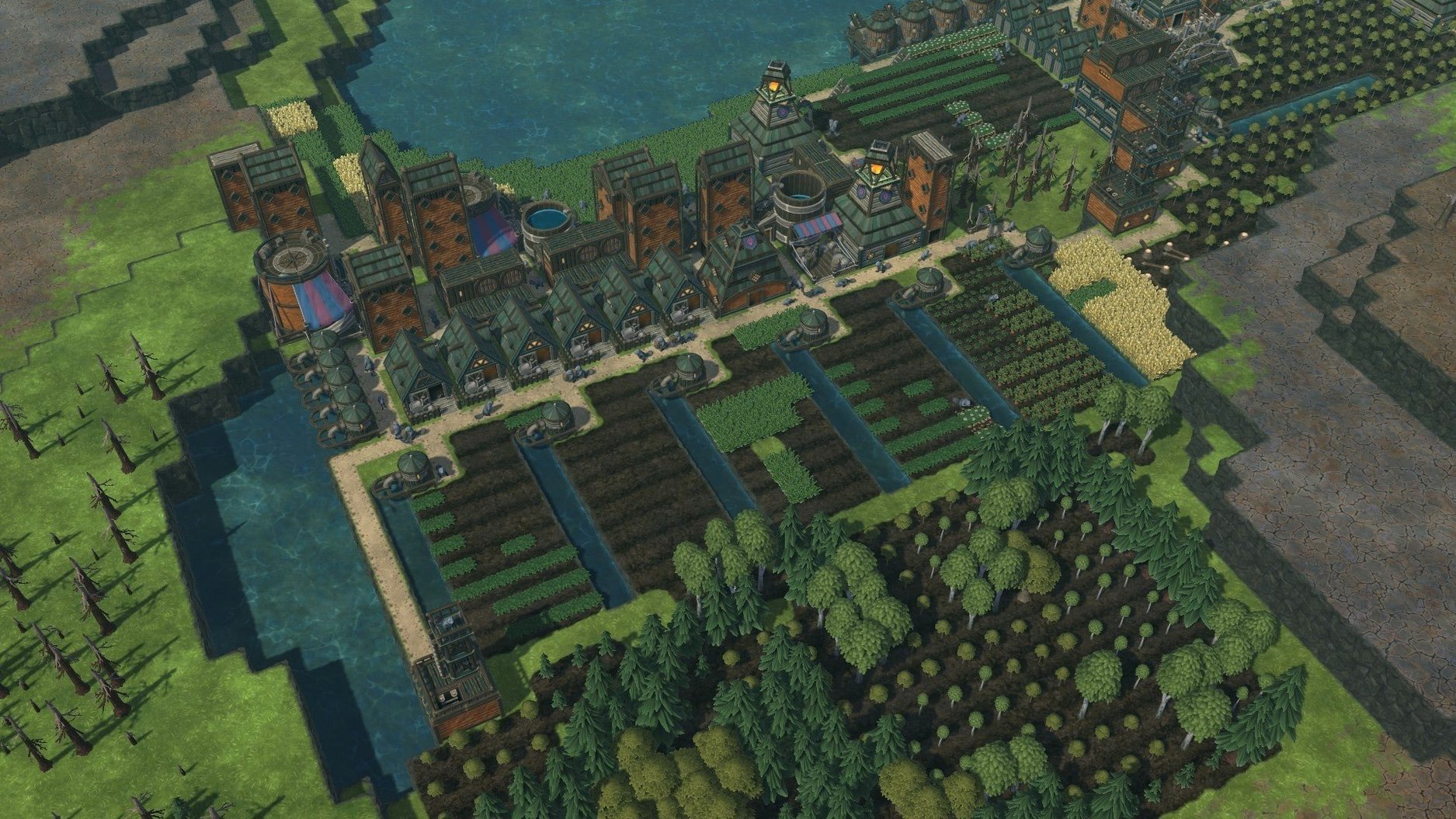
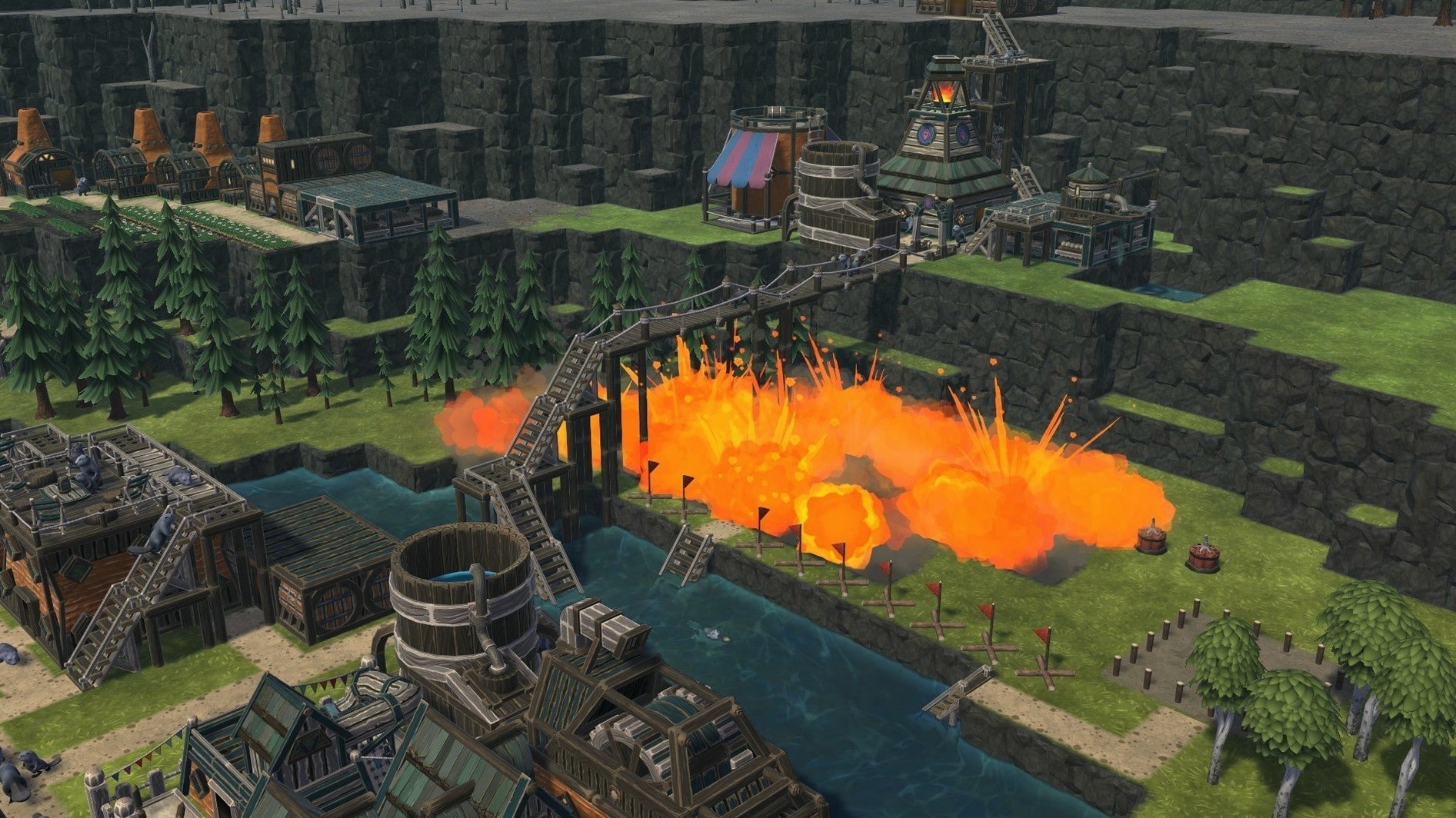
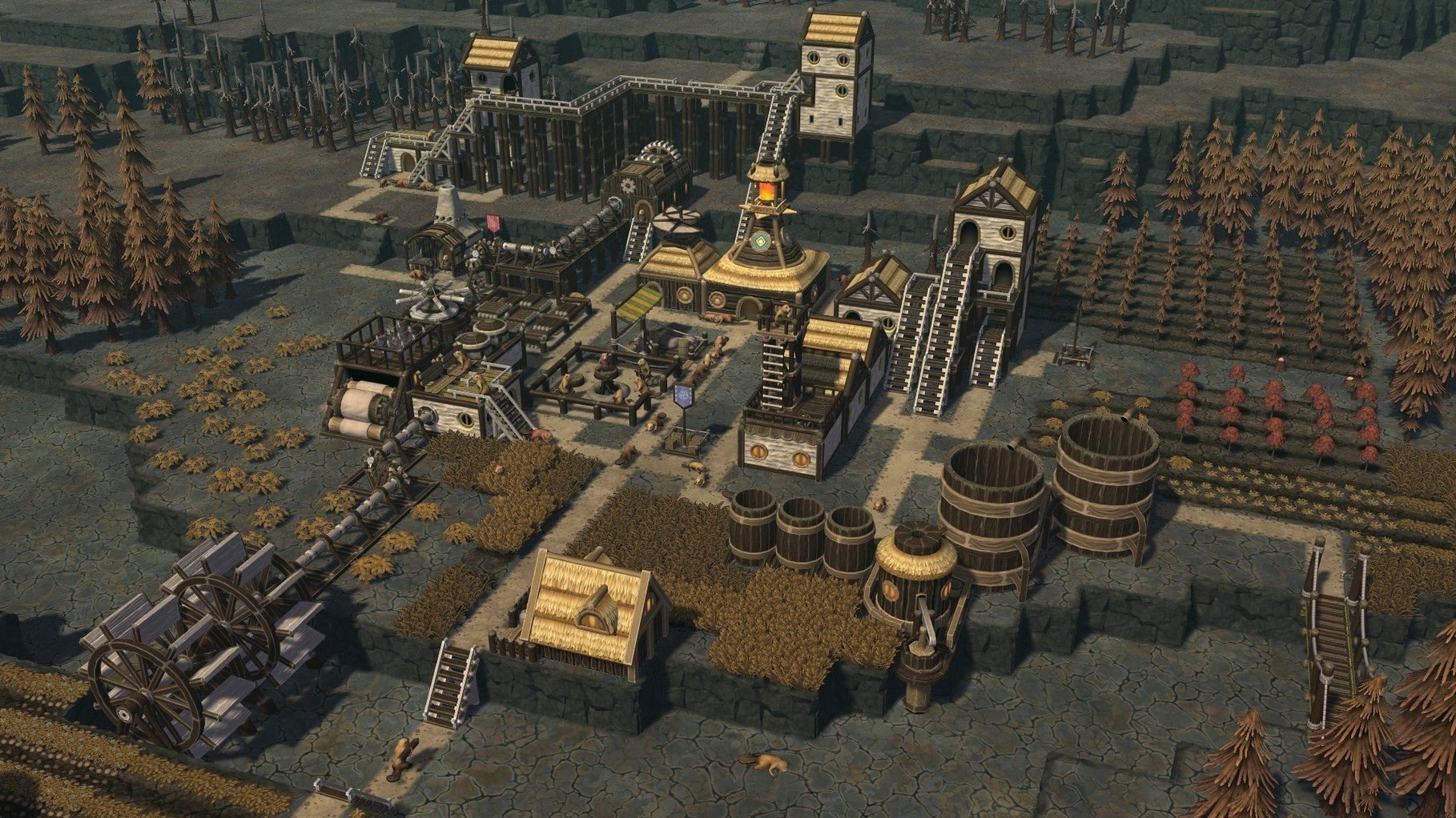
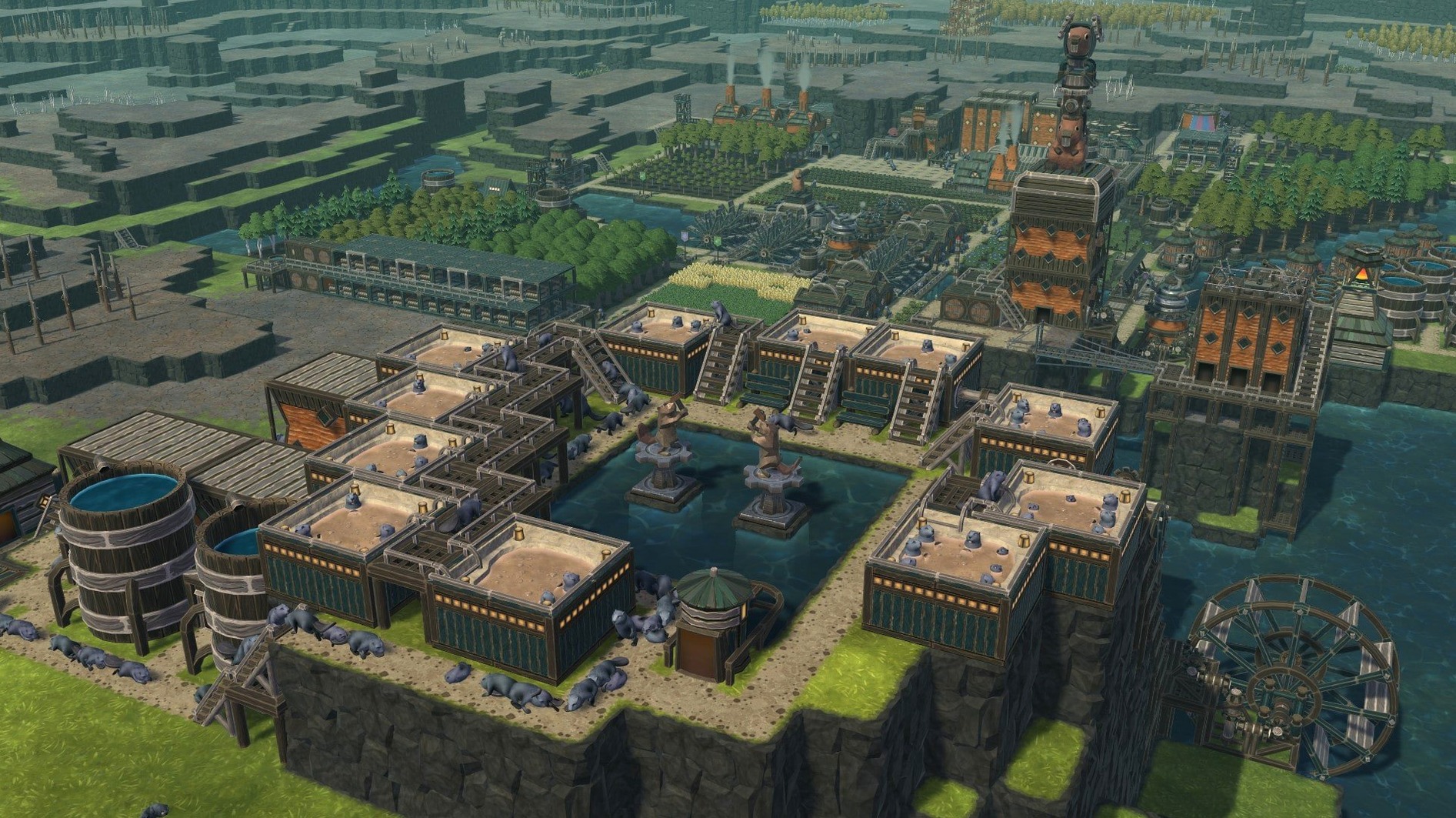
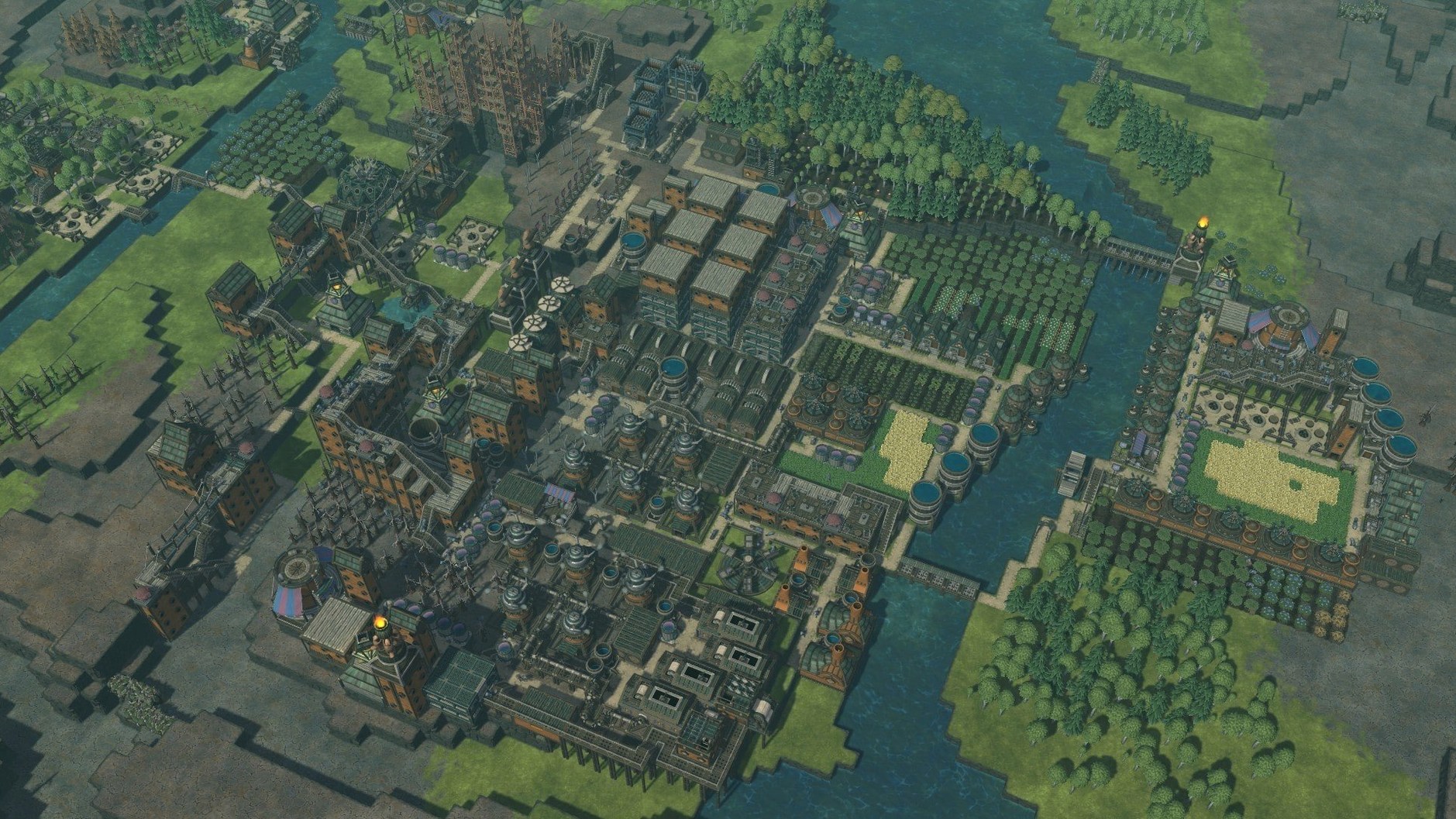
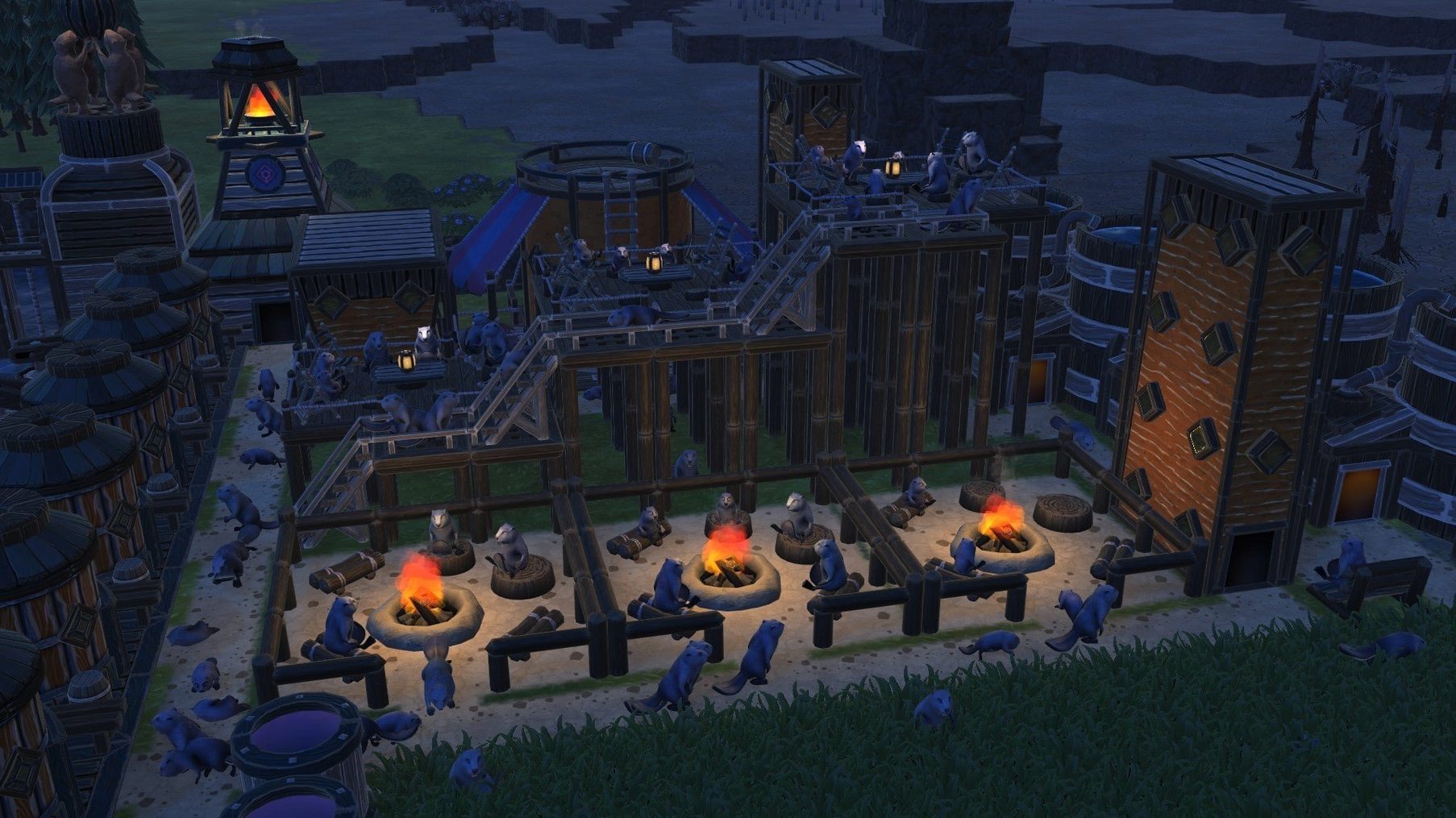
Dams, canals, and the quiet threat of a bad drought — Timberborn puts water physics at the center of a post-human world, and that's where its personality lives. You're not just placing buildings; you're sculpting rivers, planning reservoir capacity, and making sure the carrot crop doesn't wither before the wet season returns.
Where water and long-term logistics steal the show
- Players who enjoy logistics puzzles and long-term planning over combat or quick action.
- Anyone fascinated by water mechanics — redirecting rivers and stacking dams is the core loop, not a side system.
- People who like seeing a settlement grow from a handful of huts into a multi-level wooden metropolis.
- Fans of the two-faction idea: Folktails lean into farming and community, Iron Teeth push toward industry and efficiency.
A debut game with deliberate, sometimes brutal pacing
- This is Mechanistry's debut game — it's polished but doesn't have the sprawl of a decades-old franchise.
- Pacing is deliberate. A dry season can wipe out hours of work if you didn't store enough water, and there's no undo button for poor planning.
- The world is woodpunk beavers rebuilding after humans vanished; if you need a narrative or characters to follow, the game offers systems, not story.
Reading terrain and tracing rivers before a single plank
I sit down with a fresh map — let's say it's one of the new ones from the 1.1 release — and the first ten minutes are pure terrain reading. Where does the river bend? Where's the natural elevation for a dam? I mark a spot for the district center on high ground, because I've learned that lowland builds flood the moment I get clever with levees. Then I place a lumberjack flag near a stand of birch, drop a water pump on the bank, and unpause.
The colony is five beavers and a handful of berries. My first dam goes up across a narrow section of the river, logs only, and I set the priority high so nobody wanders off to build a decoration. While the water backs up behind it, I'm laying out carrot patches on irrigated soil and checking the forecast — three days to the next drought. Stomachs are full, so I push science points into stairs and platforms. Once vertical movement is unlocked, the settlement stops spreading outward and starts climbing.
By the third cycle, I'm stacking warehouses on platforms, building a second dam upstream, and setting up a sluice gate that I'll tweak manually for the first season before automating it. The session ends with me staring at the water flow overlay, calculating how many more tiles of farmland I can feed if I widen the canal by one block. It's a puzzle that never quite solves itself, which is why I keep coming back.
New maps and the stats panel that reshaped my planning
Version 1.1 brought two things that shift how I spend my time: new maps and statistics. The maps aren't just visual swaps — they reshuffle the terrain challenges, so a river might run through a canyon on one and split into three shallow streams on another. That means dam placement isn't a formula I can carry over; each map asks for fresh thinking about water pressure and evaporation rates.
The statistics panel is the quieter change that I now reach for constantly. I can see at a glance how many beavers are hungry, how much water is stored across all tanks, and whether my lumber production has a bottleneck two districts away. Before 1.1, I'd click through buildings one by one to guess at shortages. Now I catch problems during a drought before the warning icons even appear. It's the kind of feature that doesn't sound exciting in a changelog, but it cuts the busywork and keeps me focused on the big engineering projects instead of playing inventory detective.
How a farm-first player turns a canyon into Folktail breadbasket
Picture someone who plays colony sims mostly for the agriculture — they want to build a thriving food system, not just break even. In Timberborn, that player picks Folktails for the windmills and the farmer bonuses, then scouts a canyon map where the river cuts deep and the arable land is scarce. The challenge isn't growing enough food; it's getting water to the terraced fields they plan to carve into the cliffside.
They spend the first five cycles building a tall dam at the canyon mouth, turning the ravine into a long reservoir where the river used to be. Then they dig a canal along the eastern cliff face, lined with levies, and install sluice gates that release measured amounts of water down to each terrace level. The fields are green while the natural riverbed below is bone dry. By late game, the colony exports grilled potatoes and bread to a second district that handles industry, and the whole system runs on a water clock that would make a civil engineer proud. That's the kind of satisfaction Timberborn delivers — not from combat or conquest, but from making the desert bloom with sticks, logs, and a lot of careful grading.
The 1.1 update brought a fresh batch of maps to reshape with your dams and new statistics screens for keeping a closer eye on your colony's numbers.
- Architecture: Apple Silicon (ARM) and Intel (64-bit x86)
Questions from the stall
Does Timberborn run natively on Apple Silicon Macs?
Yes, the build supports both ARM and 64-bit x86 architectures, so it runs natively on Apple Silicon and Intel Macs.
Notes from other shops 0
Sign in or open a shop account to leave a note.
No notes yet. If you've used this on a shop Mac, tell me how it went.