
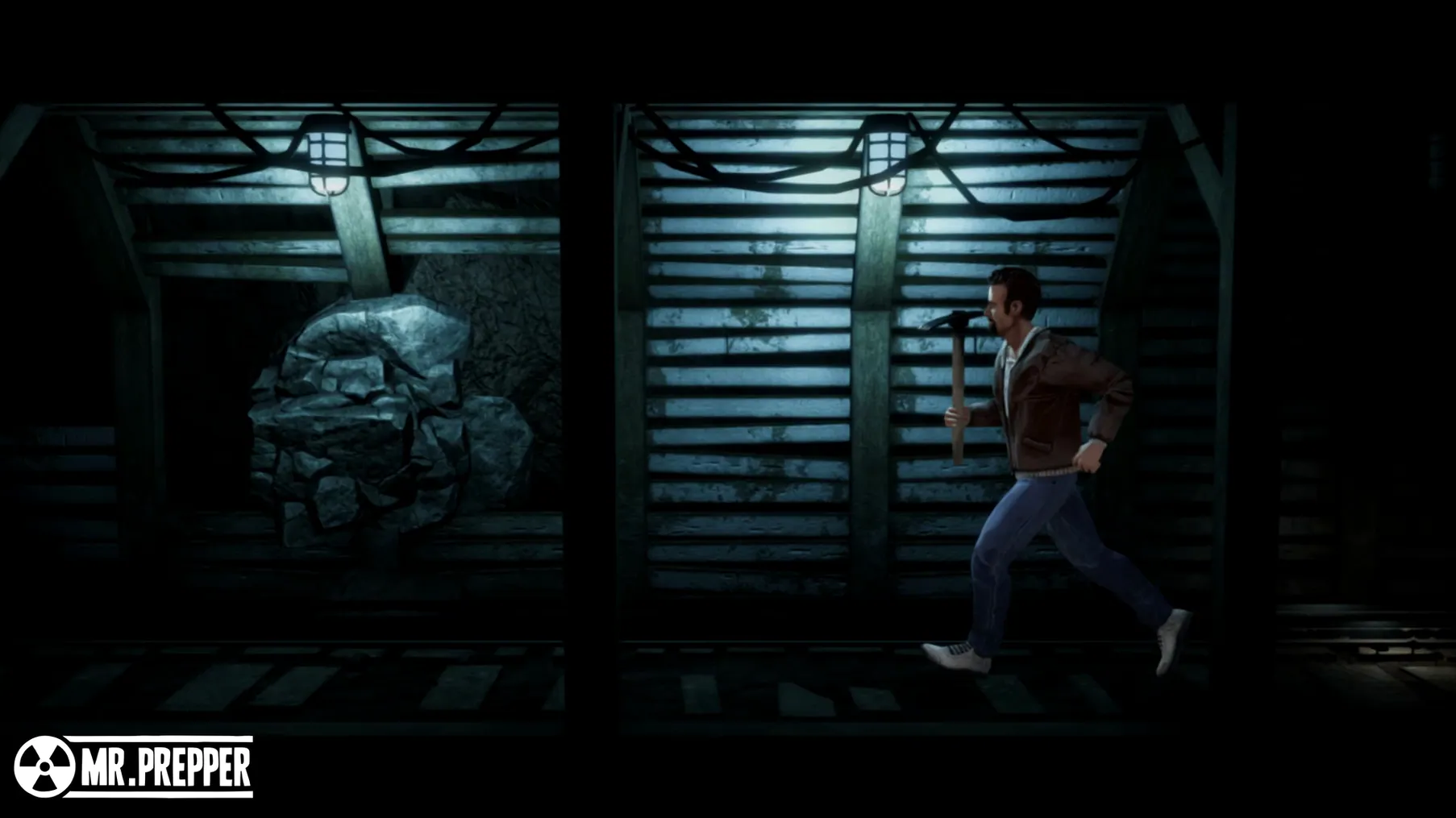
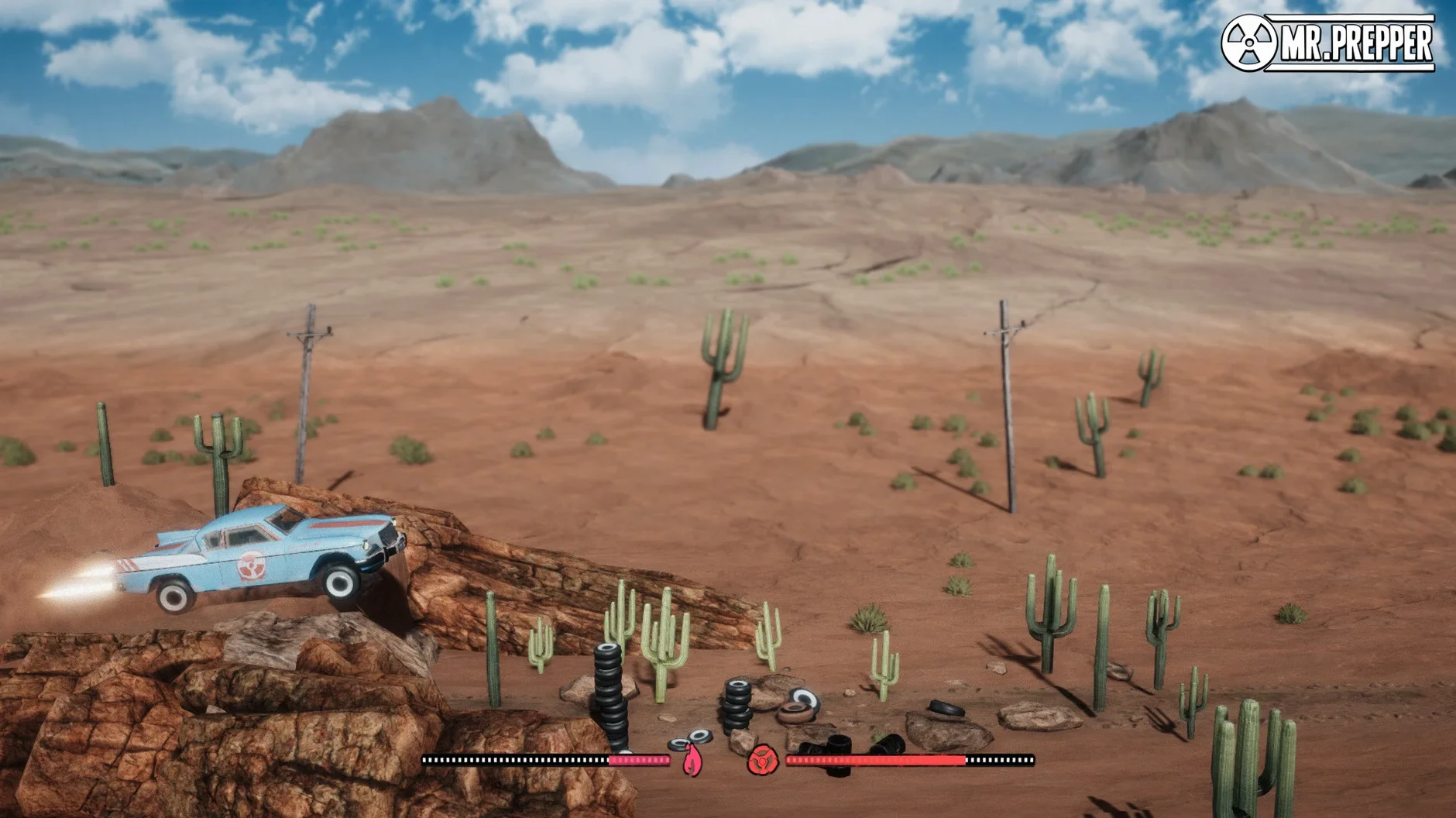
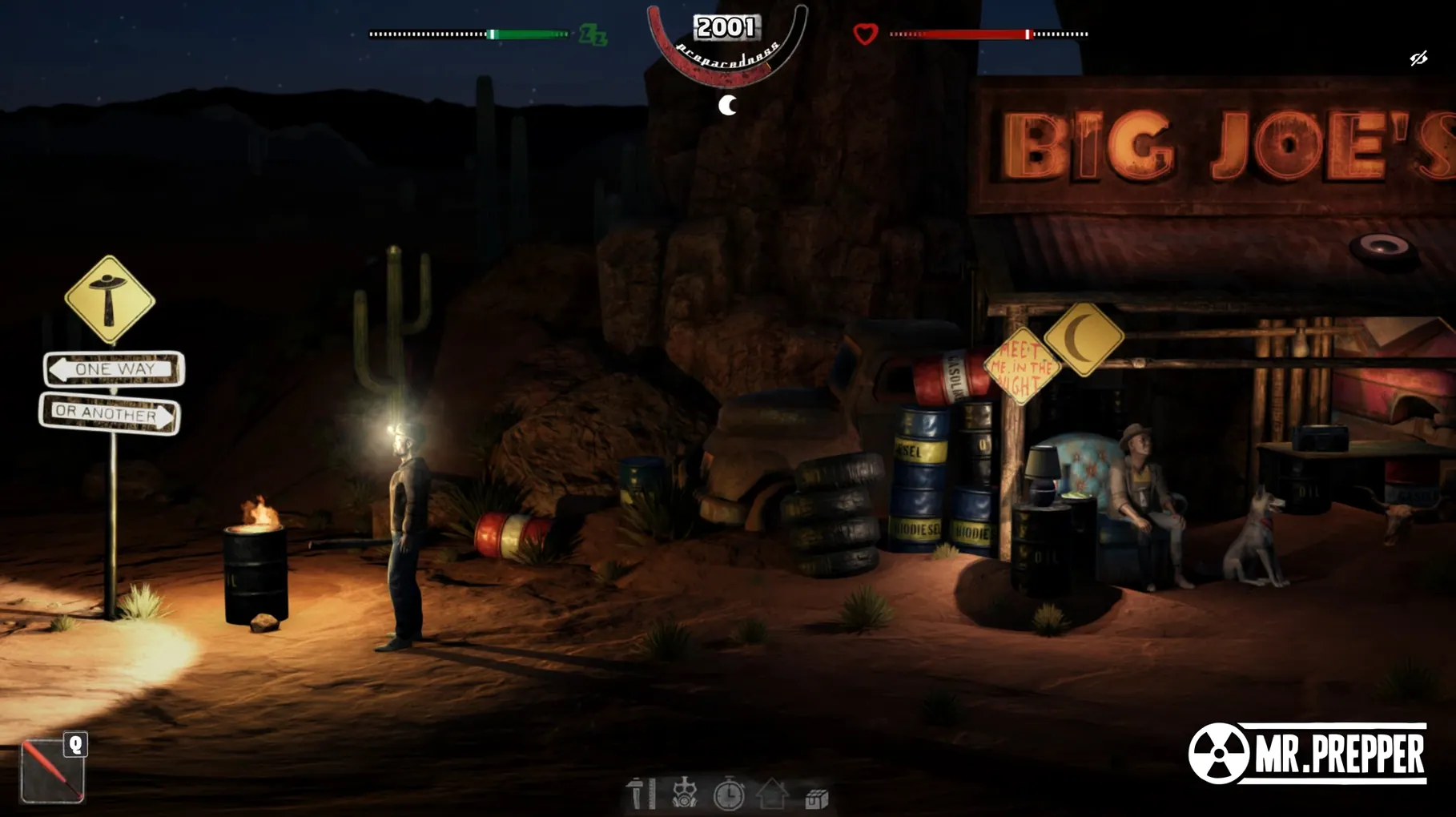
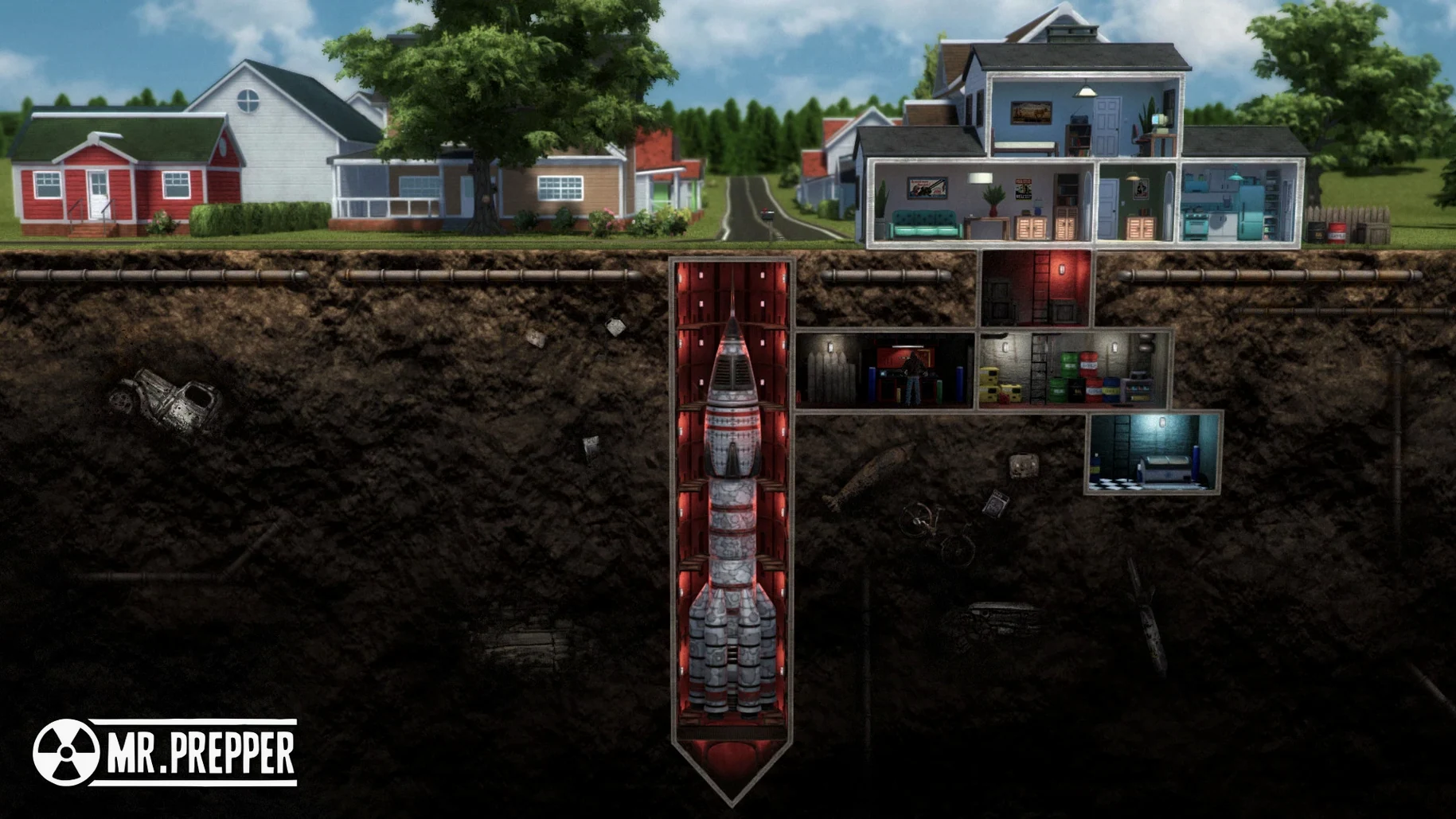
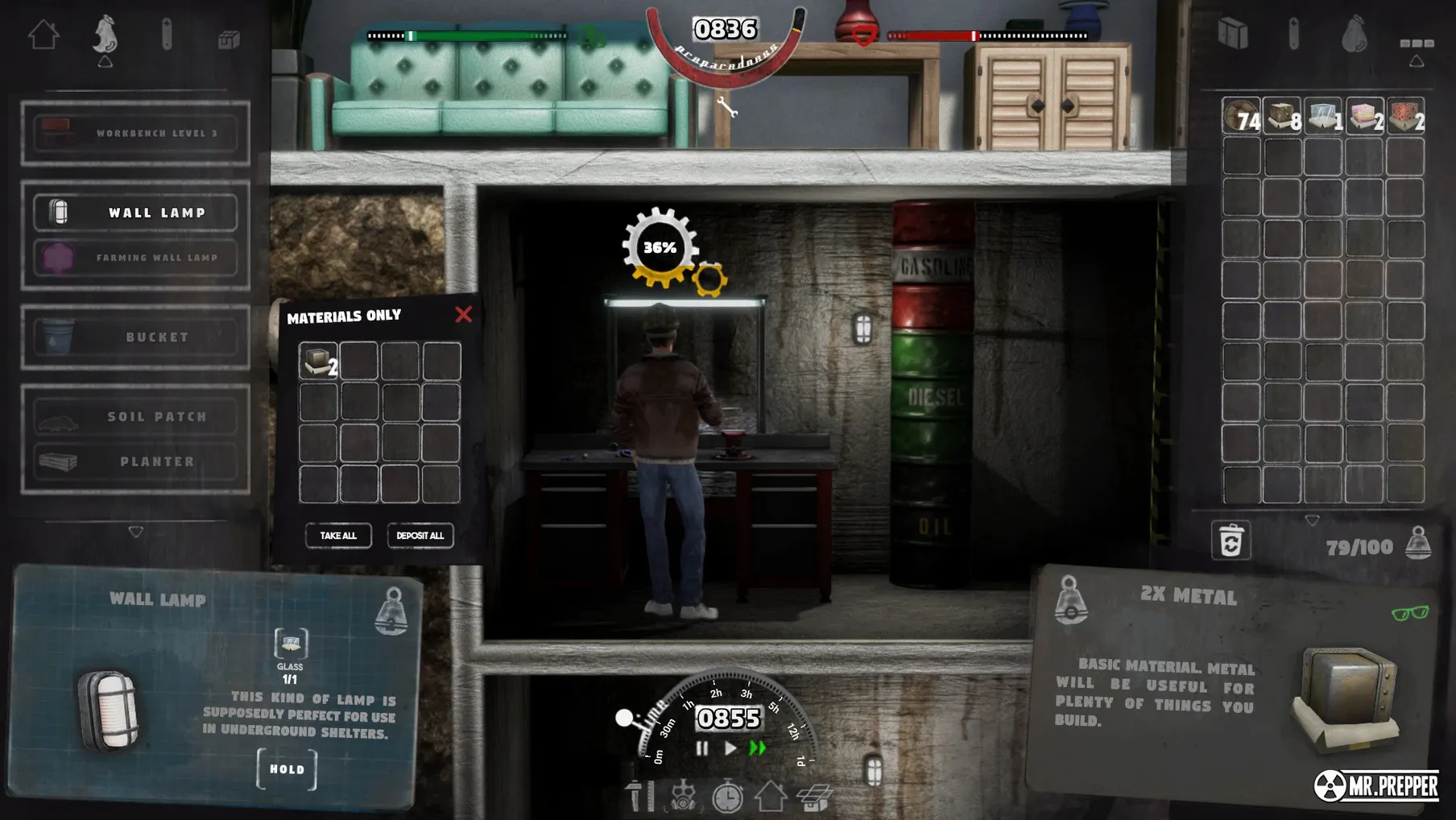
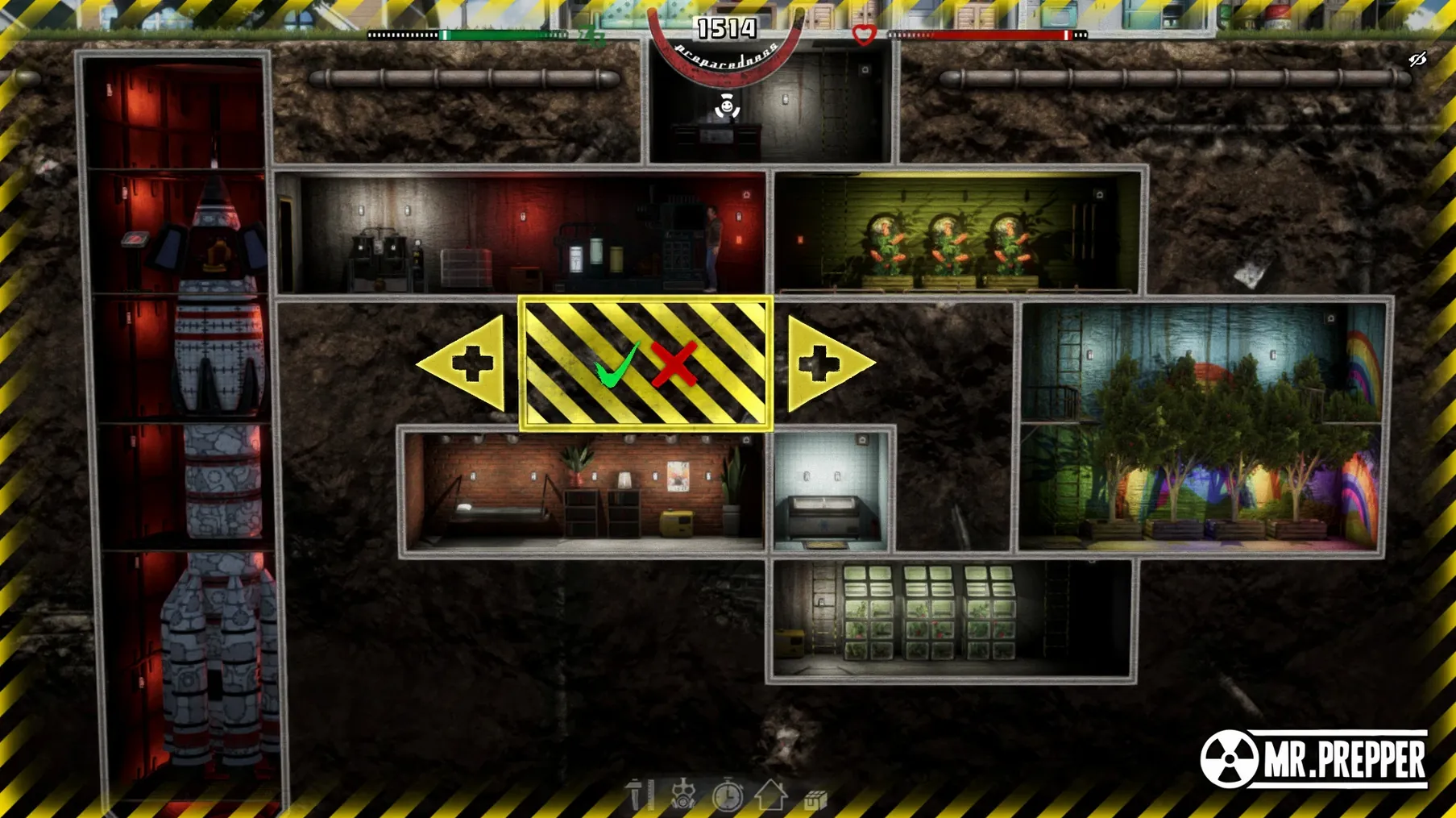
Living under a watchful government that strictly forbids independent survival preparation is the central problem you face in Mr. Prepper. You play as a regular person who senses something is deeply wrong and decides the only way out is down—six feet under your own backyard. Your minute-to-minute life revolves around maintaining a double life: appearing to be a compliant citizen upstairs while feverishly expanding a secret bunker below.
| Detail | Info |
|---|---|
| Developer | Rejected Games |
| Genre | Survival, Crafting, Simulation |
| Setting | Authoritarian state, pre-nuclear war |
Most of your time is spent gathering materials from the forest or scavenging junk, then crafting workbenches, water collectors, and storage units to make the shelter habitable. The authorities run periodic inspections, so you must quickly hide any contraband blueprints or resources before they knock. You’ll also trade with a network of cautious neighbors, bartering home-grown vegetables for mechanical parts and keeping those relationships quiet. It’s a constant juggling act between digging deeper, managing physical health, and maintaining a flawless alibi on the surface.
Crafting chains click for production-minded planners
The game fits a specific kind of player better than a general action audience. Crafting enthusiasts who enjoy multi-step production chains tend to settle in happily—you're not just building a workbench, you're planning a water filtration system, greenhouse rotation, and oxygen supply all at once. Mac users who lean toward simulation and management titles over reflex-heavy combat will find the pacing comfortable, since the threat comes from planning failures rather than quick-time events.
People who get attached to a single persistent base rather than restarting procedurally generated worlds also click with the underground-shelter premise. The bunker grows in a way that reflects your decisions, and that continuity keeps the tension personal. If you enjoy games where inventory management is a puzzle and hiding contraband before an inspection genuinely raises your heart rate, the loop feels satisfying. It's also a solid pick for folks who liked the preparation phase of survival games but wished that part lasted an entire campaign.
Ignoring your cover story upstairs brings the agents down
New players often treat the surface life as an afterthought. The secret police don't care how impressive your bunker is if you've missed three days of "normal" behavior upstairs. Another common slip is hoarding raw materials without building dedicated storage early—your backpack fills up fast, and you'll waste hours running back and forth to the same scavenging spots.
- Digging too deep too fast. Expanding downward without reinforcing walls or setting up oxygen can collapse sections you've already furnished.
- Ignoring neighbor trade windows. Some deals only appear on specific days. Missing them means waiting through the full cycle again for a rare component.
- Underestimating electricity draw. Wiring every new machine without checking your generator's limit causes blackouts when you least want them.
- Stashing contraband in obvious spots. Inspectors check certain locations more thoroughly. Spread the risk across multiple hiding places.
Tip: spend the first few in-game mornings just watching patrol patterns and noting which rooms get searched first. That knowledge costs no resources and saves whole playthroughs.
Crafting queues stopped jamming after recent fixes
Builds leading up to 1.43j smoothed out a handful of rough edges that used to interrupt the rhythm of shelter life. The crafting queue behaves more predictably now—fewer instances of a stuck workbench refusing to acknowledge you already delivered the ingredients. Trading interfaces got a subtle refresh too, with clearer feedback on whether a neighbor deal is still available or expired for the day. These aren't headline features, but they cut down on the kind of friction that pulled you out of the tense, furtive mood the game works hard to build.
Performance on Apple Silicon Macs improved noticeably around the same updates. The Unity Engine under the hood runs cooler and quieter on M-series machines, which matters when you're three hours into a bunker expansion and the fan used to spin up for no clear reason. Mac players who grabbed mr. prepper macos free versions from earlier builds will see smoother loading when transitioning between the house exterior and underground levels. The inspector AI also received small tuning passes—they no longer pathfind into furniture quite as awkwardly, so hiding your illegal radio components behind the wardrobe feels like a plan rather than a dice roll.
- Runs on both Intel and Apple Silicon Macs
Notes from other shops 0
Sign in or open a shop account to leave a note.
No notes yet. If you've used this on a shop Mac, tell me how it went.