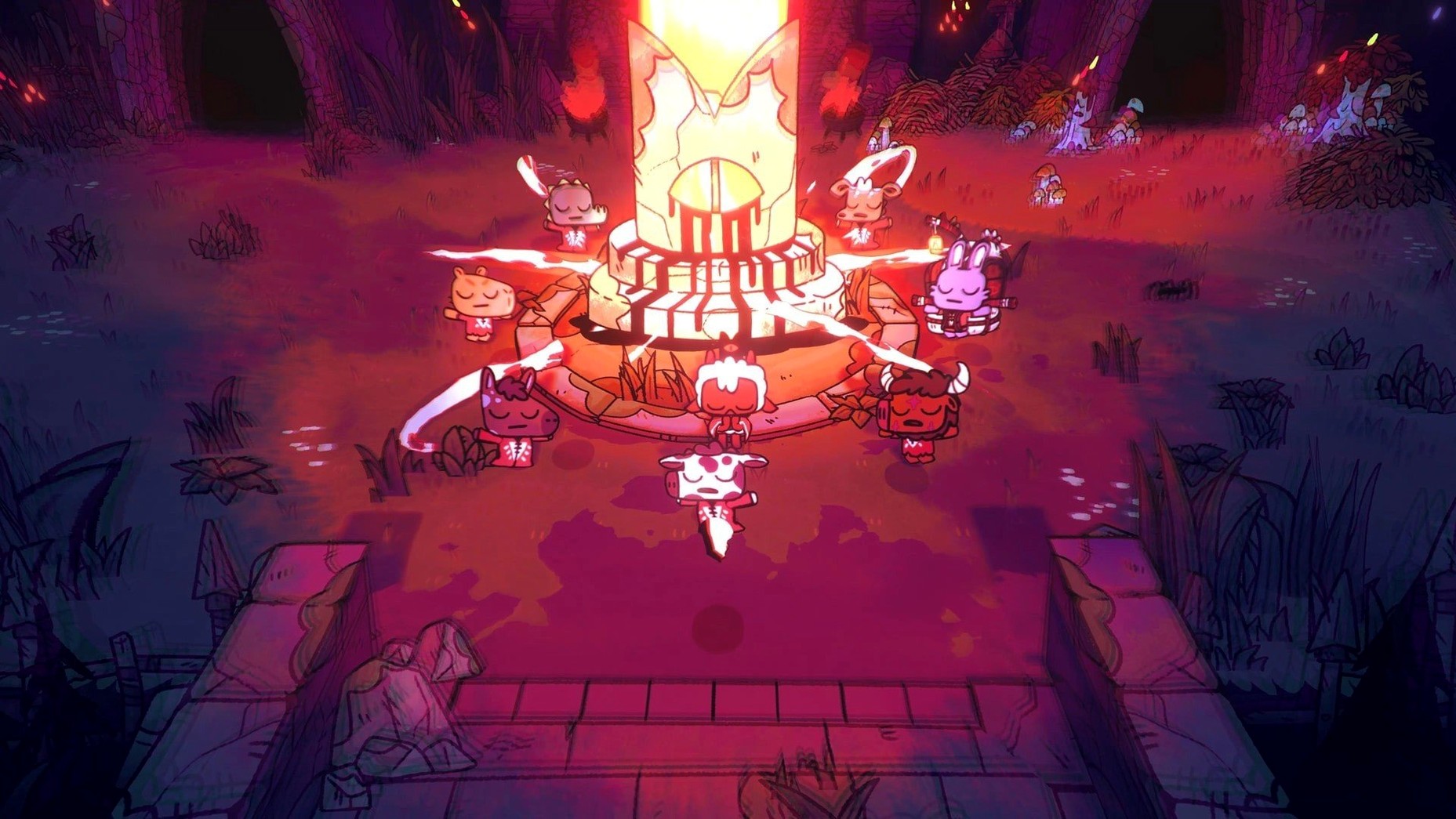
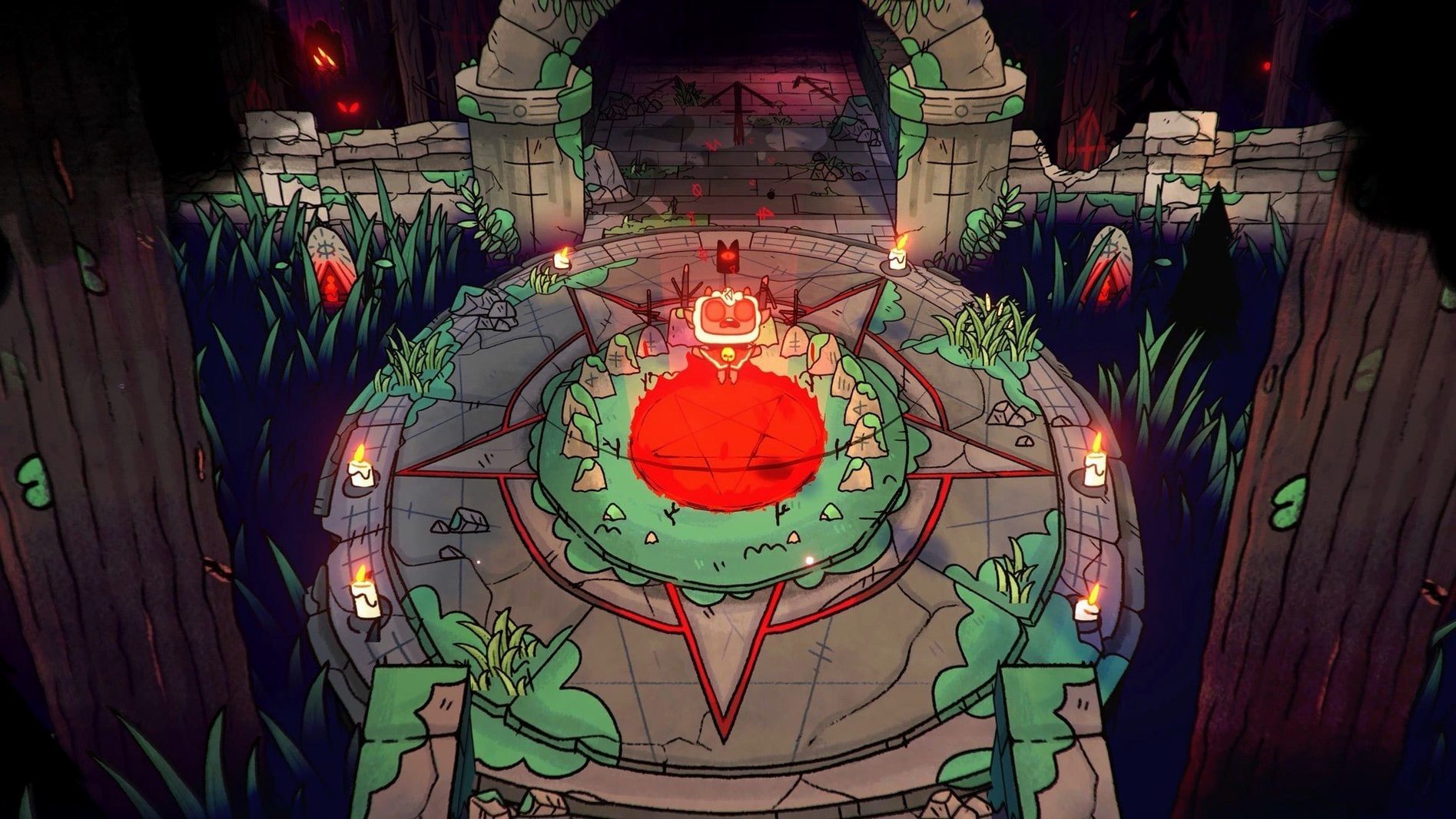

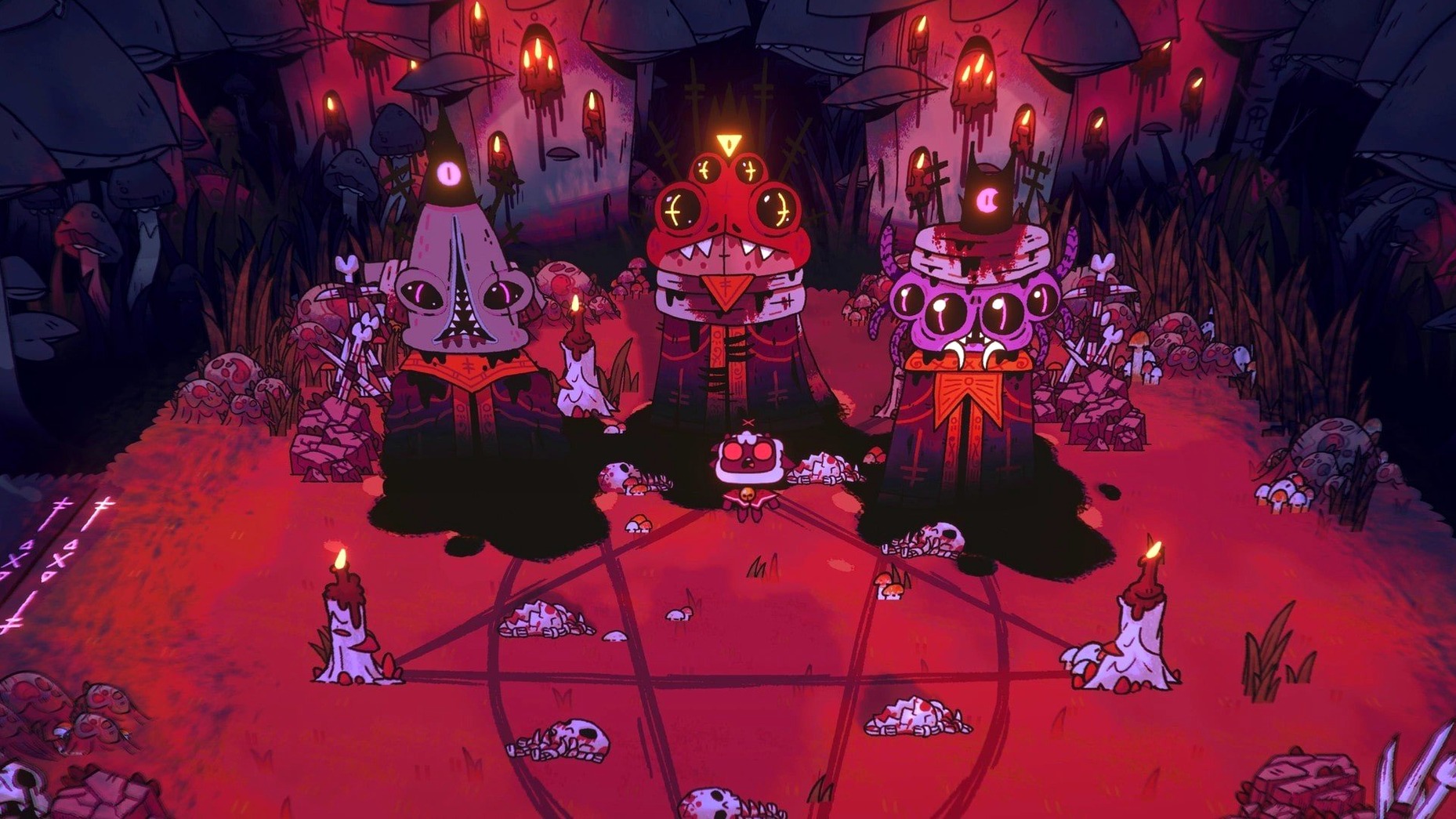
Cult of the Lamb is a game where you build a loyal commune of woodland followers while hacking through procedurally generated dungeons to pay off a divine debt.
Building your base
You'll gather resources to construct everything from sleeping bags to demonic shrines, and the real satisfaction comes from watching your followers' devotion turn your clearing into a lively, slightly unhinged village.
Keeping the faith
Performing dark rituals to appease gods and managing the quirks of your growing flock is half the challenge—if you enjoy tending to a community's needs while making tough calls, this loop will sink its claws into you.
Raiding the regions
Four mysterious regions offer fast, dodge-heavy combat that expects you to adapt on the fly. It's a great fit if you like short, risky runs, but players who prefer deep, slow-burn combat systems might find the action just a little too streamlined.
A farmer's tale
Imagine someone who spends their workday planning crop rotations and fixing irrigation lines — a person who already treats management sims the way others treat comfort food. For that player, the cult grounds feel like a natural extension of everything they love about Stardew Valley or Graveyard Keeper, just tilted sideways. They plant crops, sure. But they also name each follower, fret over who's sleeping too close to the outhouse, and genuinely pause before picking a doctrine that might upset the one rabbit who always works the lumber yard without complaining. The dungeon crawling becomes almost secondary — a necessary errand to bring back bones and devotion, like running to the hardware store mid-harvest.
That's where the game shines brightest for the management-minded player: the constant, low-key pressure of keeping everyone fed, housed, and not openly questioning your authority. It's not about min-maxing — it's about the little narratives that bubble up when two followers start bickering or someone refuses to use the nicer sleeping bag you crafted specifically for them.
Turning a follower into a powerhouse
One of the most satisfying workflows starts with a follower who seems utterly average — no useful traits, no standout devotion. Here's how you turn them into your most reliable asset over a few in-game days:
- Pick your candidate. Look for someone whose negative traits aren't dealbreakers. A follower who's terrified of dissenting is easier to manage than one who spreads doubt every time you leave camp.
- Level them through devotion. Assign them to worship at the shrine as often as possible. Sermons, blessings, and the occasional bribe of a favorite meal speed this up considerably.
- Gift them a demonic necklace. Once you've unlocked the right crafting options, a necklace that boosts loyalty or extends their lifespan turns a decent follower into a cornerstone of your cult.
- Send them on missions. The missionary hut isn't just for gathering extra resources — it's a way to test a follower's mettle. Success brings back rare items and deepens your attachment to that specific character.
- Reincarnate if they fall. Should they die in combat or old age, the resurrection ritual brings them back — sometimes with a few surprises. A resurrected follower can return with altered traits, which keeps the whole process unpredictable.
By the end of a play session, you'll have a follower you'd genuinely mourn losing — and that emotional tether is what makes the management half of the game stick with you long after you've closed the app.
What people wonder before installing
Does it run smoothly on Apple Silicon? Yes. The build is compiled for both ARM and x86 64-bit Macs, and it was tested on an M4 Mac mini running macOS Tahoe without issues. If you do hit a freeze at launch — which is rare — launching with Rosetta clears it right up. The game isn't graphically demanding, so even older machines that meet the macOS 13.0 floor should handle it without the fan screaming.
Is the combat deep enough to carry the game? It's more about rhythm and reaction than complex combos. You'll dodge, slash, and use spells that map cleanly to the controls. If you're coming from something like Dead Cells, you'll recognize the flow instantly. The variation comes from the weapons and curses the game hands you each run — some days you're a flimsy poison-dagger lamb, other days you're swinging a massive axe that turns enemies into splinters. It won't replace a dedicated fighting game in your library, but it doesn't need to.
What if I just want to build and ignore the dungeons? You can't fully ignore them — bones, devotion, and certain building materials only come from runs — but you can treat them as quick supply trips rather than the main event. Spend five minutes in Darkwood, grab what you need, and get back to rearranging the crop plots. The game respects that balance, even if it occasionally nudges you toward the next boss door with a polite but insistent quest marker.
- macOS 13.0 or later
- Apple Silicon or Intel Mac
Questions from the stall
What macOS version does Cult of the Lamb need?
The game requires macOS 13.0 or later and runs on both Intel and Apple Silicon Macs.
Can I play Cult of the Lamb in my language?
Yes, the interface supports Russian, English, German, Spanish, Traditional Chinese, Simplified Chinese, Korean, Portuguese, French, and Japanese.
What if the game hangs on startup?
Try launching it with Rosetta if you're on an Apple Silicon Mac and it gets stuck during the initial load.
Notes from other shops 0
Sign in or open a shop account to leave a note.
No notes yet. If you've used this on a shop Mac, tell me how it went.