
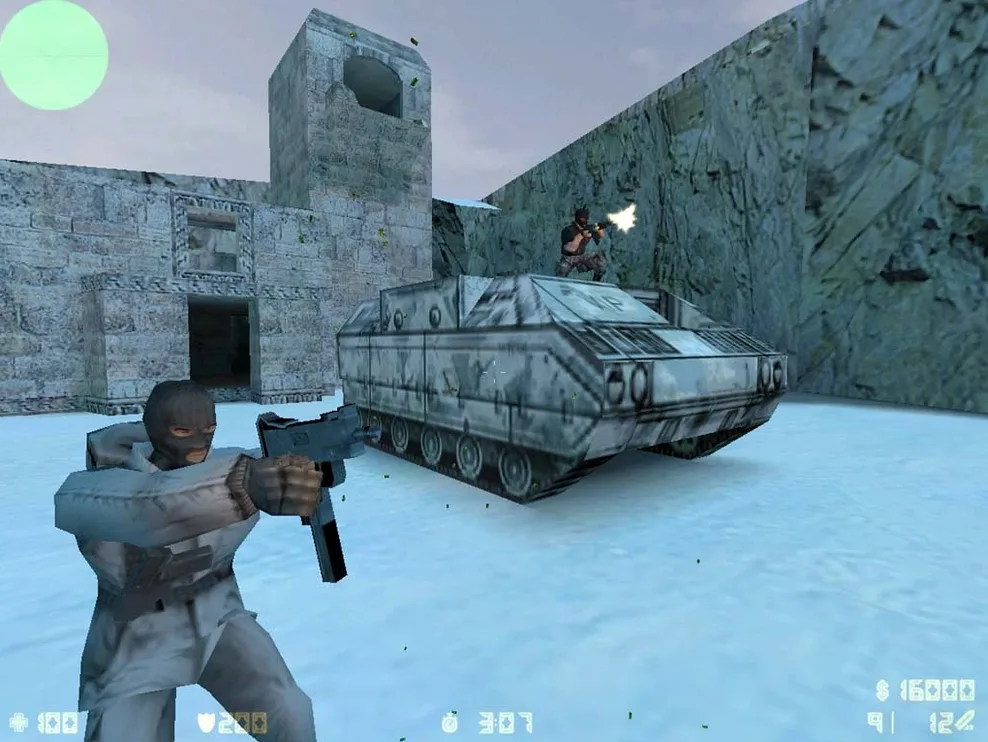
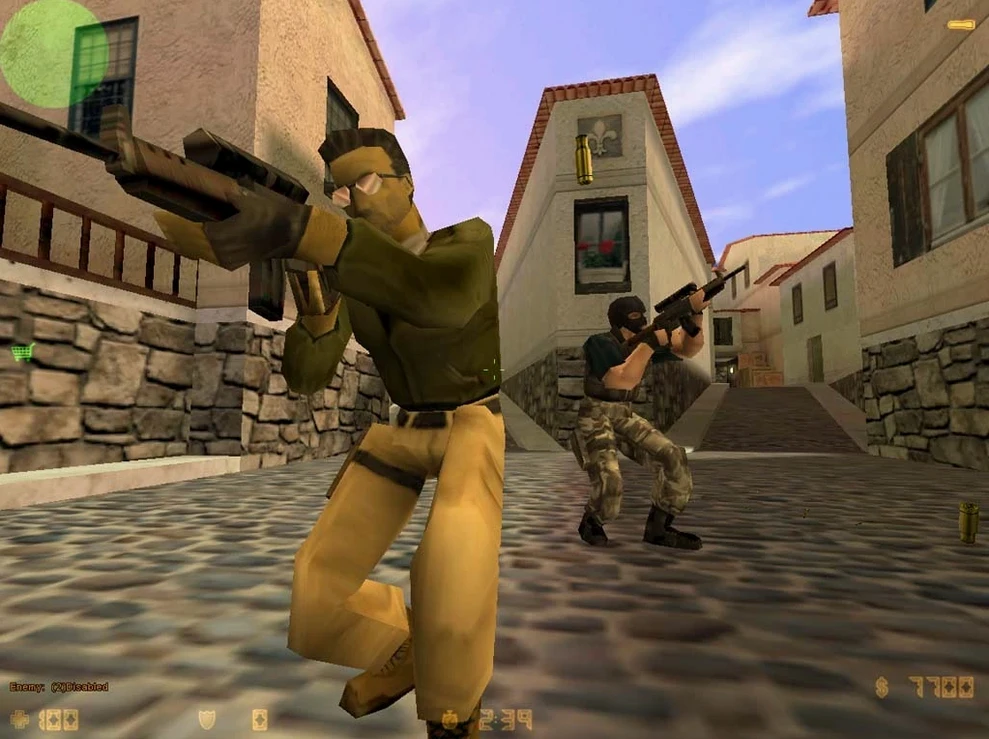
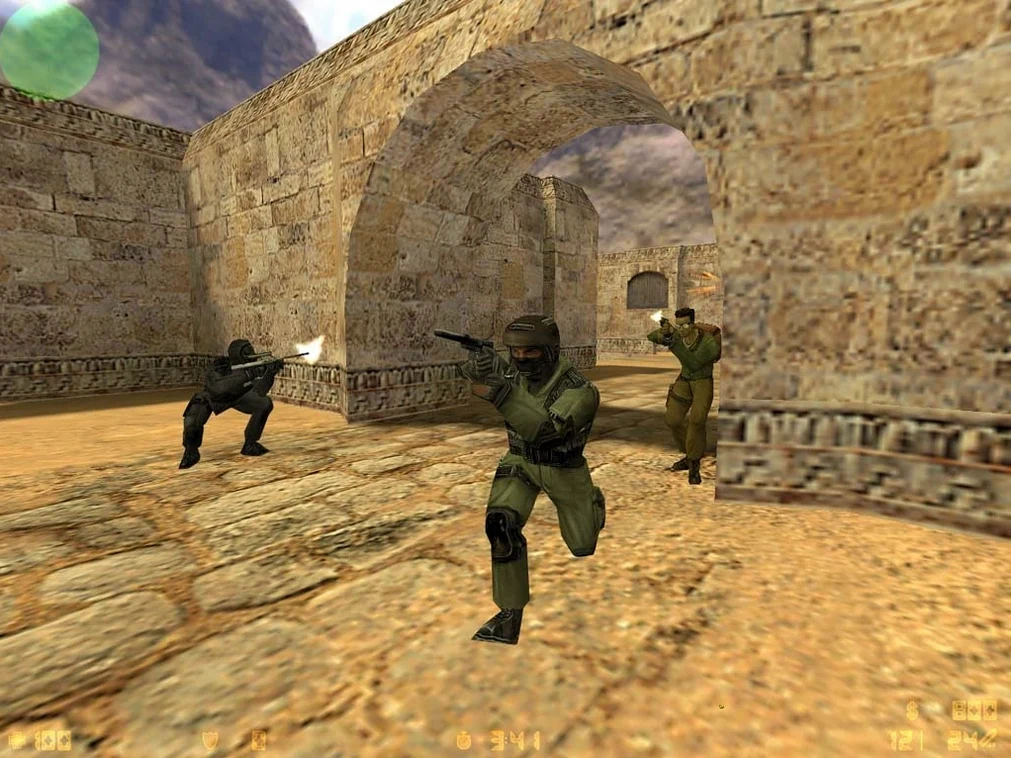
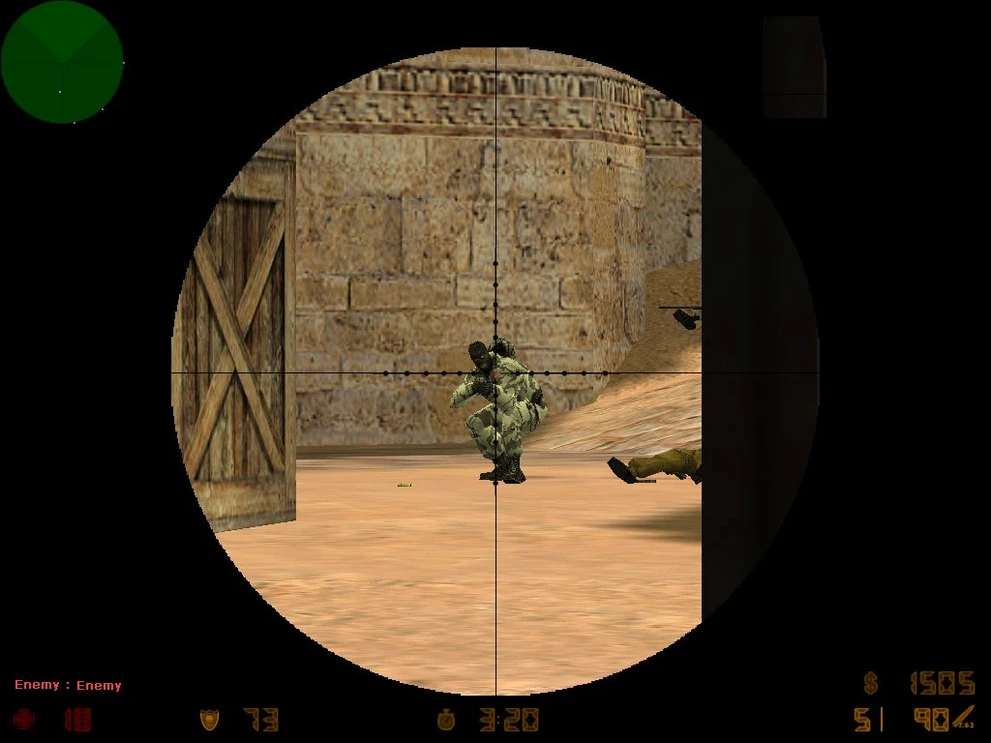
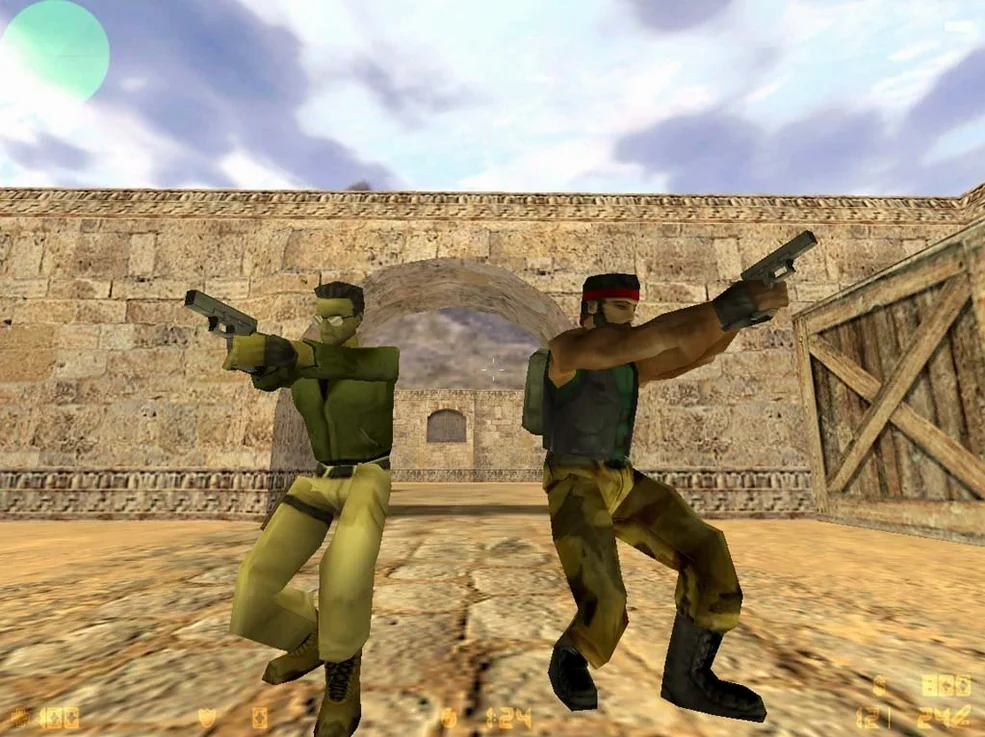
Counter-Strike suits players who like tension over spectacle. It's a slower, round-based tactical shooter built around two teams — terrorists and counter-terrorists — each with a clear objective per map. You pick a side when the round starts and stay dead if you get eliminated, watching your teammates finish the job. Between rounds, virtual money buys better gear, so choices carry weight.
Patience and positioning pay off more than fast aim
This one fits if you enjoy short, high-stakes matches where positioning and listening matter more than twitchy aim. The online matches reward patience; rushing in usually means spectating for the next two minutes. It lands well for people who like learning map callouts, managing an in-game economy, and pulling off a clutch when you're the last one standing with a pistol and a dream.
Round-based tension without respawns or power fantasy
If you want constant action, quick respawns, or a solo power fantasy, the round-based structure can feel punishing. There's no sprint button, no loadout screen before you die — just the round timer, your teammates, and whatever you could afford. The 2000-era look and deliberate pace aren't for everyone, and that's fine. It's a specific taste, not a universal one.
A round from start to finish
You join a server — maybe Dust2, maybe a quieter custom map — and the warm-up ends. The buy menu pops up. You've got $800 because you lost the pistol round earlier, so you grab a P250 and a flashbang and hope for the best. The freeze timer counts down, your teammates call out who's covering long and who's watching tunnels, and then the round goes live.
You move slowly, checking corners, tapping shift to walk when you suspect someone's nearby. Footsteps give away positions, so silence is its own weapon. You hear a burst of AK fire from B site and a teammate's icon goes dark on the radar. Now it's three versus four. You rotate through mid, throw the flashbang to blind anyone holding the angle, and trade a kill before a second opponent catches you from the side. The round plays out without you — just the killfeed and the voices of the two survivors trying to close it out. Thirty seconds later, the bomb is defused or the last terrorist drops, and the next buy phase begins. That rhythm repeats for thirty rounds, and no two play the same way.
Spending all your cash on a Desert Eagle with no armor
The biggest mistake is treating the buy menu like a shopping list. Spending all your cash on a Desert Eagle with no armor on a full-buy round leaves you vulnerable to one body shot flinch. Learning when to save, when to force-buy, and when to drop a rifle for a teammate is half the game. The other common slip is reloading after every kill — four bullets left is enough for the next fight, and the reload sound telegraphs your position to anyone nearby.
Bad crosshair placement is another tell. Walking around staring at the floor means you have to flick up to head level when an enemy appears, which takes time you don't have. The counter-intuitive one: over-rotating. Leaving your site too early because you heard action elsewhere often hands the bombsite to a lurking player who was waiting for exactly that. Patience in position is a skill, not passivity.
- macOS Tahoe tested (Apple Silicon / Intel, 64-bit)
- Works on ARM and x86 Macs
- Online connection for multiplayer matches
Questions from the stall
What's the objective in a Counter-Strike round?
Complete your team's map objective — terrorists typically plant a bomb or hold hostages, while counter-terrorists prevent the plant or rescue the hostages. Eliminating the other team also wins the round.
Notes from other shops 0
Sign in or open a shop account to leave a note.
No notes yet. If you've used this on a shop Mac, tell me how it went.