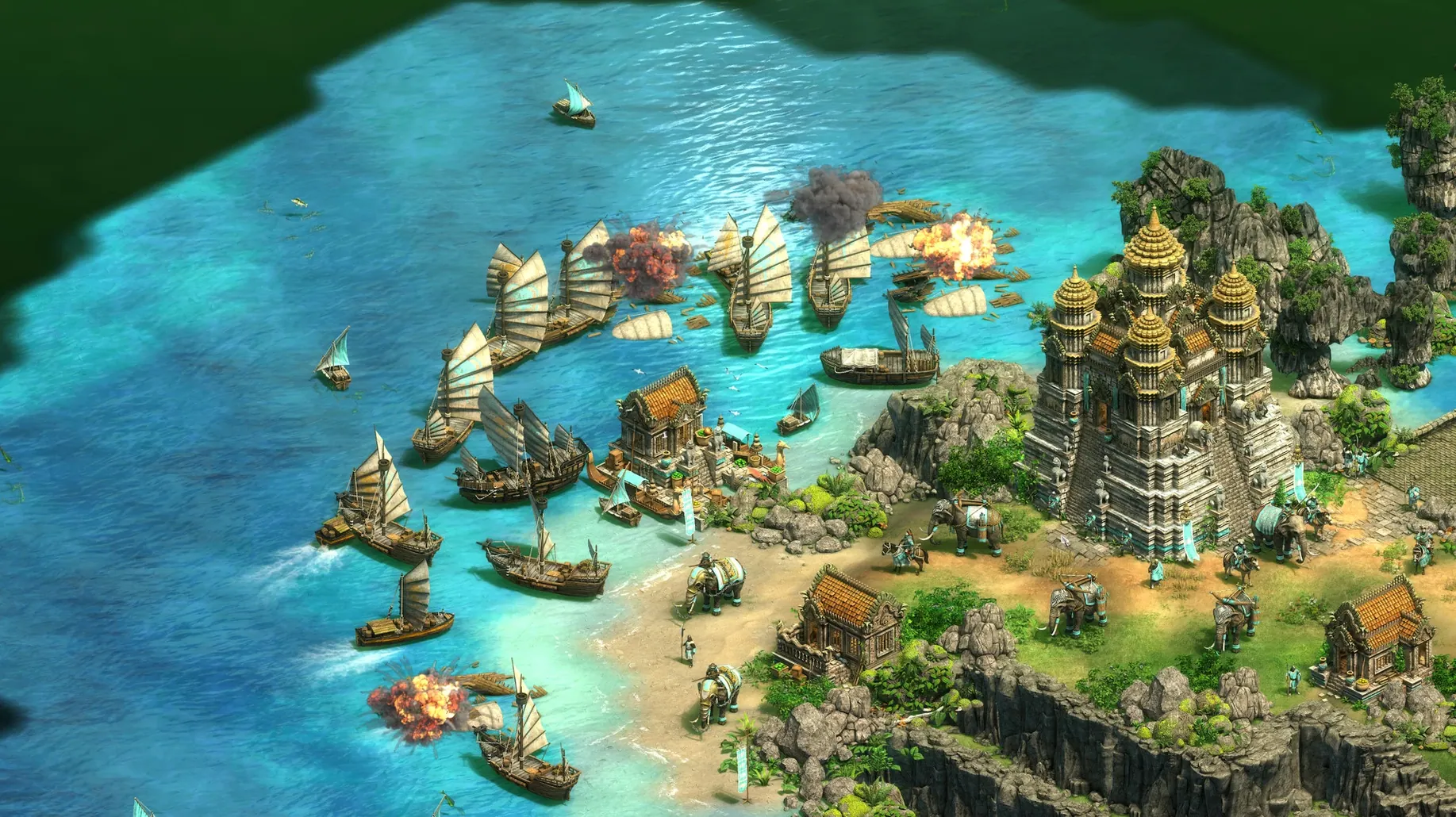
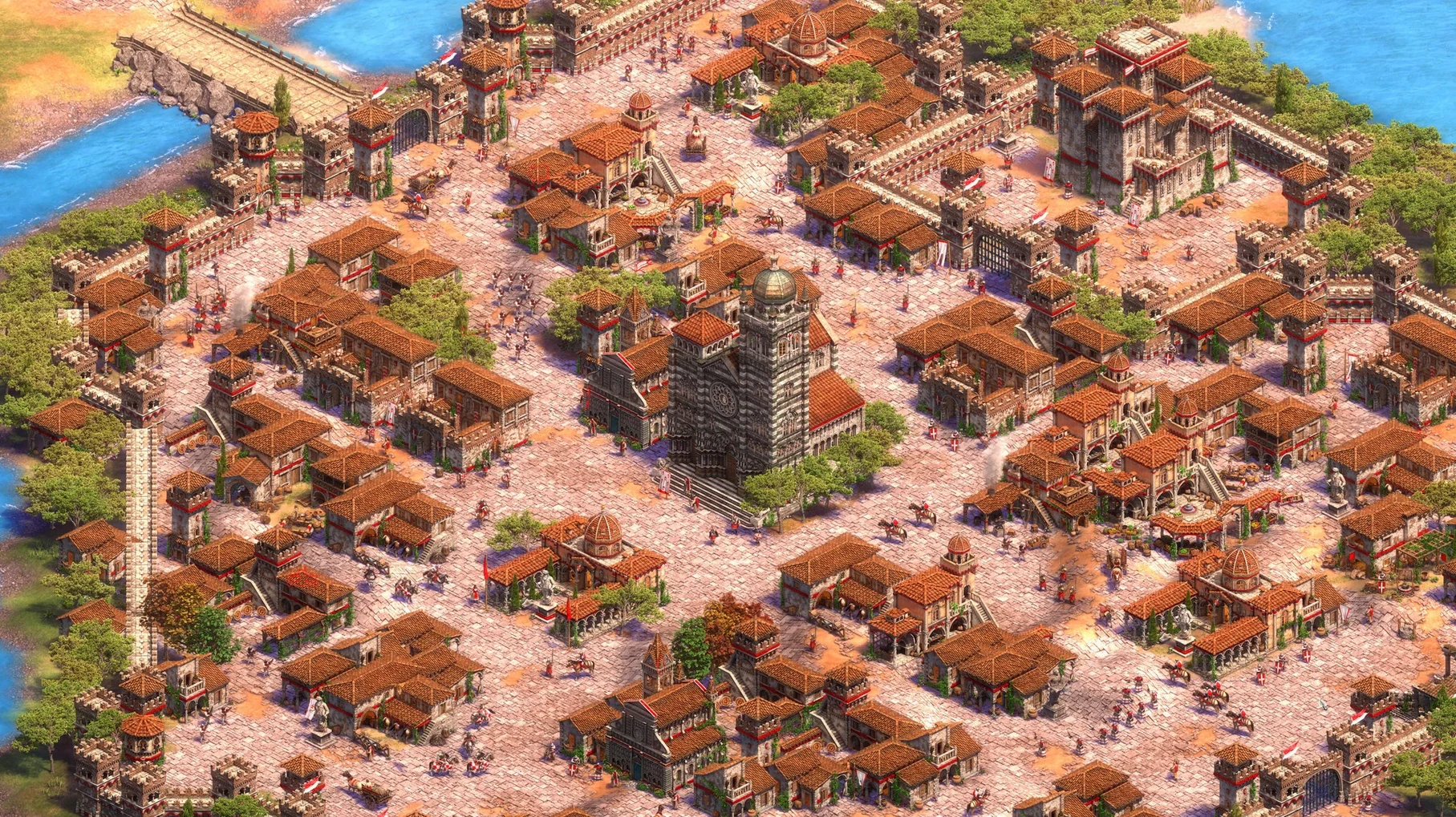
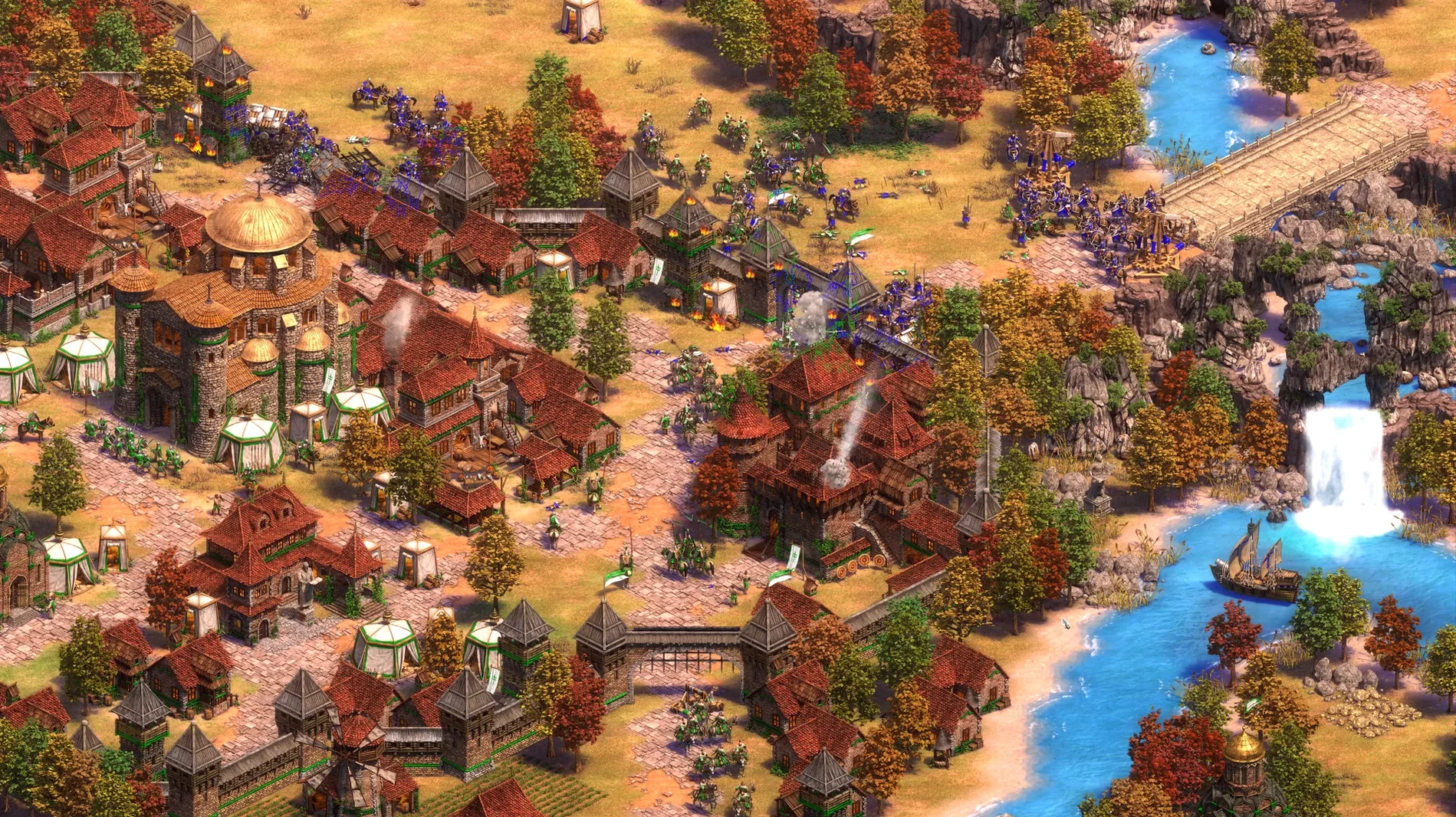
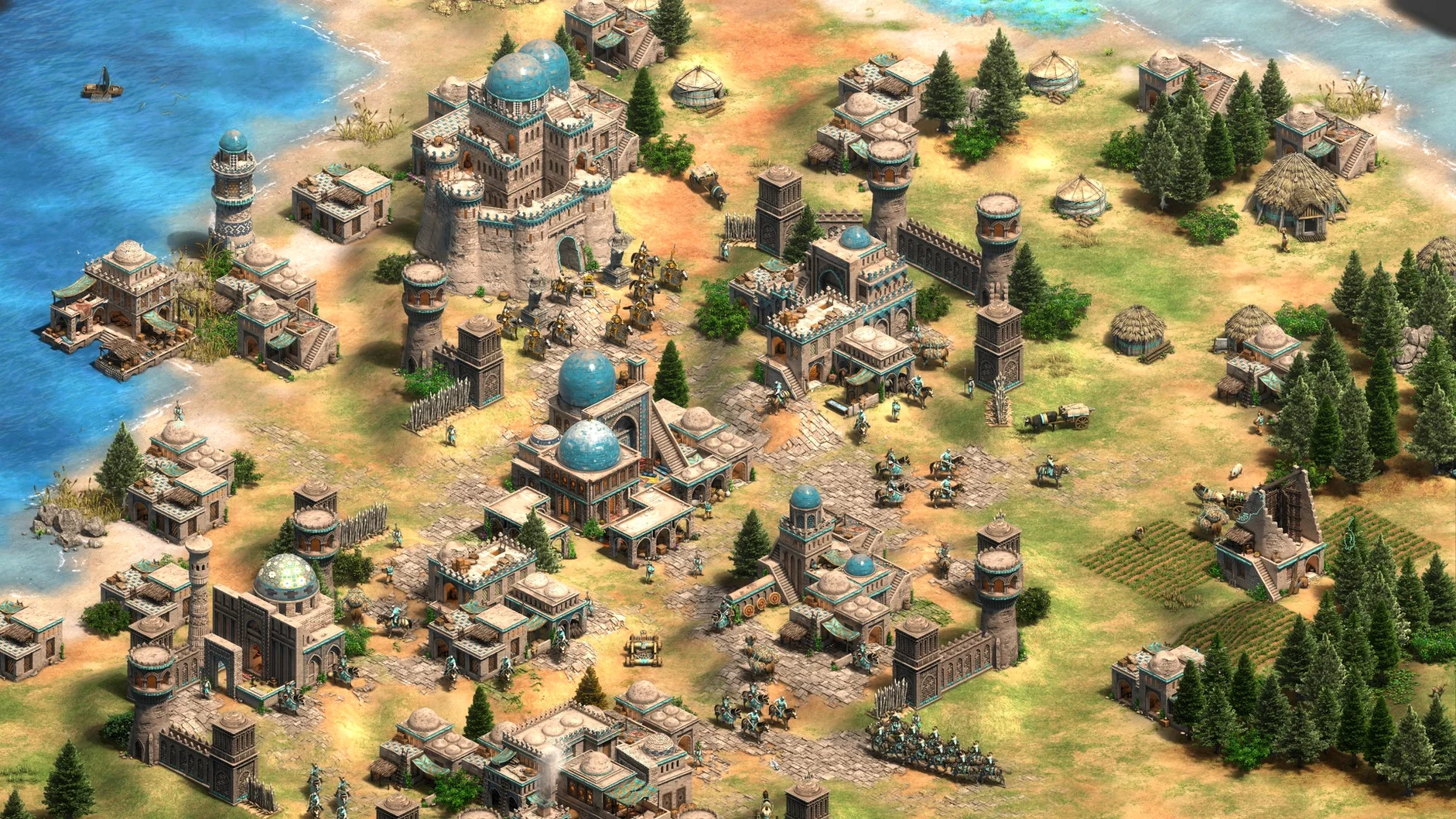
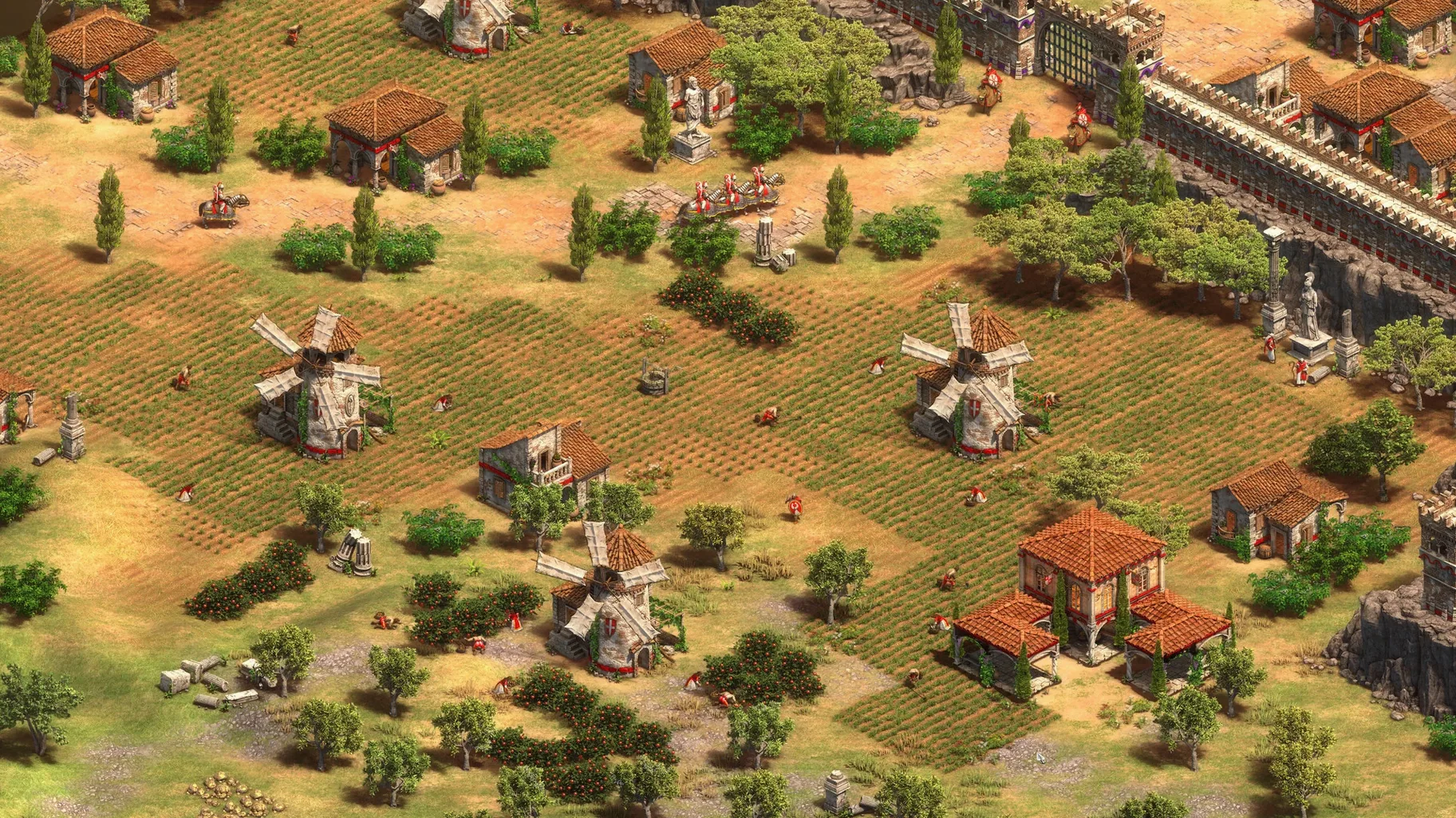
A real-time strategy classic reborn for macOS. Age of Empires II: Definitive Edition brings the full 4K remaster, three expansions, and more than 200 hours of single-player campaigns to the Mac, with online play that now supports 35 civilizations.
Getting the game running on a Mac
- Check your hardware. The game was tested on a Mac mini 2024 M4 running macOS Tahoe and works on both Intel and Apple Silicon Macs. A Mac that handles 4K video smoothly will have no trouble here.
- Install it. After downloading, mount the disk image file and drag the app icon onto the Applications folder alias. Once copying finishes, launch it straight from Launchpad — no activation required.
- Pick your input. A mouse and keyboard feel most natural for the classic RTS layout, though a trackpad works fine for campaign browsing and casual skirmishes.
- Expect steady performance. On Apple Silicon the game runs cool and quiet, even during late-game battles with hundreds of units. The remastered soundtrack and crisp interface hold up beautifully on a high-resolution display.
The Mac release includes Lords of the West, Dynasties of India, Dawn of the Dukes, and The Last Khans — so you get the full 1,000-year sweep of history right from the first launch. Between the scenario editor, quick play mode, and the battle royale twist that arrived in a recent update, there is a mode for every kind of evening.
One mission becomes three before dinner
Last Tuesday I sat down with a cup of tea and the goal of clearing a single campaign mission before dinner. Two hours later I had finished three. That is how this game works — it pulls you in gently and then you look up and the afternoon is gone. Here is how a session usually unfolds on my Mac.
Launch and lobby. Double-click the icon, the remastered soundtrack swells, and the main menu appears almost instantly. I head straight to single-player campaigns, because I am working through the new The Last Khans content. The interface runs at a silky frame rate on the M4 Mac mini; menu transitions are immediate, no spinning beach ball in sight.
Loadout and briefing. I pick a scenario, skim the narrated intro — the voice work in German and Spanish is particularly good if you want to switch things up — and scan the map. I usually zoom out with a scroll-wheel flick to get the full picture. The 4K textures mean I can spot sheep and berry bushes from a screen away, which saves early-game scouting seconds.
Early game rhythm. Town center, queue villagers, scout with the starting cavalry. The first ten minutes are pure muscle memory: find food, lure a boar, wall off a choke point. The Mac version handles the rapid click-and-drag box selection without any input lag. On this hardware, I have never seen a stutter even when six boars and a dozen villagers are pathfinding around a forest.
Mid-game pressure. By the time I hit Castle Age the screen is busy — trade carts, military buildings, a forward castle under construction. The fan on the Mac mini stays inaudible. I can flip between the scenario editor to test a build order and the campaign map without the game missing a beat. Memory use stays reasonable; I have had Safari, Mail and a music app open in the background and the game never complained.
Wrap-up. Victory screen, stats, a quick save. I always check the post-game timeline to see where my economy spiked. Then I usually promise myself "just one more" — and mean it about half the time.
Building a balanced 1v1 with the new scenario editor
Skirmish mode is where I experiment with new civilizations before taking them online. The scenario editor that arrived in a recent update makes this process far smoother on Mac. Here is how I set up a balanced 1v1 practice match.
Step 1: Pick the stage. I open skirmish mode and choose a standard map — Arabia for open-land practice or Black Forest if I want to test late-game unit compositions. The interface now lets you filter by map type, which cuts down scrolling through the massive map pool.
Step 2: Choose civilizations with intent. With 35 civilizations available, I pick two that have a clear strategic contrast. For example, Bulgarians (infantry and Krepost pressure) versus Britons (long-range archers). The quick play mode that was added recently lets me jump into a match without fiddling with lobby settings, but for deliberate practice I prefer the custom setup where I can lock the starting age and resources.
Step 3: Tweak the AI personality. I set the enemy to "Hard" and give it a personality that matches the civilization — aggressive for Mongols, defensive for Koreans. The expanded scenario editor support means I could even pre-place a few market routes or relic positions if I wanted to drill a very specific opening, though I usually keep it random for replayability.
Step 4: Run the drill. I play the first fifteen minutes three times in a row, experimenting with different build orders. Once I nail a tight Feudal Age timing, I save the replay. The Mac version writes replays reliably; I have not lost a single file to corruption.
Step 5: Review and refine. I watch the replay at 2x speed, noting when my scout was idle or when I forgot to queue villagers. Then I tweak the build order and run it again. This loop — skirmish setup, execution, replay review — is so fast on this hardware that an hour of practice feels like three hours of progress.
The most stable RTS I have run on macOS
After weeks of near-daily play, I have a clear picture of how the Mac version behaves under real conditions. The short version: it is the most stable RTS I have run on macOS.
- Launch time. Cold launch to main menu takes about four seconds on the M4 Mac mini. Subsequent launches are faster thanks to caching. No splash-screen delays, no verifying files.
- Loading campaigns. Even the largest campaign scenarios — the multi-part historical epics that span enormous maps — load in under six seconds. Skirmishes load in about three.
- Frame rate and smoothness. The game locks to a smooth 60 frames per second at 4K resolution with every graphics setting maxed out. Late-game battles with 300-plus units, siege onagers flattening forests and trade carts weaving through palisades do not cause dips. The remastered particle effects — smoke, fire, crumbling walls — render without a hitch.
- Thermals and noise. The Mac mini stays cool and silent throughout. After a three-hour multiplayer session, the case was barely warm to the touch. No throttling, no fan ramp-up.
- Memory footprint. The game uses about 3 to 4 GB of RAM during large skirmishes. With 16 GB of system memory, I can leave several other apps open and switch between them without the game swapping to disk.
- Stability. I have logged over sixty hours across campaigns, skirmishes, the battle royale mode and the scenario editor. Not a single crash. One time I accidentally yanked the display cable mid-game; the app paused gracefully and resumed when I plugged it back in.
- Online multiplayer. Matchmaking connects quickly, and the Mac-native build talks smoothly to other macOS players. Ping times are low, and I have seen no desync errors in the last two weeks of evening play.
Quick play and the quiet fixes that reshaped my routine
The 1.2 release and its accompanying updates brought several quiet improvements that changed how I use the game day to day. None of these are flashy, but they add up.
Quick play mode. Before this arrived, jumping into a casual multiplayer match meant navigating the lobby browser — fine for planned sessions, but a bit much when I only had twenty minutes. Now I can click quick play, pick my civilization, and be in a game in under a minute. It has lowered the barrier enough that I play short online matches far more often than I used to.
Scenario editor support. The scenario editor on Mac was a missing piece for years. Having it now means I can design map layouts, script simple triggers and test custom scenarios without booting another machine. I have built a half-dozen training maps for practicing fast-castle builds, and the editor interface feels responsive and well-adapted to macOS conventions — keyboard shortcuts match what you would expect, and copy-paste for terrain chunks works flawlessly.
Battle royale mode. This mode is a strange, tense twist on the formula. You start with a small force on a shrinking map and fight to be the last player standing. I play it in short bursts; it is surprisingly fun and completely different from the methodical campaign
Version 1.2 puts the Definitive Edition treatment front and centre:
- Ultra HD 4K visuals and the digitally remastered soundtrack are built into the initial Mac release.
- The expansion The Last Khans ships included, adding three campaigns and four civilizations.
- A battle royale mode and a scenario editor arrived in recent updates.
- Quick play mode keeps matchmaking snappy and straightforward.
- macOS Tahoe (tested on a Mac mini 2024 M4)
- Works on both Apple Silicon and Intel Macs
- No activation needed
Questions from the stall
Does the Mac version support multiplayer with PC players?
The Mac version supports online multiplayer with other macOS players; cross-play with Windows is not available in this release.
What languages are available in the Mac interface?
You can play in English, Russian, German, Spanish, French, Italian, Polish, Portuguese, Turkish, Hindi, Japanese, Korean, Malay, Vietnamese, Simplified Chinese, and Traditional Chinese.
Notes from other shops 0
Sign in or open a shop account to leave a note.
No notes yet. If you've used this on a shop Mac, tell me how it went.