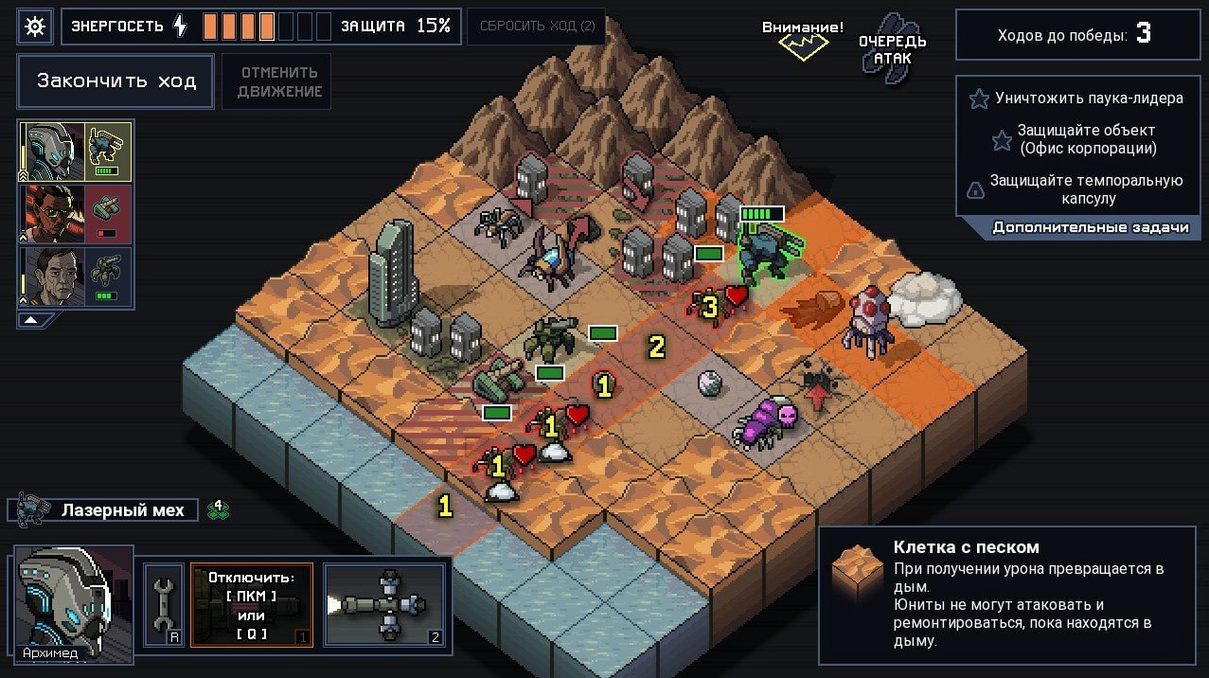
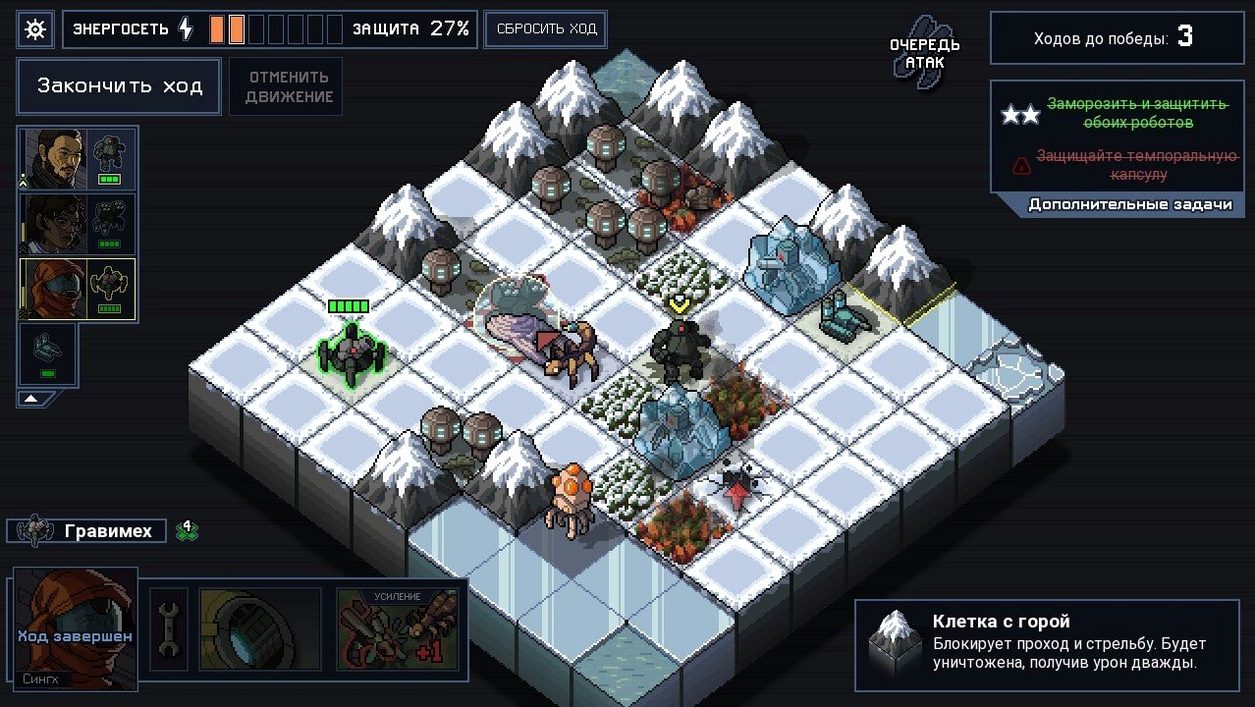
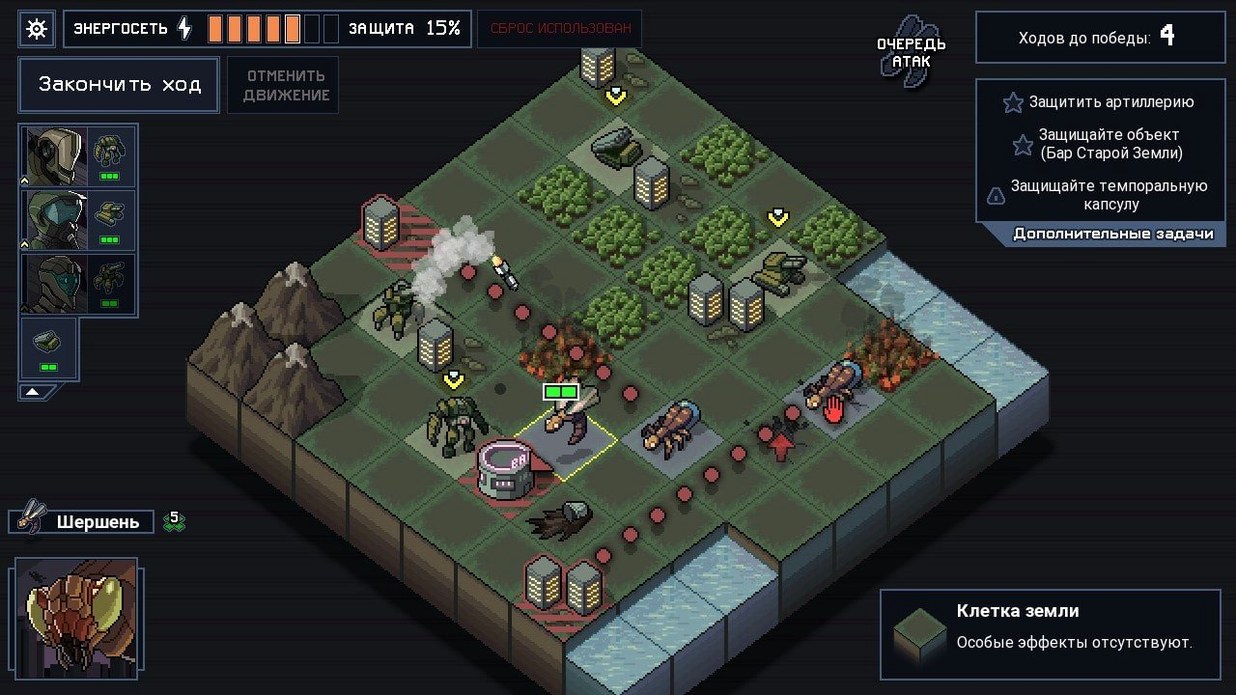
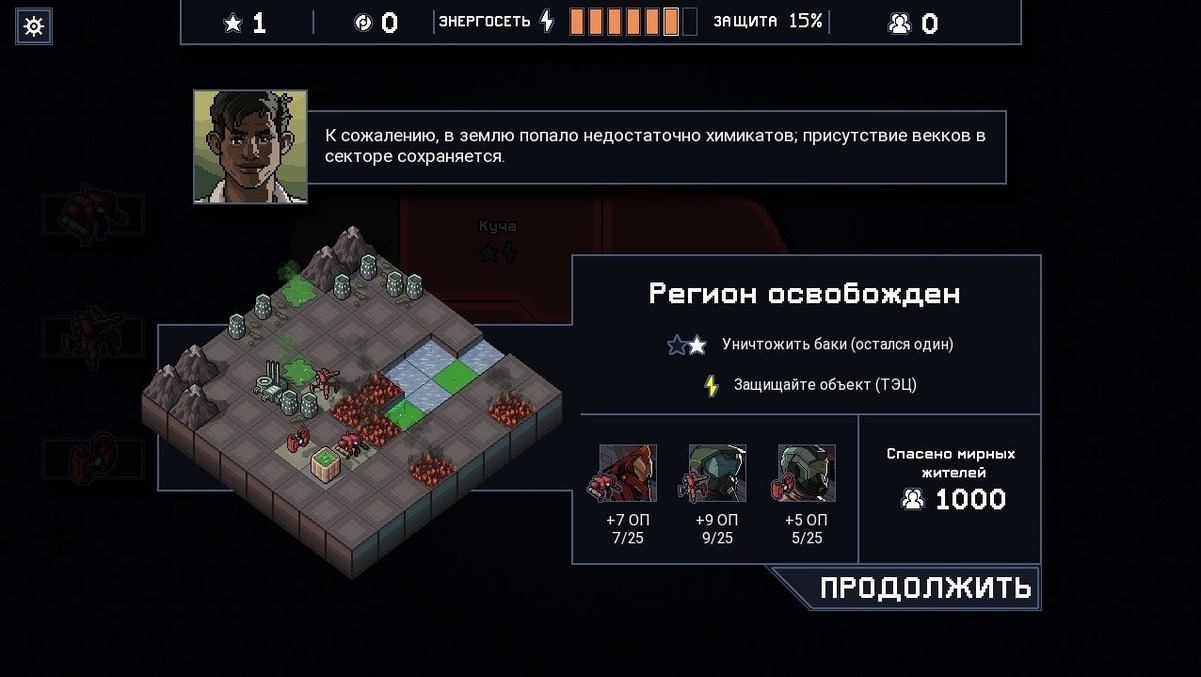
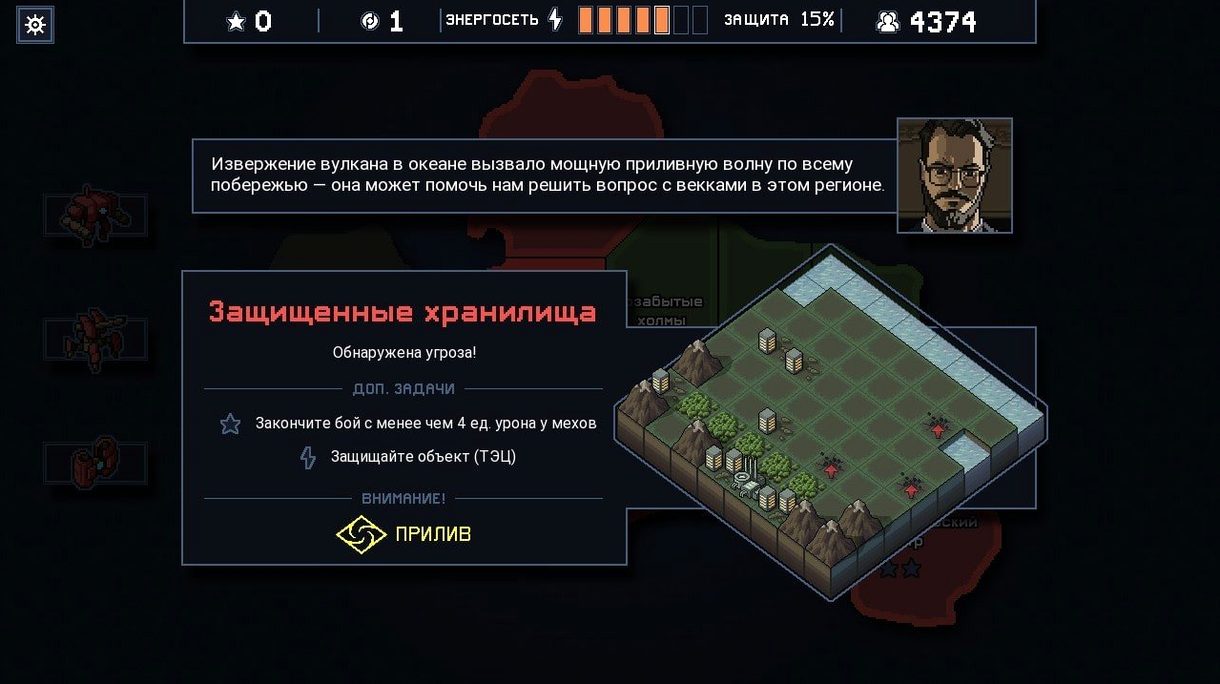
Every battle plays out on a compact 8x8 grid. Enemy attacks are telegraphed a turn in advance, so you know exactly what they intend to do. The challenge isn't about reflexes—it's about using your squad of three mechs to shove, pull, block, and redirect the Vek in ways that protect the power grid underneath the city. Mistakes cascade quickly, and a single misjudged push can cost a building or a pilot. The game suits players who enjoy tight positional puzzles and don't mind losing a run to a bad decision. Each attempt generates a new set of islands, objectives, and rewards, so no two campaigns unfold the same way. If you prefer grand strategy, base-building, or long-form storytelling, the minimal framing and small-scale maps might feel restrictive. But if you like the idea of a strategy game that treats every turn like a logic problem with giant robots, it fits.
Quick look
| Detail | Info |
|---|---|
| Developer | Subset Games |
| Version | 1.2.93b |
| Architecture | Intel (64-bit) |
| Interface languages | English, French, German, Spanish, Italian, Portuguese, Russian, Polish, Japanese, Simplified Chinese |
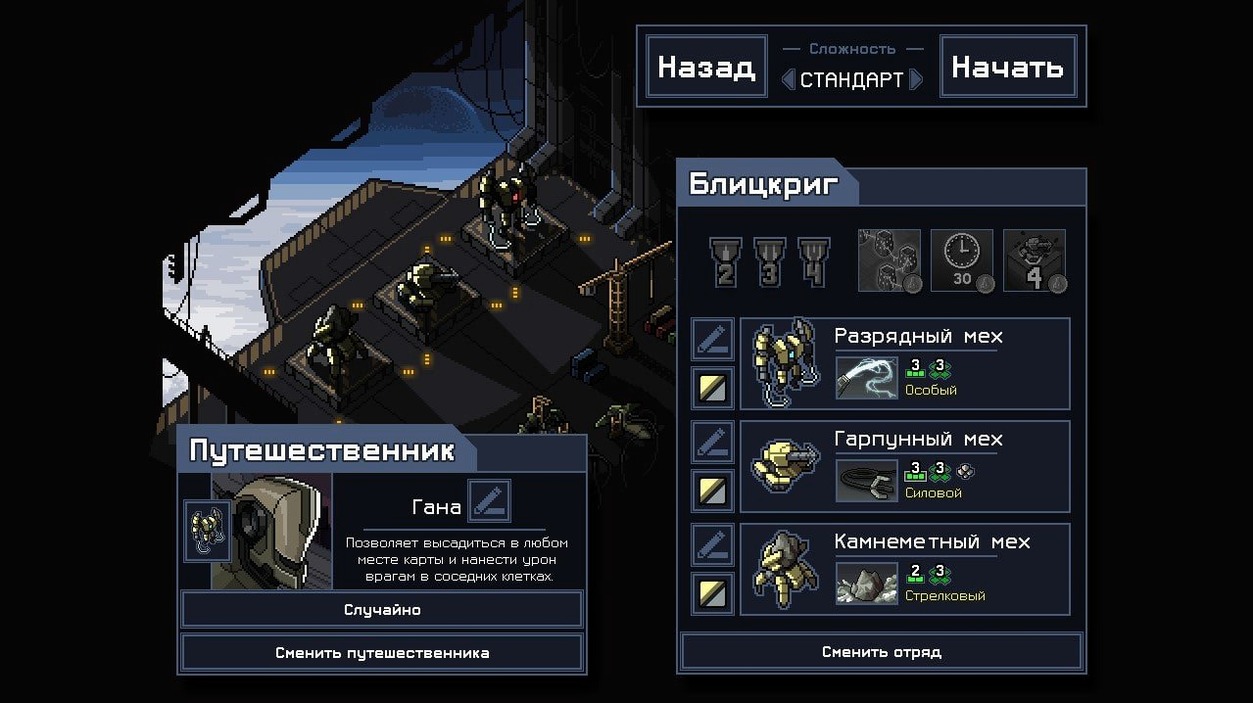
Failure isn't the end. When a timeline collapses, you can send a single pilot back through time to carry experience and a new weapon into the next attempt. That loop keeps even doomed runs productive. Between missions you'll find new weapons and recruit pilots with traits that nudge your tactics in fresh directions, which gives the small-scale combat surprising variety across multiple playthroughs.
Mistakes I made early on (so you don’t have to)
The most common beginner slip is treating mechs like tanks. Your squad isn’t tough enough to absorb hits turn after turn—every point of mech health you lose is a repair action you won’t spend repositioning or dealing damage. A far better habit is thinking of attacks as displacement tools first, damage second. A push that shoves a Vek into water or off the map entirely is often worth more than a clean kill that leaves your mech exposed.
Another trap is ignoring the turn-order display at the top of the screen. I’ve lost buildings because I planned around a Vek that was actually acting after my move, not before. The game shows the sequence clearly, but it’s easy to glance past when you’re focused on the grid. Train yourself to check it before committing any action.
Overvaluing the “perfect” objective—no grid damage, all Vek destroyed—will also sink runs. Some missions hand you a board state where losing one civilian building is the least bad outcome. Take the small loss, keep your pilots healthy, and move on. A campaign that absorbs a few hits can still reach the final island; one that chases flawless victories often doesn’t.
Finally, new players sometimes forget that civilian buildings aren’t just score counters. They’re your power supply. Letting two or three collapse in quick succession can cripple a run faster than losing a mech, so give grid defense the same priority you’d give a pilot’s life.
Hold alt to preview attack order
Holding Alt while hovering over any unit shows a detailed breakdown of attack order and status effects. It’s the quickest way to untangle a messy turn without counting icons manually, and the game never quite shoves it in your face.
The repair button does double duty: it restores health and cures status effects like fire or acid in a single action. If a mech is both damaged and burning, one click fixes both problems. I missed that for my first several runs.
You can reset a turn at any time before confirming your last mech’s action. No penalty, no hidden cooldown. Use it freely to test pushes, check enemy movement lines, or see whether a particular sequence actually saves the building you think it will. The undo option turns every turn into a small sandbox.
Between islands, the shop screen lets you sell unused weapons for reputation—a currency you can spend on cores, grid power, or new gear. Hoarding a situational weapon you never equip is less useful than an extra point of reactor core that boosts a mech’s primary attack for the rest of the run. Reputation management isn’t flashy, but it quietly decides how deep a run goes.
- Architecture: Intel (64-bit)
Questions from the stall
How does sending help back through time work?
When you fail a run you can choose one pilot to travel back to a fresh timeline. They keep their experience and any special abilities, giving the next attempt a small head start.
Notes from other shops 0
Sign in or open a shop account to leave a note.
No notes yet. If you've used this on a shop Mac, tell me how it went.