

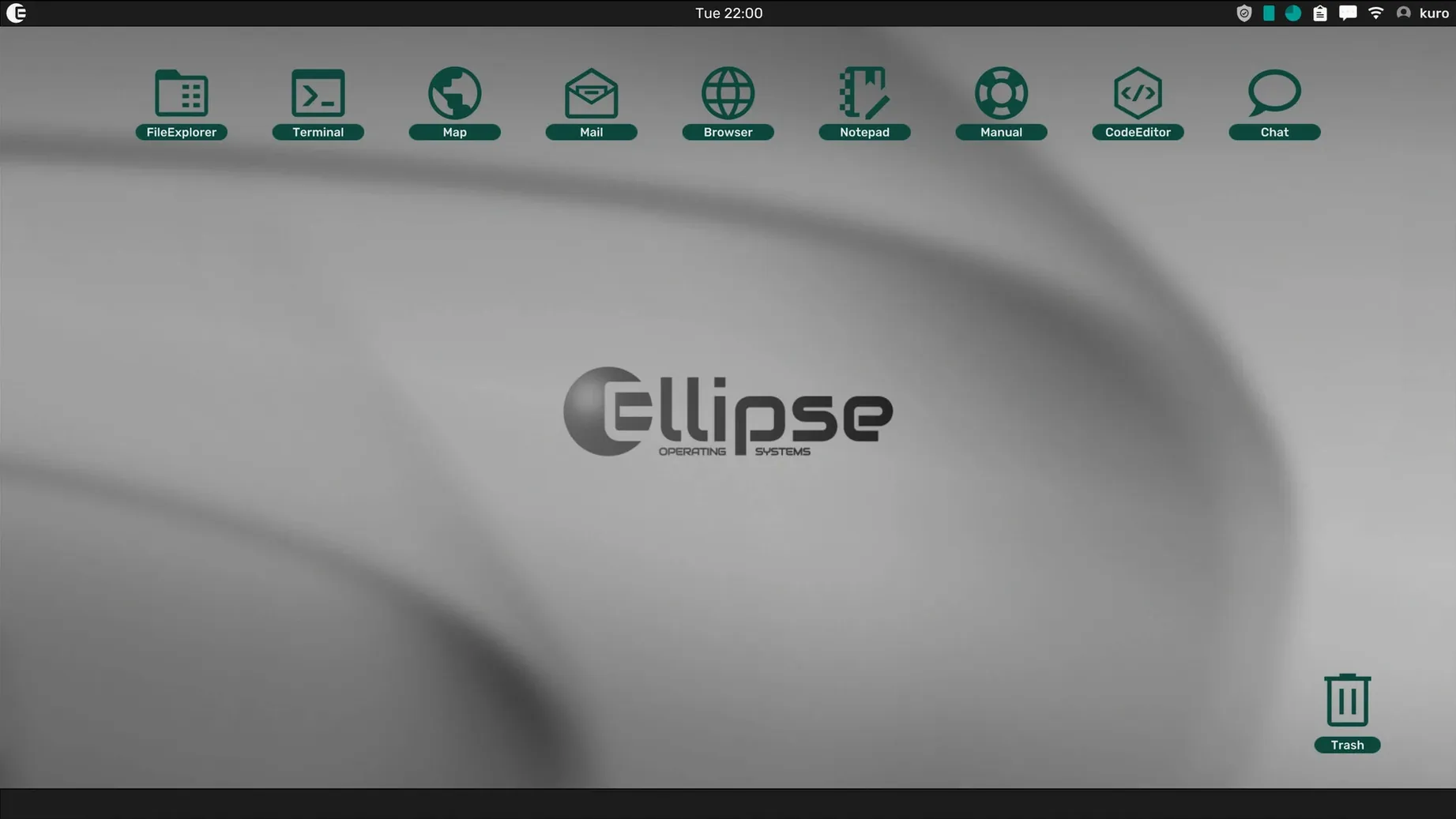
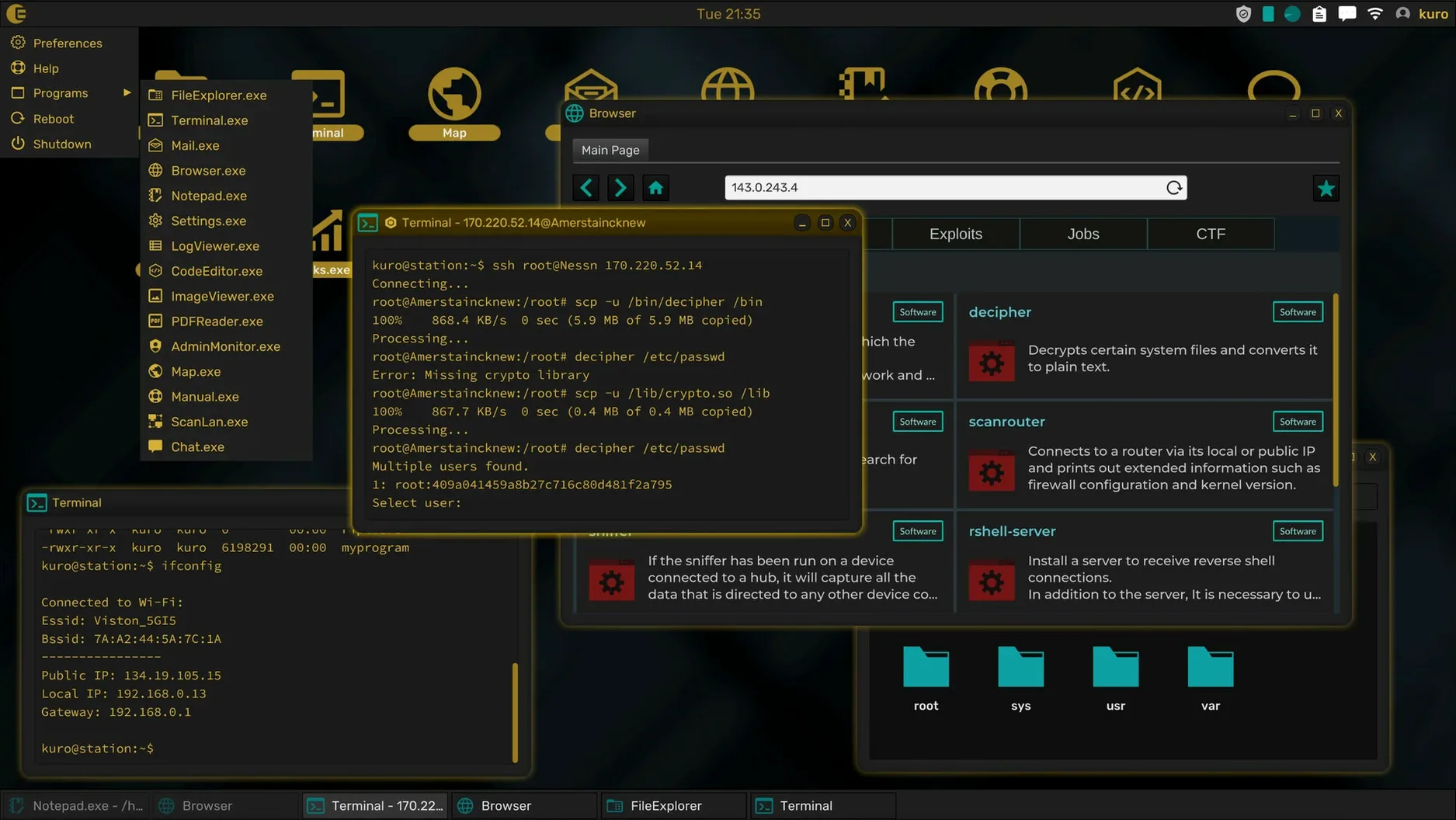
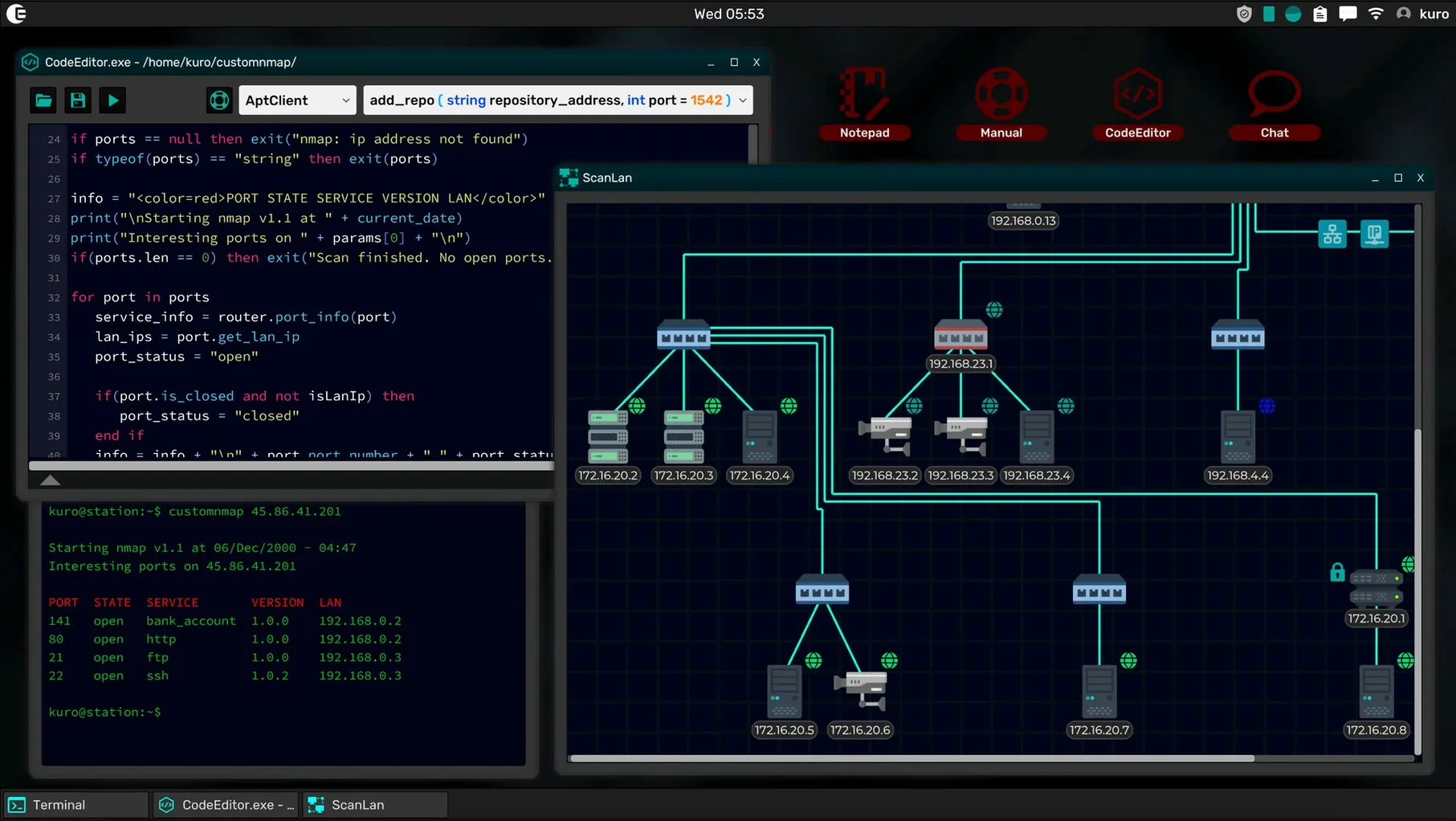
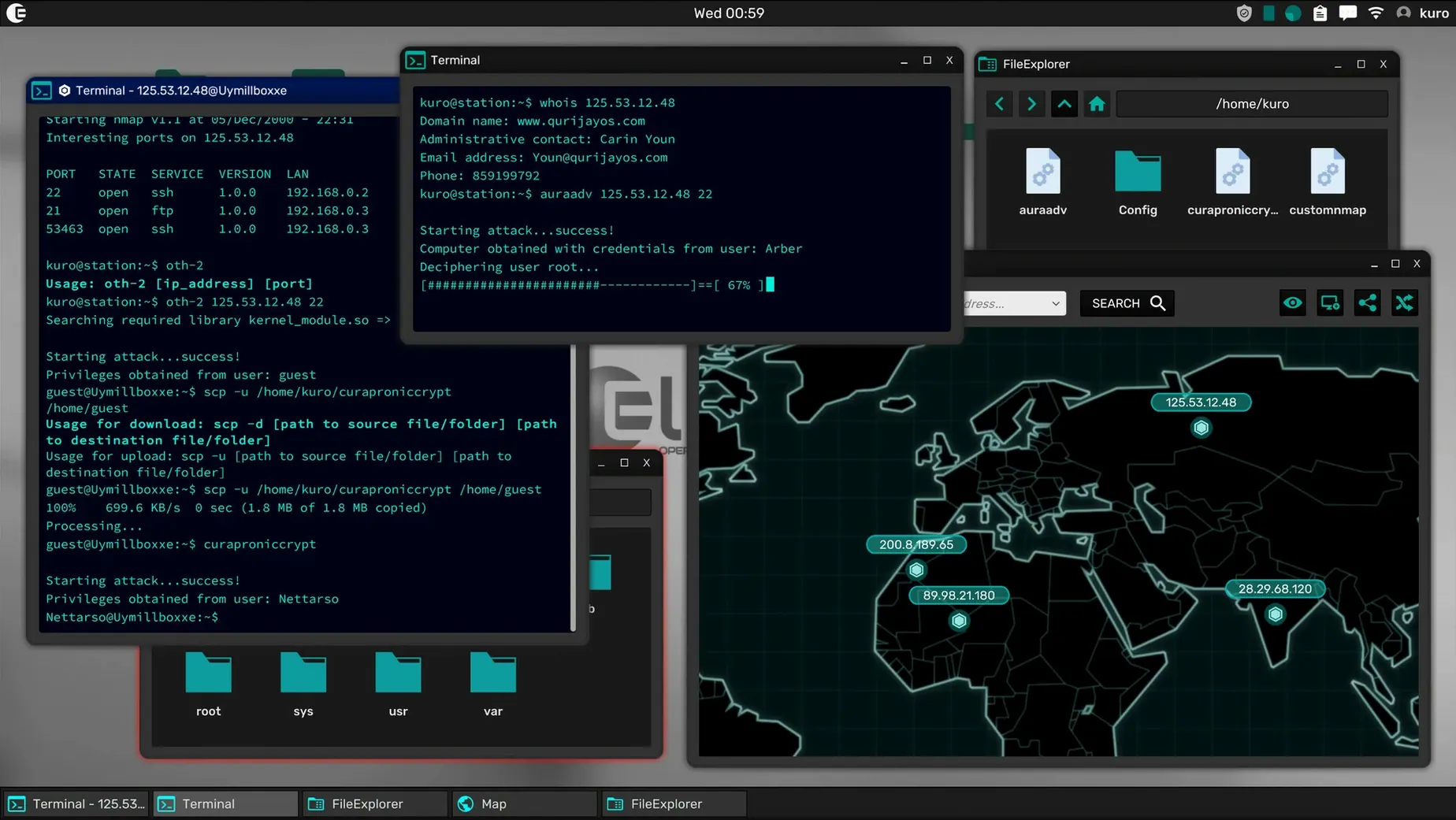
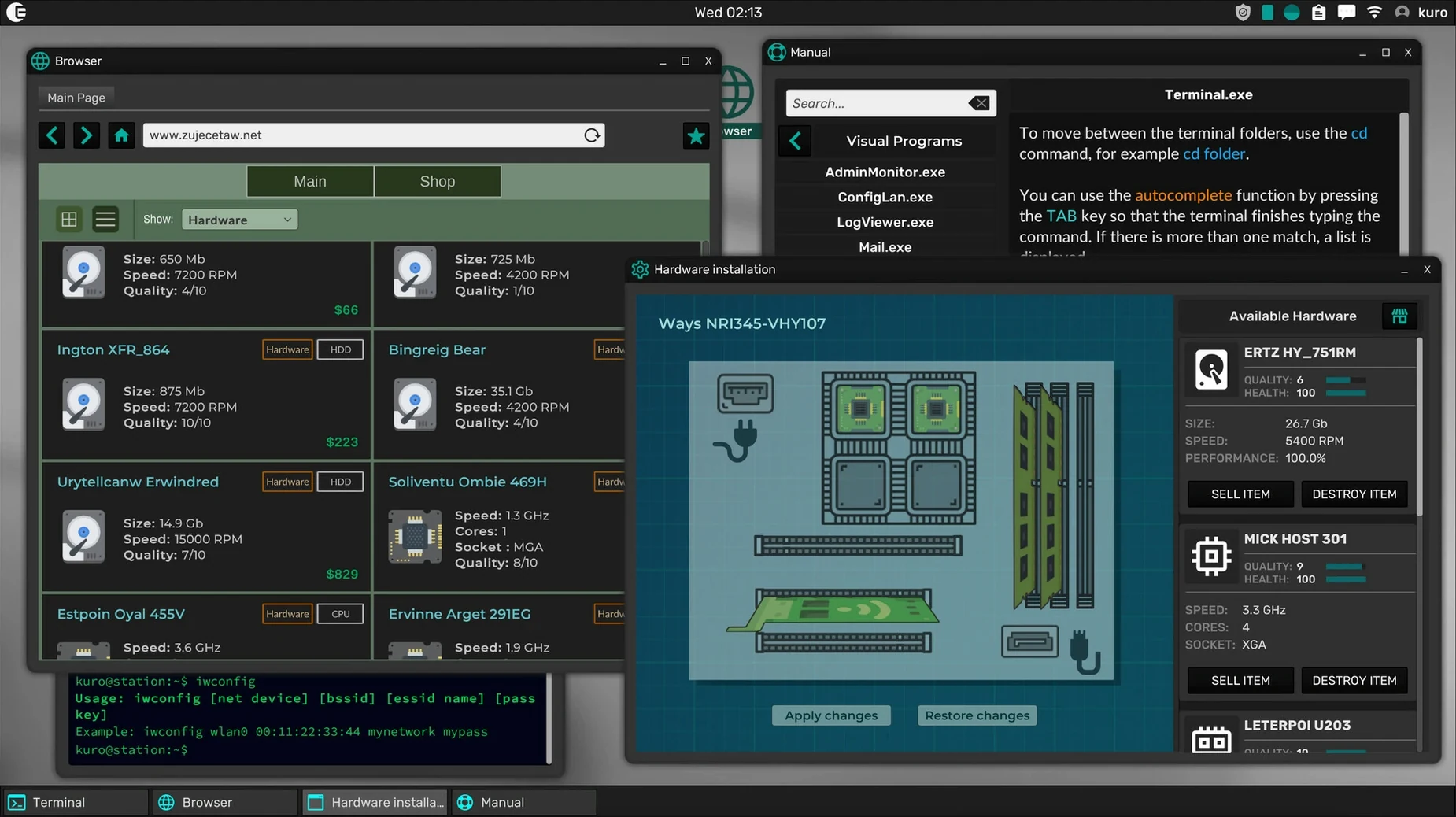
Terminal isn't just a window — it's the main tool that makes a run work. Here's what's in the box when you start Grey Hack.
File Explorer — your starting point for moving around the machines you reach. It feels familiar, but every folder here belongs to someone else.
Terminal — where the actual hacking happens. Commands, scripts, probes. The game treats this as your primary instrument, and it shows.
Text Editor — for reading files you pull off a server or writing scripts to make later runs quicker. Simple, but it gets used more than you'd expect.
Procedurally generated network — every computer you can reach sits inside a large, generated network. No two players see the same layout.
Full freedom of action — you're a hacker, not a guided tourist. What you do with those three starting tools is up to you.
Starting with coffee and leftover shells
You sit down with coffee, launch Grey Hack, and the familiar desktop loads — File Explorer, Terminal, Text Editor, just like yesterday. The network doesn't wait. Your first move is usually the same: check what machines you left shells on overnight. A quick who or uptime tells you if anyone noticed your presence.
Next you open the in-game browser and check the hacker forums. Somebody might have dropped a fresh exploit script, or posted IP ranges worth scanning. You copy a promising-looking IP block into your notes. Then it's Terminal time — nmap that range, watch the pings come back, pick a machine with an open SSH port that looks like it hasn't been patched in months.
You spend twenty minutes probing — ssh with a few default credentials, maybe a metaxploit scan if you have the library built. Something gives. You're in. Now you're reading email folders, checking for password reuse, maybe planting a backdoor script so you can hop back later without the front door. Before you log out, you clean the logs with a quick rm — sloppy hackers get traced.
A real task: finding and selling a database
Say you need in-game currency — the kind that buys better tools. Here's one way to get it.
Start by scanning a corporate IP range you found on a forum. Look for machines with port 3306 open — MySQL. When you find one, you don't just try root; you check if the server is running an old version. mysql -V shows you the build number. If it's old enough, you might have a local exploit ready in your library.
Once inside the database, SHOW DATABASES; reveals a customer records table. You dump it with SELECT * INTO OUTFILE, download the file through the File Explorer, and scrub your tracks. Now you have a data file sitting in your home machine. You post it on the in-game black market, set a price, and wait for a buyer. The whole sequence — scan, exploit, extract, sell — feels like real tradecraft, not a tutorial checkpoint.
Pasting scripts you don't understand
New players often treat Grey Hack like a puzzle game with one right answer. It's not. The biggest mistake is relying entirely on pre-written scripts without understanding what they do. You'll see someone grab a Grey Hack Torrent Mac exploit they downloaded from a forum, run it against a hardened server, and get instantly traced because they didn't read the payload first. Read the code before you run it — every time.
Another common slip: ignoring log files. Beginners break into a machine, grab what they want, and leave without touching /var/log. That's how you get your home IP burned. A simple cat /dev/null > auth.log takes two seconds and saves hours of rebuilding your network identity.
Finally, new hackers hoard tools but never write their own. The Text Editor is there for a reason. A short script that automates log-cleaning across multiple machines is worth more than any pre-made exploit you'll find on a torrent site. Start small — a bash loop that pings a subnet — and build from there. The game rewards players who think like toolmakers, not just tourists.
- Tested on macOS Tahoe
- ARM and 64-bit x86 architectures
- Interface languages: English, Spanish
Questions from the stall
What platforms and architectures does Grey Hack support?
The build supports both ARM and 64-bit x86 Macs, and the game is also available on Steam as an Early Access title.
Notes from other shops 0
Sign in or open a shop account to leave a note.
No notes yet. If you've used this on a shop Mac, tell me how it went.