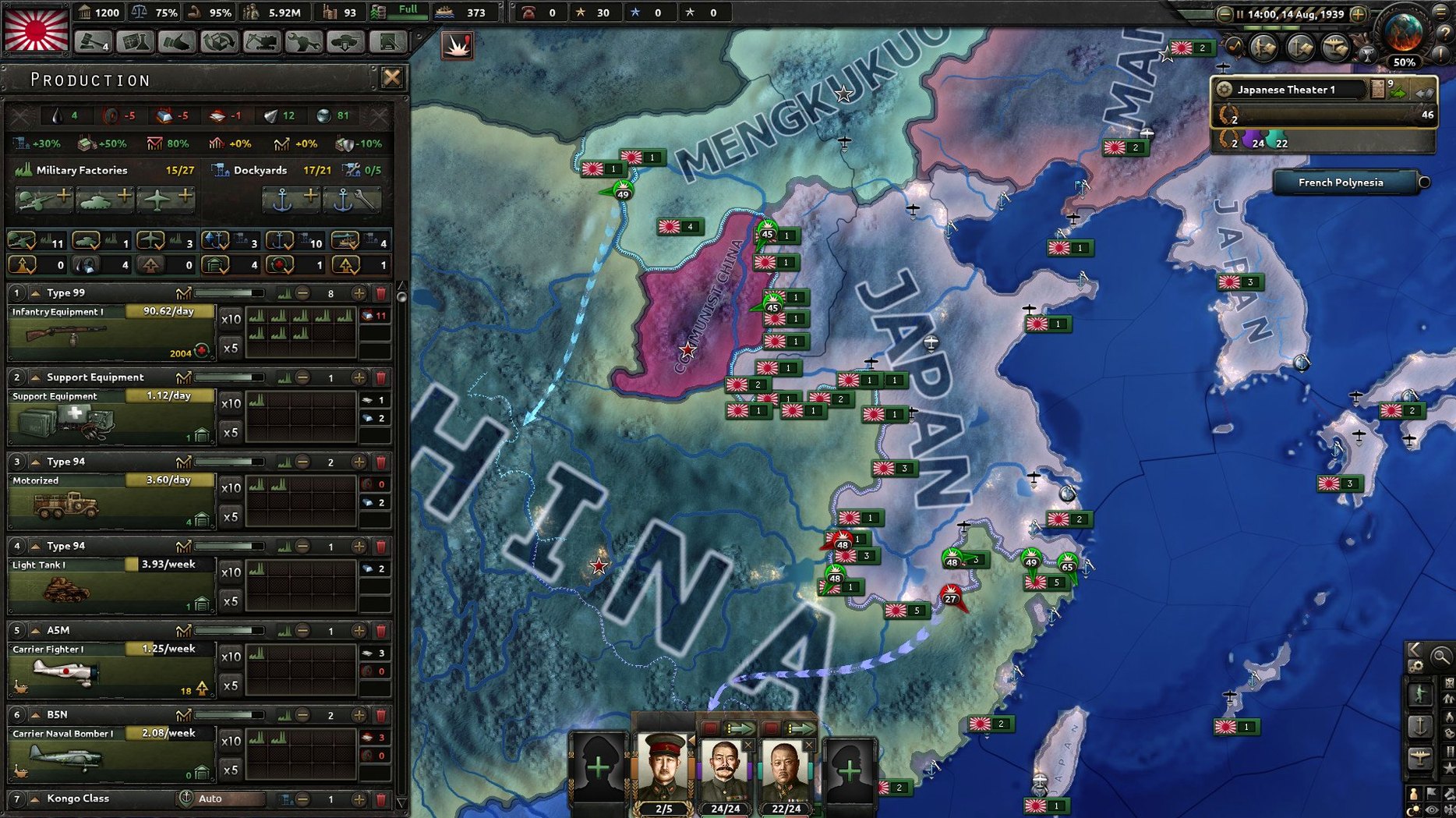
The new secret path for Australia opens up a completely different theater to worry about, pulling focus away from the usual European slugfest. It’s a good reminder that this isn’t just a war game—it’s a sandbox for alternate history where you can nudge entire nations toward outcomes that never happened. You fight battles, sure, but you also negotiate trade deals, organize inland invasions, and decide which political faction gets the funding to shape your research tree.
Two start dates and the tools to reshape WWII
- The full grand strategy sandbox set during the World War II era
- Tools to direct diplomacy, production, military doctrine, and political appointments
- A 1936 and 1939 start date, each changing the tension and pacing
- A music-only voice language setting for an uninterrupted soundtrack
- Latest late-game content additions for Siam and Indonesia
Launch from the dowser file, then pause and plan
Paradox built this to run on Intel Macs, and the interface handles the familiar pause-and-plan rhythm well. The launcher is inside the game package—you run the dowser file to set things like English, Russian, or Japanese before jumping in. Once the language is locked, the map is yours to micromanage supply lines, draw battle plans, or stage a coup that flips a neutral neighbor.
How I'd turn Siam into a regional power, step by step
Late-game Siam got fresh content in version 1.19.3, so it's a solid pick if you want a smaller nation with room to maneuver. Here's the workflow I'd follow, starting from the 1936 bookmark.
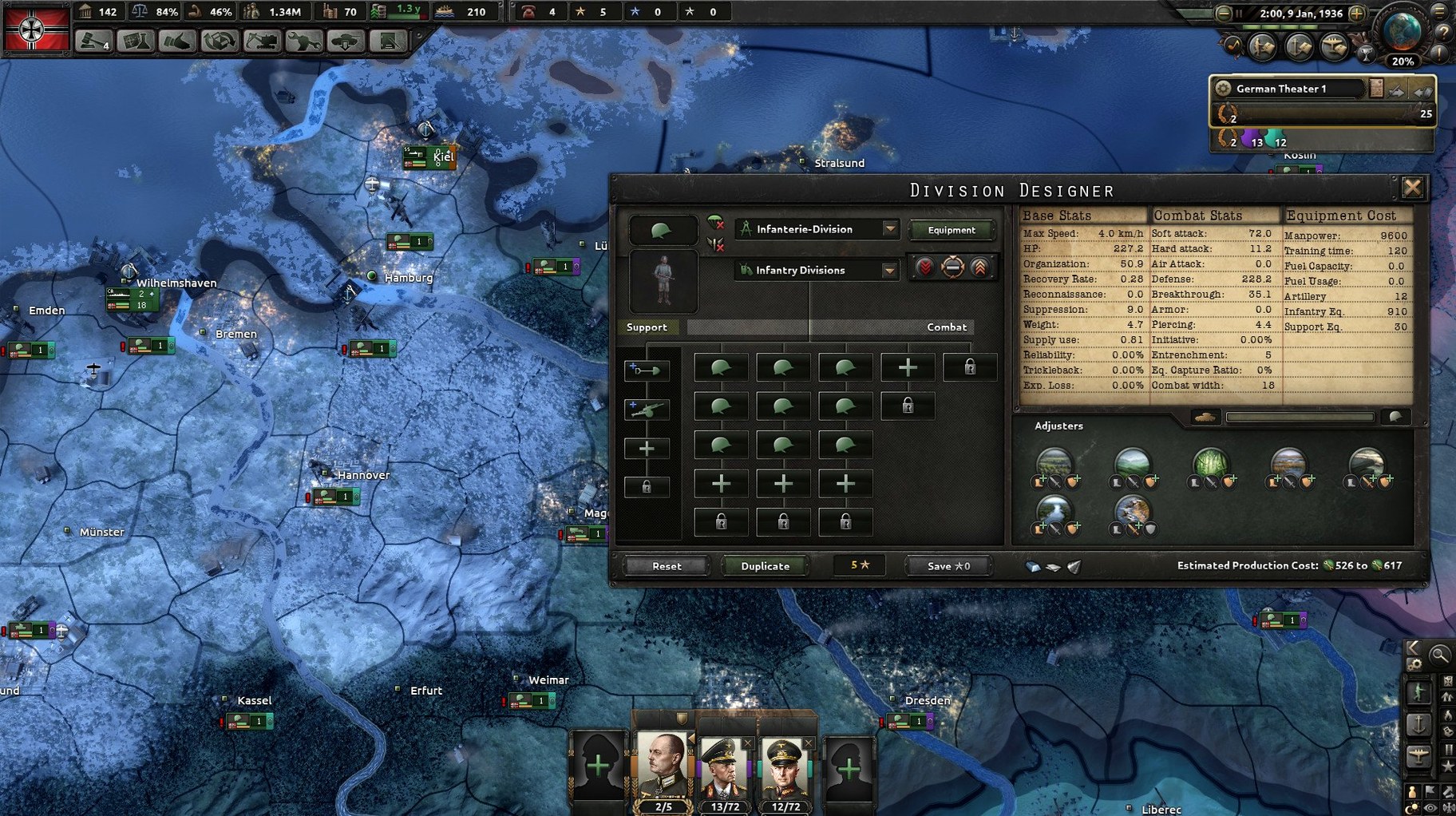
First year — build the foundation. I'd pull two civilian factories onto the queue immediately and leave them there through 1937. Research slots are precious, so the first tech picks would be Electronic Mechanical Engineering and Basic Machine Tools. Siam's army is small, but you don't need a huge force yet—just enough divisions to hold the border and look credible. I'd set my infantry template to a clean 9/0 (nine infantry battalions, no artillery) and start training six more units at low priority so equipment trickles in without stalling factory output.
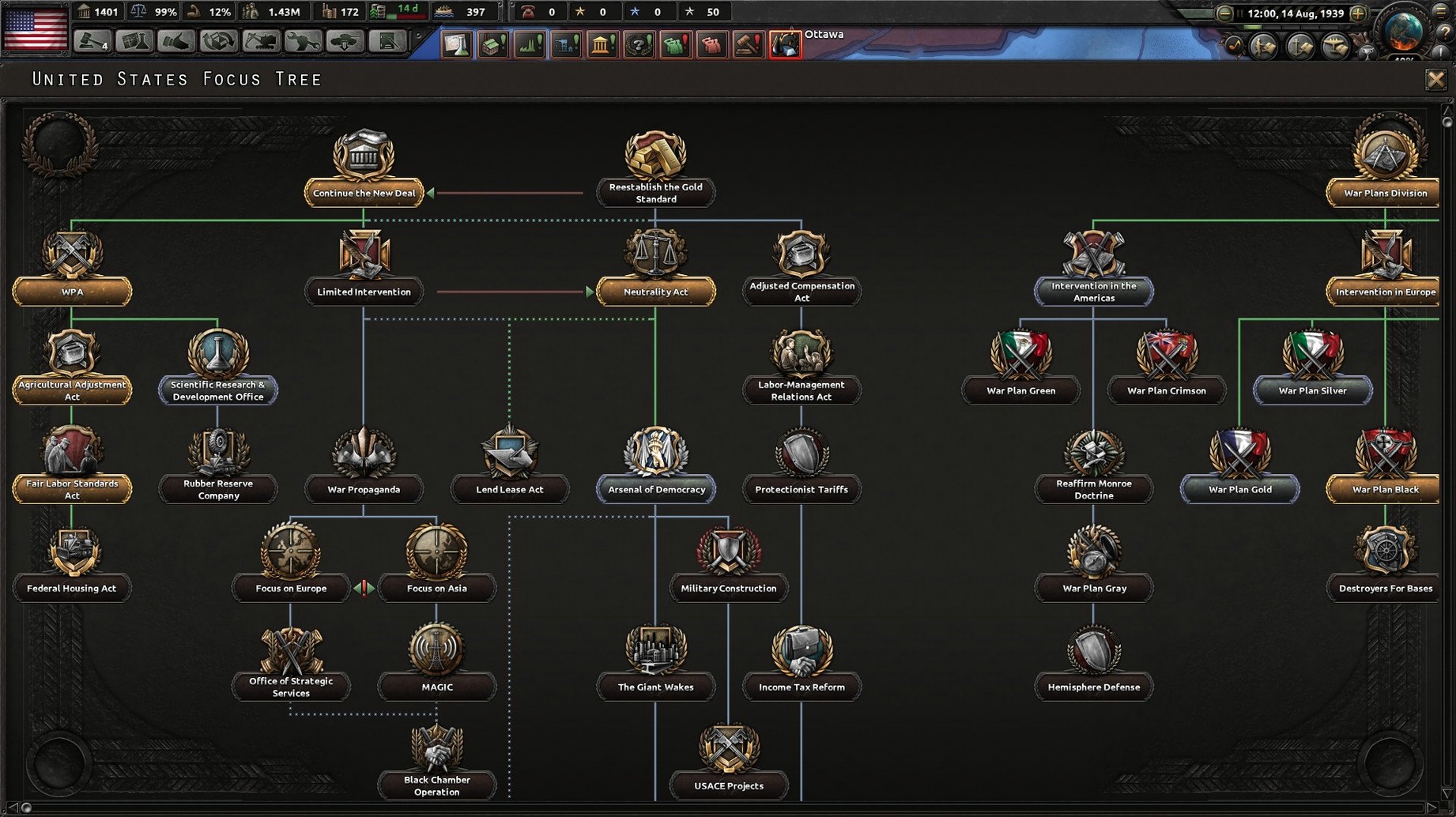
Political maneuvering. The focus tree lets you lean toward Japan or chart an independent path. The new late-game branches reward staying flexible, so I'd avoid locking into a faction too early. Instead, I'd grab the industrial focuses first—there's a decent one that gives an extra research slot—and save the political alignment decisions for 1938, when the world picture is clearer. A timely boost to war support through decisions keeps the home front stable while you prepare.
Mid-game punch. By 1940, Siam should have a modest air force of close air support planes and enough trucks to motorize a couple of divisions. The real play is timing: wait until the Allies are distracted in North Africa or the Pacific, then push into Malaya or Indochina with a small, fast spearhead. I'd micro the first few provinces manually rather than trusting battle plans—the AI sometimes bleeds equipment on bad terrain. Once a port is captured, supply becomes the constraint, so upgrading the naval base in Bangkok early is a quiet investment that pays off.
Tip: keep an eye on Indonesia's late-game content too. If the Dutch East Indies fragment after capitulation, Siam can snag resource-rich islands without fighting a major fleet.
What the 1.19.3 patch changes in daily play
Balance tweaks in this patch smoothed out a few rough edges I used to work around. Naval invasion response times feel slightly sharper—the AI commits more aggressively to coastal defense, so you can't just sail past a sleeping garrison anymore. That makes Pacific island-hopping a touch more tense, particularly for multiplayer groups that like to coordinate simultaneous landings.
The bug fixes listed in the notes aren't flashy, but they matter. Several community reports about peace conference logic got addressed, so territory distribution after a major war now matches what you'd expect from the war-score screen instead of throwing random provinces to a neutral bystander. I've also noticed fewer instances of division templates resetting their equipment priorities after a reload, which used to waste production efficiency.
The Australia secret path is the headliner, and it genuinely shifts how a multiplayer session can unfold. A human Australia player now has an alternative to the historical Commonwealth support role—they can pivot toward a Pacific-focused expansion that pressures Japan earlier or even challenges the Allies from within. That ripples into Siam and Indonesia campaigns too, since a distracted Australia changes the threat landscape across Southeast Asia.
Late-game division shuffle slows the daily tick
On an Intel Mac, the late-game slowdown is real but manageable. The 1944-1948 stretch, when hundreds of divisions shuffle across multiple fronts, will chug during the daily tick. I keep the speed on three notches for peacetime and drop to two during major offensives. The game doesn't crash often—Paradox's engine has years of patches behind it—but memory use climbs steadily through a six-hour session. Quitting and relaunching every three hours clears that up.
Rosetta 2 handles the x86 build without drama. Loading a save from the main menu takes about forty seconds on a recent Intel Mac; the initial boot is closer to a minute. The music-only voice language setting helps here too—no audio files to load, so the soundtrack kicks in immediately and stays smooth. If you're hunting for a Hearts of Iron IV torrent that runs reliably on macOS, this build has the stability you'd hope for from a mature strategy title. The interface scaling on larger screens works out of the box, and all the tooltips render cleanly even when the map is cluttered with front lines and naval patrol zones.
From Crusader Kings to tank production lines
Grand strategy players who enjoy long planning sessions over quick action. If you've spent hours in Crusader Kings or Europa Universalis, the shift to industrial production and division templates feels like a natural next step. The World War II setting pulls in history enthusiasts who want to test counterfactuals—what if Germany pushed through the Caucasus, or Japan ignored Pearl Harbor entirely.
Multiplayer groups get a lot out of it too. Coordinating three or four nations on voice chat, dividing responsibilities for air cover and naval escort while one player micros the Eastern Front, turns the game into a shared narrative. Single-player campaigners who like slow-burn storytelling will appreciate the focus trees and event chains that the latest patches keep expanding. Even people who never touched a Paradox game before but spent years with turn-based strategy can adapt; the pause button is the great equalizer. Searching for a hearts of iron 4 mac torrent often leads here because macOS strategy options this deep are rare, and this one rewards patience with stories you'll tell your friends afterward.
The 1.19.3 update tucks in a few surprises alongside the usual polish:
- A new secret path for Australia gives the Pacific theater a fresh twist.
- Late-game content arrives for Siam and Indonesia, adding more flavor to Southeast Asia.
- Balance changes and bug fixes keep the strategy sharp.
- Architecture: Intel Mac
Questions from the stall
What languages does the game interface support?
The interface comes in Russian, English, German, Spanish, Polish, Portuguese, French, and Japanese, and you can change it in the launcher before starting.
Notes from other shops 0
Sign in or open a shop account to leave a note.
No notes yet. If you've used this on a shop Mac, tell me how it went.